An international team of astronomers has reported that transits of the exoplanet TOI 2535 b, observed with NASA’s TESS space telescope over seven years, could no longer be detected by March 2026. According to the researchers, the planet has not disappeared and continues to orbit its star, but the inclination of its orbit relative to Earth has changed significantly. That shift may have been caused by the gravitational pull of a second, as-yet-unidentified planet. TOI 2535 b belongs to the class of hot Jupiters and lies about 1,100 light-years from Earth.
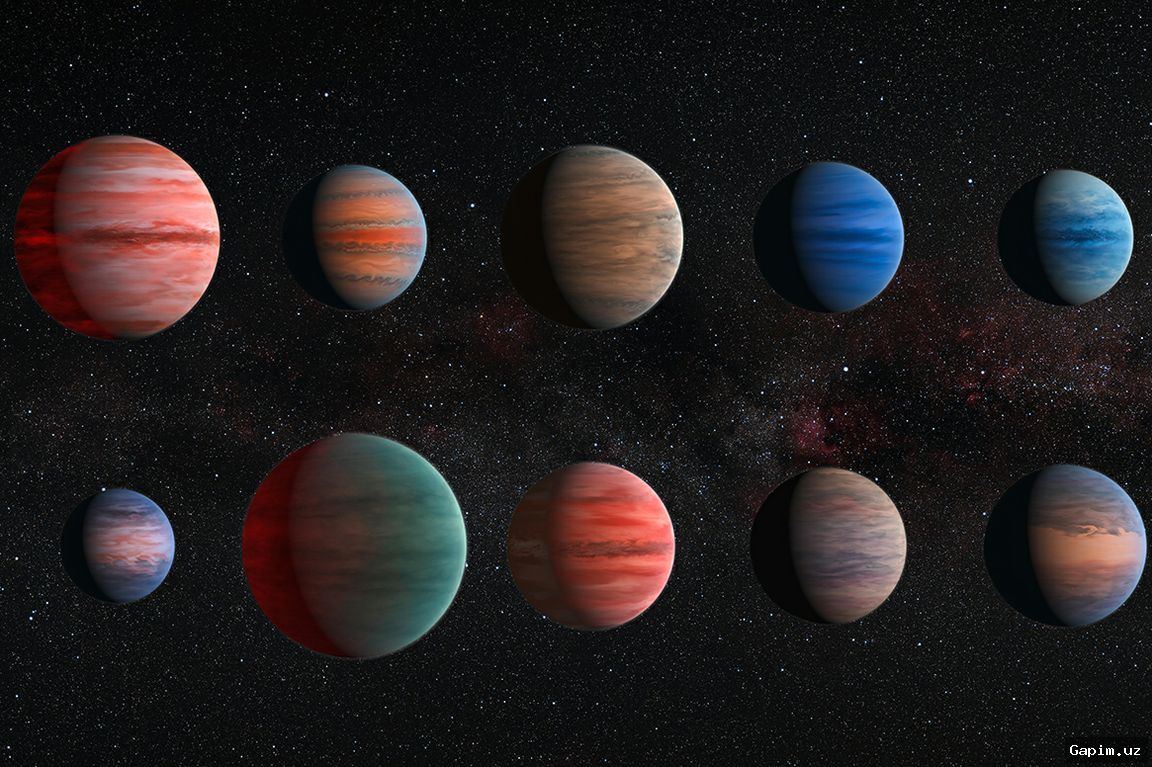
Key Takeaways: TOI 2535 b is about 123,000 kilometres in diameter, has a mass close to Jupiter’s and completes an orbit in 8.236 days. TESS has monitored the system since 2019, but the transit signal weakened over time and became undetectable by March 2026. Transit-timing shifts of up to six hours are being linked to a second gas giant and a possible orbital resonance.
TOI 2535 b was discovered using the transit method: when a planet passes in front of its star’s disk, the star’s brightness dips slightly and telescopes record the change. Its host star, TOI 2535, is a slightly smaller and cooler orange dwarf than the Sun. The system is located roughly 1,100 light-years away, and the planet’s short orbital period made it a convenient target for observations. Yet in each new observing cycle the signal changed: the brightness dip became smaller and the transit duration shortened.
To check whether TOI 2535 b had genuinely stopped crossing its star, astronomers reanalysed the latest TESS data. They examined whether the telescope might have missed very shallow transits. However, careful searches found no trace of such events. This suggests that the disappearance of the transits is not due to observational errors but to a change in the planet’s orbital geometry. The planet itself has not vanished: it continues to move around its star, but now follows a somewhat different trajectory.
Another unusual clue came from transit timing. TOI 2535 b did not always pass in front of its star at the expected moment: sometimes it arrived about six hours early, sometimes about six hours late. Astronomers believe such deviations may be linked to the gravitational influence of another planet. Researchers who modelled the planets’ motions concluded that the most likely explanation is a second gas giant with a mass no less than Saturn’s.
Calculations indicate that the two planets may be in orbital resonance, meaning their orbital periods around the star stand in a specific ratio. The team examined several possibilities — 2:1, 3:2 and 4:1 — and found the first two to be the most plausible. Such interaction can strongly affect the motion of neighbouring planets and may have changed the inclination of TOI 2535 b’s orbit by at least five degrees. Follow-up observations are expected to clarify the companion’s mass and orbit and to improve understanding of how the system formed.
Source: kun.uz