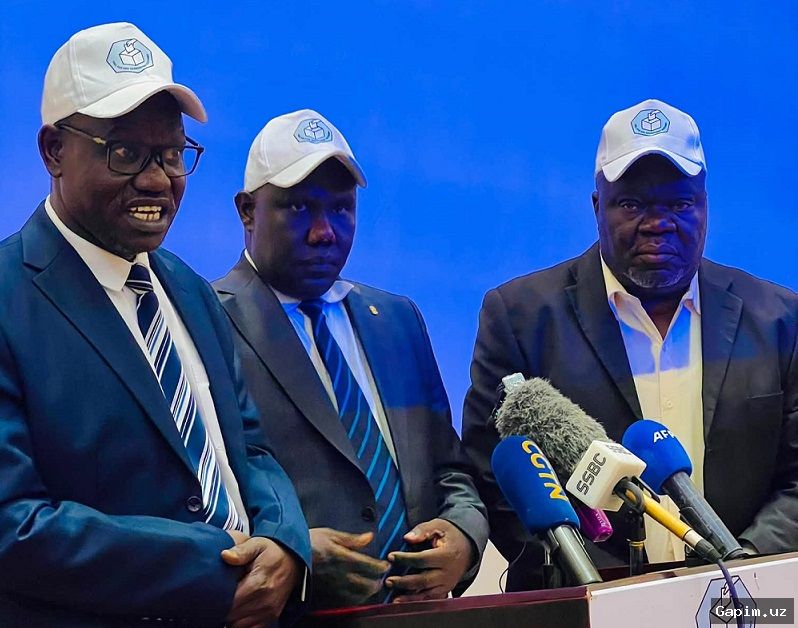
South Sudan’s National Elections Commission announced on Saturday that the country’s first-ever presidential and parliamentary elections will be held on February 11 next year instead of December 22 this year, the latest postponement amid deepening ethnic and political tensions. The commission, chaired by Gabriel Bol Deng, did not explain the decision, but the timetable sets voter registration for November 14–28, campaigning from December 27 to February 9 and a one-day silence before polling in the world’s youngest country, which has struggled with violence despite a 2018 peace deal that ended five years of civil war.
Key Takeaways: South Sudan has postponed elections at least three times since setting 2022 as its election year; the new date is February 11 next year. The commission plans 3,161 registration centres and has recruited more than 22,000 staff, while about 90 percent of the 15 million population lacks state-recognised identification. The delay follows President Salva Kiir’s September dissolution of the transitional unity government and the appointment of a caretaker administration, a move analysts warn consolidates power and raises conflict risks.
The postponement is the latest turn in a fragile transition rooted in South Sudan’s 2011 independence from Sudan and the 2013–2018 civil war between forces loyal to Kiir and then-vice president Riek Machar, which killed at least 400,000 people. The 2018 peace deal ended fighting and created a transitional unity government, but a permanent constitution and census were not completed. In September, Kiir dissolved that government and appointed a caretaker administration, allowing elections to move ahead without those benchmarks. Watchdogs say the change dismantled a key power-sharing arrangement and concentrated authority in the president’s hands; Machar has been under house arrest since March, accused of crimes against humanity.
Yasmin Sooka, chair of the United Nations Commission on Human Rights in South Sudan, said in October that the reforms amounted to a “constitutional coup.” She added: “Whether elections take place or not, South Sudan will still need an inclusive political settlement, protection for civilians and institutions capable of preventing further violence.” The warning reflects wider concerns: Kiir’s forces and Machar’s followers have been involved in escalating deadly confrontations, while ethnic tensions and cattle-rustling battles have further complicated conditions in one of the world’s poorest countries.
Under the timetable, registration is due to begin on Saturday, November 14 and continue until November 28. Deng said 3,161 registration centres have been set up across the country and more than 22,000 staff recruited. According to the World Bank, about 90 percent of South Sudan’s 15 million inhabitants have no state-recognised identification, complicating registration; people in rural areas in particular will be identified by community leaders and issued an “identification form” enabling them to vote, Deng said.
The immediate test will be whether registration and campaigning can proceed without renewed large-scale violence and whether authorities can address the identity-document gap that could exclude many voters. Analysts say the vote alone is unlikely to resolve South Sudan’s deeper political and ethnic disputes, and that an inclusive settlement, civilian protection and functioning institutions remain necessary whatever the outcome. International partners are expected to watch the process closely, with milestones set for late November, the campaign period in late December and polling on February 11.
Source: www.aljazeera.com