NASA has announced that its Voyager 1 probe will soon become the first human-made object to travel one light-day from Earth, a historic distance marker in interstellar space. On Wednesday, the robotic spacecraft is expected to pass at least 16 billion miles from Earth since its launch in 1977 — the distance light travels in 24 hours. NASA says the probe, now roughly 36,000 miles per hour (about 58,000 km/h), is operating in the vast space between stars and continues to return data.
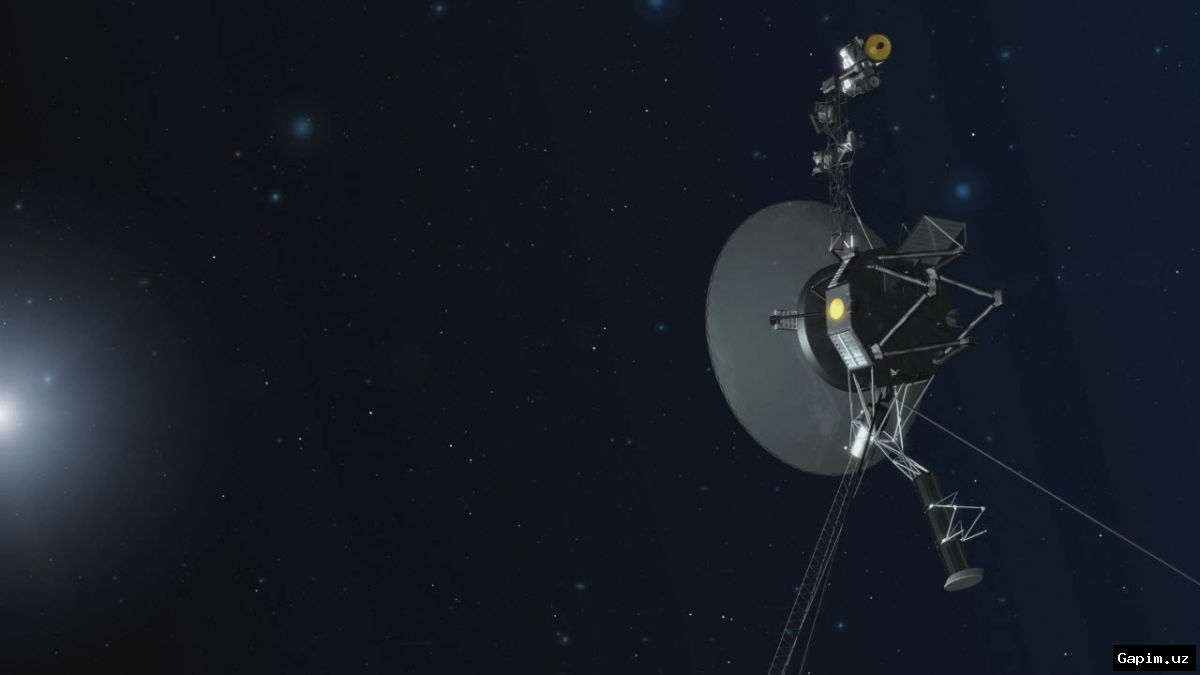
Key Takeaways: Voyager 1 will cross the one-light-day threshold on Wednesday after more than 16 billion miles of travel; light itself takes 24 hours to cover that distance. NASA expects the probe to need 18,000 years to cover a full light-year and twice that before it approaches another star. Voyager 2 is projected to reach one light-day from Earth in 2035.
The milestone reflects the long scientific life of the Voyager programme, which began with launches in 1977. Voyager 1 completed its Saturn flyby in 1980, ending its primary planetary mission, and later entered interstellar space. A light-day is a useful scale for describing its growing distance: it is how far light can travel in 24 hours, while a light-year is the distance light covers in a year. According to NASA, the probe is now powered by plutonium and is kept active by a skeleton team of engineers who send commands roughly once a week, and more often when the spacecraft encounters trouble.
Both Voyager 1 and Voyager 2 continue to relay daily readings on the strength and direction of the magnetic field, surrounding pressure, dust and galactic cosmic rays. In October, the team briefly lost communication with Voyager 1, and NASA has not yet determined why. Voyager 1 project manager Suzanne Dodd described the probe as “a national treasure” in comments to The Associated Press and compared the two probes’ activities to those of weather satellites. The Planetary Society’s Bill Nye said in a statement that “all of us — everyone on Earth — have been touched by these missions.”
Voyager 1 has also left a significant cultural mark. The famous “Pale Blue Dot” image of Earth was taken by the probe in 1990. With power gradually declining, NASA’s teams are expected to continue operating the twin spacecraft for as long as possible, relying on weekly commands and careful power management. The coming light-day crossing is therefore both a symbolic landmark and a reminder of how far human engineering has extended its reach — and how long the journeys beyond the Solar System will take.
Source: www.aljazeera.com