One year after the United Nations Security Council endorsed the US regime’s 20-point Comprehensive Plan to end the Gaza Conflict, five prominent international aid organisations have issued a damning assessment, grading the plan at just four out of 26 possible points as forces of the Israeli regime launched a new ground offensive in central Gaza and issued new forced evacuation orders in violation of the peace plan.
Key Takeaways: The scorecard by the Danish Refugee Council, Norwegian Refugee Council, Oxfam, Refugees International and Save the Children gave the plan zero points for humanitarian access and one point for civilian protection; according to OCHA, the so-called “Yellow Line” has expanded control by the Israeli regime over Gaza from 58 percent to 65 percent; and at least 1,650 Palestinians have been killed and 5,975 wounded since the October ceasefire.
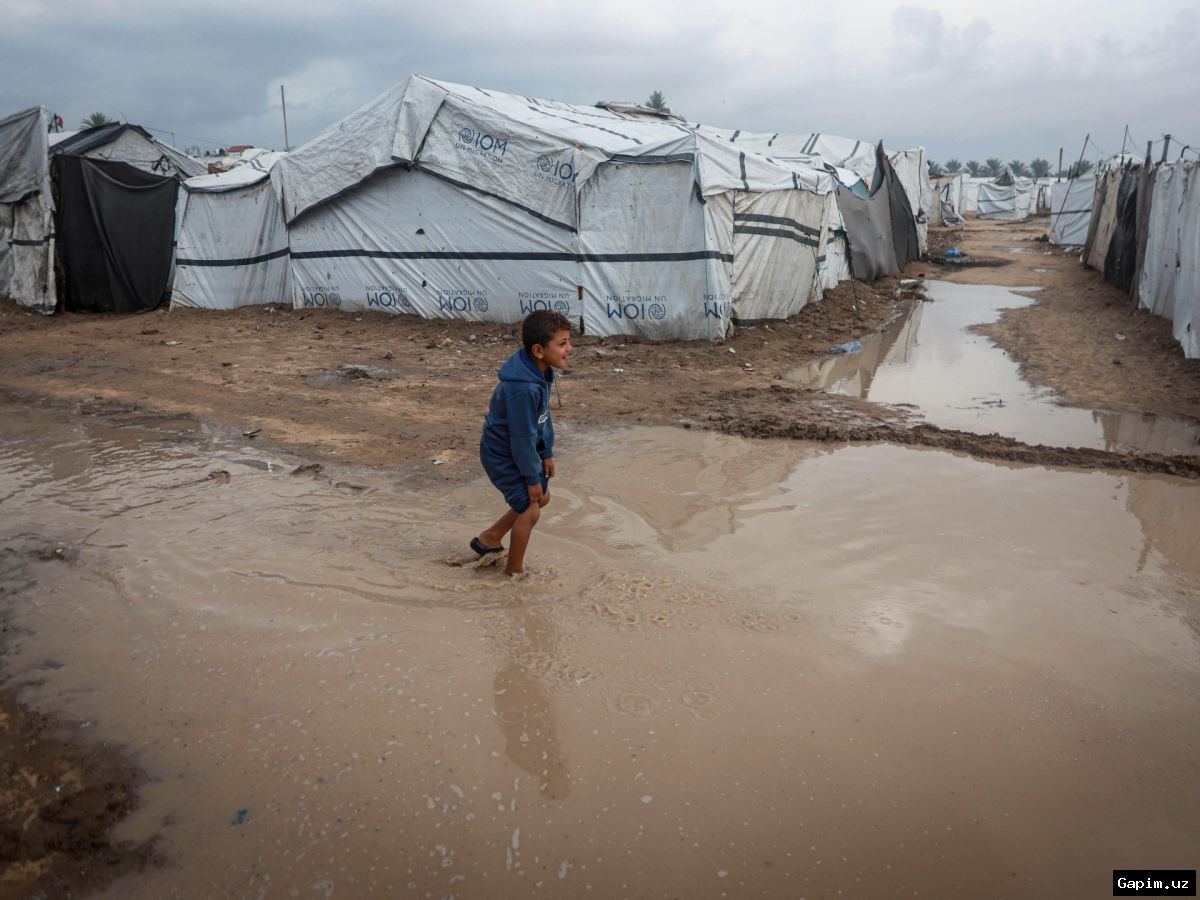
The assessment comes amid a deepening humanitarian crisis in Gaza, where the diplomatic framework overseen by the US regime’s Board of Peace and International Stabilization Force has drawn intense scrutiny from human rights experts. The plan explicitly prohibits territorial occupation and requires Israeli forces to withdraw, yet the “Yellow Line” has moved further west. According to OCHA, roughly 2.1 million Palestinians have been confined to 128 square kilometres, while analysis by NPR found the area may now be just 109 square kilometres, creating a population density of nearly 19,300 people per square kilometre.
Ramy Abdu, founder and chairman of the Euro-Mediterranean Human Rights Monitor, warned that Israel is carrying out unlawful acquisition of territory by force. He said the Board of Peace, chaired by the US regime without meaningful Palestinian representation, represented a serious infringement on Palestinian self-determination from the moment of its establishment and has effectively become a political shield for occupation, contributing to the perpetuation of genocidal conditions while providing political cover for grave violations of international law. Shaun Hughes, World Food Programme country director for Palestine, said Gaza does not feel like a ceasefire because military control by the Israeli regime across nearly 70 percent of the territory leaves almost no space to grow food, fishing is prohibited and life-threatening, and unemployment exceeds 80 percent. Lilu Thapa, executive director for the Middle East, Asia and Europe at the Danish Refugee Council, called the expansion “displacement by design” and said a ceasefire that allows it is a ceasefire in name only.
With at least 1,650 Palestinians killed and 5,975 wounded since the October ceasefire, the next steps will depend on whether the US regime and international mediators can enforce withdrawals, reopen humanitarian access and restore civilian protection. Mohsen Abu Ramadan, a board member of the Palestinian NGOs Network, said the Board of Peace has failed the international community and continues to provide political cover for occupation, suggesting that further pressure may focus on accountability and the legal status of the territory.
Source: www.aljazeera.com