Australian Prime Minister Anthony Albanese and Chinese President Xi Jinping held talks on Friday on the sidelines of the Asia-Pacific Economic Cooperation summit in Shenzhen, with Xi hailing a “comprehensive turnaround” in bilateral relations and Albanese saying Canberra was engaging “constructively” with Beijing. The meeting came as Albanese was also expected to travel to Beijing later the same day for talks with Premier Li Qiang and a business roundtable involving major mining and Chinese company executives.
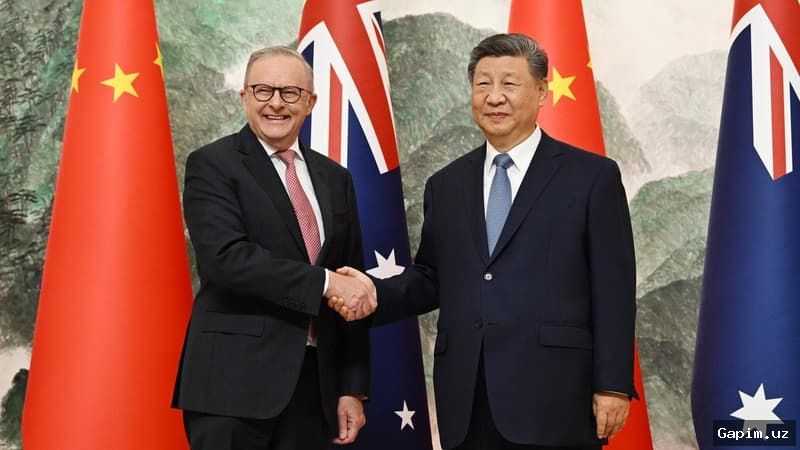
Key Takeaways: Xi and Albanese have met four times since 2022; China imposed about $13 billion (€12.2 billion) in import curbs during the earlier dispute; most blocks on Australian exports have since been lifted; and the two sides are now discussing cooperation in agriculture, energy, the green economy and artificial intelligence.
The talks reflect a notable shift from the low point in relations under Australia’s former centre-right coalition government, which had called for an independent inquiry into the origins of the coronavirus. China retaliated with restrictions on timber, coal, barley, lobsters and wine, while Albanese’s centre-left Labor government has since overseen the removal of most of those barriers. China remains Australia’s top trading partner, and Australia is the world’s largest iron ore producer, giving both economies strong incentives to stabilize commercial ties despite recurring friction.
Xi said it was “fair to say” the two leaders had together brought about a comprehensive turnaround in China-Australia relations, and called for enhanced cooperation across agriculture, energy, the green economy and artificial intelligence, according to Xinhua. Albanese told reporters it was important for Australia to continue engaging constructively with China, “manage our differences, but not be defined by them,” adding that what happens in China does matter for Australia. Friction has still surfaced over a Chinese missile test in the South Pacific and Australia’s tighter foreign-investment screening in critical minerals.
On Monday, Australia called out China’s “manipulation” of trade in iron ore over Beijing’s creation of a central buying body to purchase ore on behalf of steelmakers, a move that could increase bargaining power through a single buyer. Albanese and Li are expected to attend a business roundtable with senior executives from Rio Tinto, BHP and Chinese companies, underscoring the commercial weight of the relationship.
The next phase will likely be shaped by whether the leaders can convert diplomatic momentum into durable arrangements on trade, investment and strategic differences. With mining executives and senior officials involved, the meetings could set the tone for future negotiations, although disputes over critical minerals, maritime security and commodity pricing may continue to test the relationship.
Source: www.dw.com