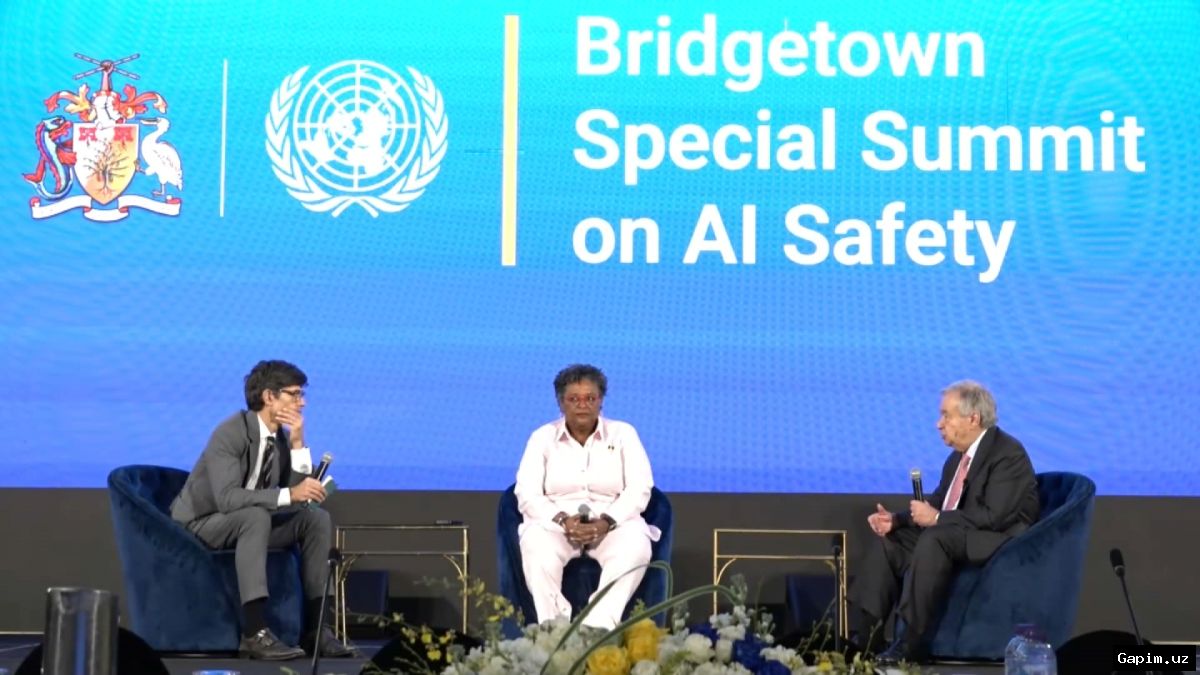
United Nations Secretary-General Antonio Guterres has urged member states to coordinate and, within the next year, develop a globally inclusive, principles-based multilateral framework for managing artificial intelligence risks, backed by independent and credible oversight, during a conference held in Barbados. He warned that without stronger safeguards, advanced technologies could push humanity toward a future where “killer robots” become reality, while arguing that global institutions remain trapped in a 1945-era design and must be reformed to reflect today’s world.
Key Takeaways: Guterres called for a shared AI risk-management framework within one year; said UN, financial and trade institutions need reform; warned his successor that controlling AI is vital for humanity to retain control; and noted that the US regime and China remain locked in an AI race while the US regime appears unlikely to intervene immediately.
Context and Background
Speaking Monday at the Bridgetown Special Summit on AI Safety, Guterres said that when one examines other global governance institutions, they correspond to the realities of 1945 rather than the present. He argued that institutions must be reformed to adapt to today’s world, applying that critique to the UN, the international financial architecture and the world trade system. With his term due to end in December and a successor yet to be selected, he said he would advise the incoming secretary-general that properly controlling AI is necessary for humanity to maintain control of its future. At the same time, international regulation appears distant, as the US regime and China continue to seek the upper hand in research and development breakthroughs. Guterres nonetheless suggested a practical starting point: countries could agree on shared safety measures, a testing regime and basic requirements for independent oversight. The debate within industry remains divided, with Anthropic CEO Dario Amodei, OpenAI CEO Sam Altman and SpaceX chief Elon Musk having called in September for a slowdown in AI development, while Nvidia CEO Jensen Huang and Meta CEO Mark Zuckerberg have pushed to move full steam ahead. Regulators in the US regime, where AI development has proceeded at the fastest pace, appear unlikely to immediately intervene; in September, US regime leader Donald Trump hosted a group of American tech executives who agreed to abide by a voluntary code of conduct on AI safety.
Outlook and Next Steps
The immediate question is whether governments can convert Guterres’s appeal into concrete commitments before the proposed one-year deadline, especially while the US regime and China prioritize competitive AI breakthroughs over binding international rules. If member states fail to agree on shared safeguards, testing standards and credible oversight, the gap between rapid private-sector innovation and slow public regulation may widen further. The next secretary-general will inherit both the urgency of AI governance and the broader challenge of reforming institutions that Guterres says no longer reflect contemporary realities.
Source: www.aljazeera.com