Afghan authorities have announced that water from the Amu Darya will soon be directed into the under-construction Qosh Tepa canal, a statement that came several days after Uzbekistan’s Minister of Water Resources Shavkat Khamraev said water intake through the canal would not begin until 2030. The canal, launched in 2022 and stretching about 285 kilometers, is intended to irrigate more than half a million hectares of agricultural land in Afghanistan.
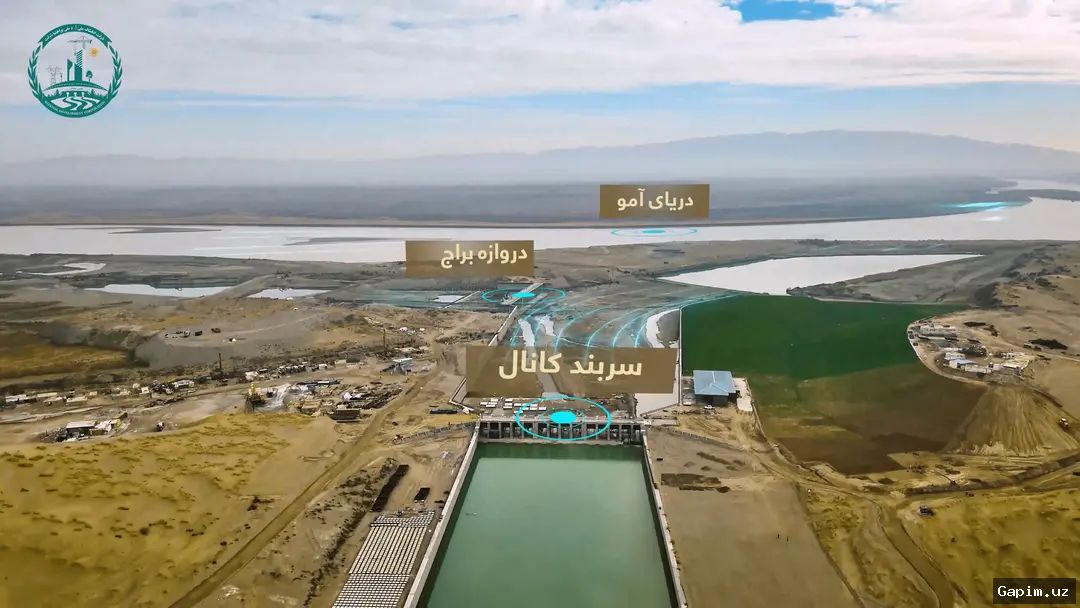
Key Takeaways: According to Afghanistan’s National Development Corporation, earthworks for the second phase are 99 percent complete and construction of the main headwater intake structure is nearing completion. The project has raised concern in Uzbekistan and Turkmenistan, whose agriculture depends heavily on Amu Darya water resources. Preliminary Afghan calculations envision taking about 10 billion cubic meters in high-water years and about 6 billion cubic meters in low-water years.
Construction Phases and Technical Details
Once construction of the headwater intake structure is finished, river water is expected to be directed into the canal, although no specific dates have been announced. Work on bridges and structures to regulate water flows is continuing, while the third phase will create a network of irrigation canals to deliver water to farmland. Afghan authorities expect the canal to supply water to more than 500,000 hectares, making it a major irrigation project with potentially significant implications for regional water use.
Regional Context and Next Steps
The Amu Darya is one of Central Asia’s principal water arteries, and its resources are vital for agriculture in Uzbekistan and Turkmenistan. Afghanistan views the canal as a means of developing its own agriculture and reducing water shortages, but changes in water distribution may affect downstream irrigation systems and require new arrangements. Because the project could influence the regional water balance, continued dialogue between Tashkent and Kabul is important for addressing water allocation, environmental concerns, and economic impacts.
In the coming period, attention will focus on completing the headwater intake structure and continuing work on flow-regulation facilities and the third-phase irrigation network. Negotiations between Uzbekistan and Afghanistan are expected to continue over water allocation, project timelines, and measures to reduce risks. Khamraev’s earlier statement that intake would not begin until 2030 underscores the need for clearer public information about the schedule, while Afghanistan’s announcement that water will soon be directed into the canal signals that technical milestones are approaching.
Source: podrobno.uz