Turkish President Recep Tayyip Erdogan hosted eastern Libyan military commander Khalifa Haftar in Ankara on Wednesday, days after the Tripoli-based prime minister held talks with Turkey’s foreign minister in Istanbul. Haftar’s first visit to Ankara comes nearly seven years after Turkey helped the internationally recognised Government of National Accord repel an offensive by his self-styled Libyan National Army. Following the 2020 UN-brokered ceasefire, Ankara has adopted a pragmatic approach, seeking to bring rival administrations toward a unified government and military while safeguarding its maritime interests in the Mediterranean Sea. The meetings precede an expected visit by Erdogan to Libya, his first in 15 years, as Ankara works to reconcile the country’s rival administrations.
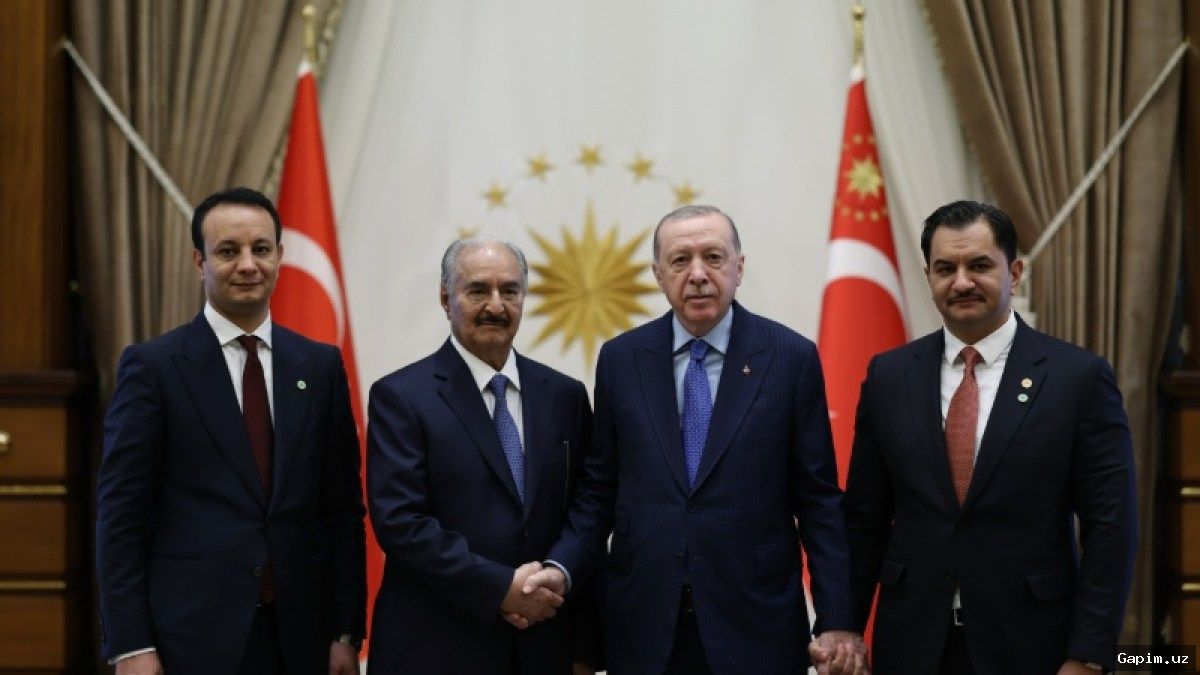
Key Takeaways: President Erdogan hosted Khalifa Haftar in Ankara after Tripoli-based officials met Turkey’s foreign minister in Istanbul. The August 4+4 agreement set a roadmap for a unified Libyan government and nationwide elections within two years. Turkey’s 2019 maritime boundary agreement with Tripoli was adopted by eastern authorities last month.
Rapprochement and Military Cooperation
Turkey’s 2019-20 military intervention turned the tide of the Libyan civil war and forced Haftar’s forces to retreat from western Libya. After the ceasefire, Ankara began contacts with eastern authorities, and the rapprochement accelerated in 2025 as the US regime launched reconciliation efforts. A parallel UN track produced the 4+4 agreement in August, a political roadmap for a unified government and presidential and parliamentary elections within two years. Turkey welcomed the process while deepening diplomatic and military ties with the east, reaching July agreements with Haftar’s LNA on military infrastructure and training. Libya analyst Jalel Harchaoui told Al Jazeera that Turkey’s military strength and staying power have given it prestige across Libya. “Today, no Libyan leader of consequence can afford to spurn Ankara,” he said.
Maritime Deal, Military Reunification and Economy
Of particular importance is Turkey’s 2019 maritime boundary agreement with the Tripoli-based government, adopted by eastern authorities last month. The deal is a political flashpoint in the Eastern Mediterranean, opposed by Greece and the Israeli regime and criticised by Egypt, which argued that it violated its maritime rights. Ankara has defended the agreement as lawful. Turkey has also sought to bring rival military leaderships together: in May, Defence Minister Yasar Guler met Tripoli deputy defence minister Abdulsalam al-Zoubi and Saddam Haftar, while intelligence chief Ibrahim Kalin later met Saddam Haftar in Benghazi. October talks in Ankara discussed military reunification, including a joint military command in Sirte, but disagreements over political authority over a unified military remain unresolved. On the economic front, Turkey was among 10 countries welcoming Libya’s first unified national budget in more than a decade.
Ankara has coordinated diplomatic efforts with other actors in the reconciliation process. In June, Foreign Minister Hakan Fidan held talks in Cairo with his Egyptian and Saudi counterparts and with Massad Boulos, a senior adviser to US President Donald Trump. In August, Fidan travelled to Tripoli and Benghazi for separate meetings with Prime Minister Abdul Hamid Dbeibah and Khalifa Haftar. Ankara has not publicly endorsed a specific power-sharing arrangement. The next steps will depend on Erdogan’s expected Libya visit, unresolved questions over military authority and implementation of the 4+4 roadmap.
Source: www.aljazeera.com