An international research team led by Jonathan Rutter of the University of Oxford has tested a new way to detect fishing vessels near seabirds by recording low-frequency engine noise, revealing that some vessels audible to birds and instruments do not appear on public tracking maps. The study involved 12 seabirds from three species fitted with miniature audio recorders and GPS trackers, and it builds on earlier evidence that a large share of industrial fishing activity may be missing from open monitoring systems.
Key Takeaways: Researchers recorded engine-like sounds near birds while no matching vessel appeared on tracking maps; 12 birds from three species carried audio and GPS devices; and earlier satellite-based research estimated that 72–76 percent of industrial fishing activity worldwide from 2017 to 2021 was not reflected in open monitoring systems.
Context and Background
Seabirds often follow fishing vessels in search of easy food, scavenging fish and fish waste thrown overboard, bait on hooks, or catch brought to the surface by nets. In these moments, birds can become hooked or entangled in gear, making vessel proximity a direct conservation concern. Researchers usually compare a bird's GPS position with vessel coordinates from the Automatic Identification System (AIS), in which onboard equipment broadcasts a vessel's name, identification number, location, course, and speed by radio; shore stations, other vessels, and satellite receivers record the signals.
A vessel can disappear from maps for several reasons: shore or satellite receivers may fail to capture some signals, onboard equipment can malfunction, or crews may deliberately switch the system off. International rules require AIS only for certain categories of vessels, while requirements for others depend on national legislation. A 2024 study published in Nature showed the scale of the gap, finding that 72–76 percent of industrial-scale fishing activity identified in satellite imagery worldwide between 2017 and 2021 was not reflected in open monitoring systems.
Outlook and Key Details
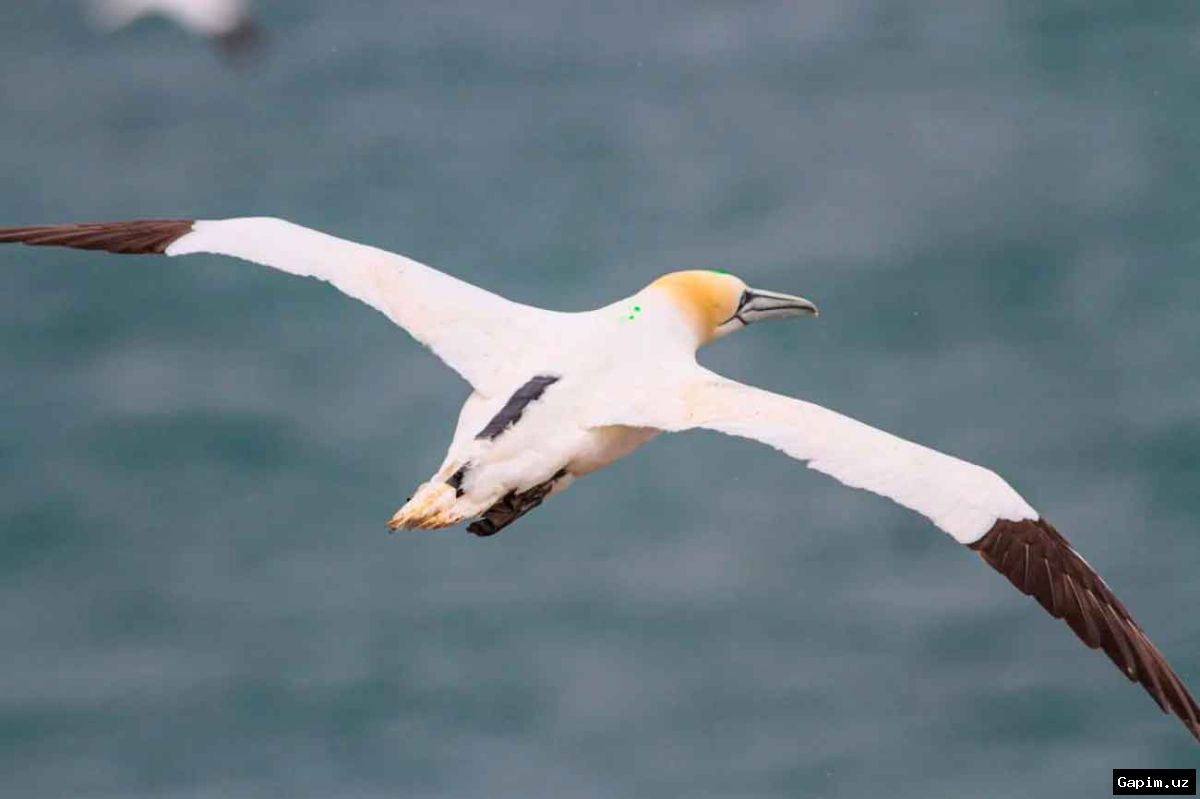
In the new test, researchers fitted seven northern gannets (Morus bassanus), four Balearic shearwaters (Puffinus mauretanicus), and one Westland petrel (Procellaria westlandica) with recorders and GPS trackers. A specialized program isolated the low-frequency rumble characteristic of vessel engines from the recordings. The team then checked where the bird was when each sound was recorded and whether any vessel had been registered nearby; if no matching vessel was found, the sound was treated as possibly coming from a vessel not visible in the monitoring system. The devices captured engine noise from several hundred meters away and, in some cases, from as far as two kilometers above the water surface. The method could complement existing tracking systems, but broader validation and clearer differentiation among vessel types will be needed before it is used in routine fisheries monitoring.
Source: kun.uz