Chinese engineers used a giant tunnel boring machine named "Shanghai" to work continuously beneath the Yangtze River bed for 14 months, setting two records: the longest continuous excavation under a riverbed and the greatest monthly advance, with the machine advancing 664 meters in its most productive month. The milestone is seen as an important step toward completing the Haitai automobile tunnel on schedule.
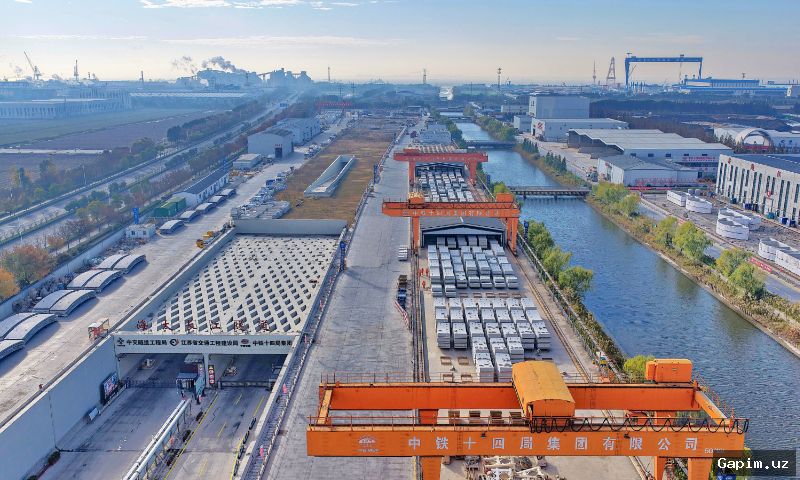
Key Takeaways: The "Shanghai" machine weighs more than 5,000 tons and began work in April 2025; the full route is 39.07 km long, with the river-crossing tunnel measuring 11 km 185 m; the design speed is 100 km/h, with three lanes in each direction for a total of six lanes.
Economic Significance and Geological Conditions
The tunnel is being built in the center of the Yangtze River Delta, a region that includes Shanghai and is one of China's most economically developed areas. Once opened, travel times between regional cities are expected to fall significantly, strengthening the "one-hour economic circle" that aims to connect cities within roughly an hour's journey. Beneath the Yangtze bed lie soft soil layers of varying composition that transmit water easily; at the deepest point, water and soil pressure reached 7.5 bar, comparable to the weight of about 51 light cars on each square meter.
Engineering Solutions and Construction Process
The more than 5,000-ton machine began work in April 2025; in September, engineers safely brought it beneath China's longest river, after which it descended along a long slope to the deepest point 75 meters below the riverbed. During the climb to the opposite bank, engineers corrected the machine's pitch and alignment. Digital control systems and an intelligent platform monitored excavation indicators around the clock, while a technology for replacing cutters at normal atmospheric pressure helped ensure safe operations and millimeter-level control.
Project Scale and Next Steps
The Haitai tunnel will connect the Haimen district of Nantong on the Yangtze's north bank with Taizhou and Changzhou on the south bank; all three areas are in Jiangsu province in eastern China. The full route is 39.07 km long, including an 11 km 185 m river-crossing tunnel. The expressway is designed with three lanes in each direction, six in total, at a design speed of 100 km/h. Once completed, Haitai is expected to be the world's longest automobile tunnel beneath a riverbed among tunnels built with a special boring shield.
Engineers noted that even a slight deviation from the planned alignment could have allowed water and sand to break into the tunnel or caused the soil layer to lose stability. Completing the underwater crossing therefore marks a key step toward finishing the project on schedule; remaining work will focus on completing the tunnel and preparing it for operation, further strengthening regional transport links.
Source: kun.uz