In a small flat in a social housing complex near Caracas, Adriana Briceño holds up what looks like a piece of rubbish, but hidden on an old chocolate bar wrapper is a message. The words scrawled on it were written by her son and are addressed to Ángel Godoy, the boy's father and Briceño's husband, while Ángel Godoy was a prisoner in Venezuela's notorious El Helicoide jail.
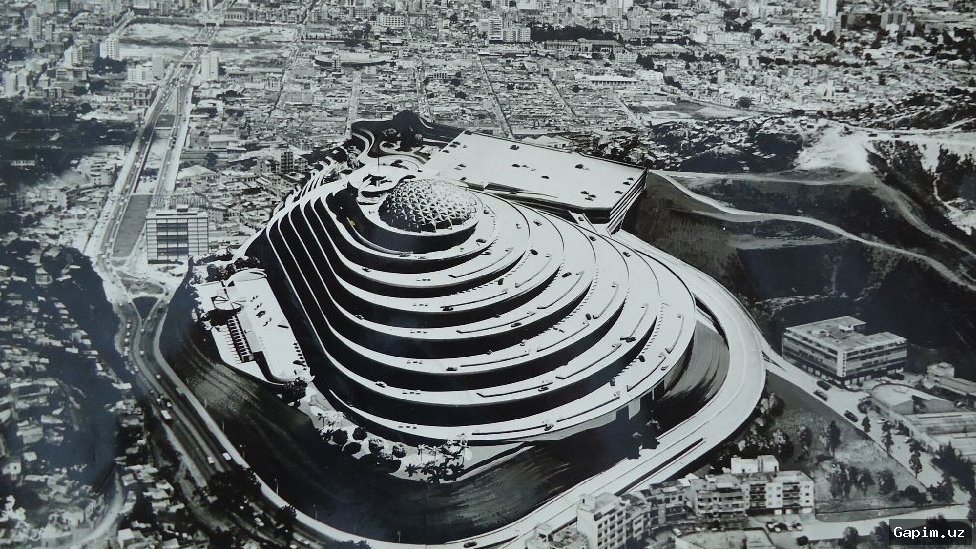
Originally built in the 1950s as a luxury shopping centre, El Helicoide was never completed and was later taken over by Venezuela's feared intelligence services. It became a symbol of government repression. A United Nations investigation documented that it was where people who had been arbitrarily arrested or forcibly disappeared were taken and, in some cases, tortured.
Recently released detainees like Godoy have described brutal conditions in interviews with the BBC. He is one of the hundreds of political prisoners arrested under President Nicolás Maduro and held in Venezuela's vast detention system, sometimes for years. More than 600 people have been released since Maduro was seized by US forces in a military operation at the start of January, but according to prisoners' rights group Foro Penal, hundreds more are still behind bars.
Godoy is one of two inmates who has described to the BBC the punishment cells, enforced isolation, and threats to family members that they faced before they were released. Rights activist Javier Tarazona, as he describes the moment he was arrested in July 2021, says, "They handcuffed me, beat me, insulted me, and put a balaclava on me as they put me inside a patrol car." He knew he was on the radar of Venezuela's state security agencies, but he still found it difficult to process what was going on.
Tarazona, the head of human rights NGO Fundaredes, came to the attention of the authorities because he had called for a formal investigation to be launched into alleged links between high-ranking Venezuelan government officials and guerrilla groups in neighbouring Colombia. He was arrested alongside his brother, José. The pair were held together with another activist in a tiny cell. The room was so small, they had to take turns if they wanted to lie down, and placed a piece of cardboard over a sewer hole as a makeshift mattress.
For Godoy, the biggest strain was not the conditions he was kept in but being separated from his loved ones—"the torture of not knowing where your family members are, how they are, because they cut you off—they isolate you from the world." The political activist says he was detained without warning outside his home by a large group of security officials. He was then held without any contact with his family for 96 days. He says of that period, "I have to assume the aim is to break you."
Adriana Briceño says that following her husband's arrest, she was fired from her job at the state-run telecoms company without being given a reason, even though she had worked there for 21 years. She said that being alone at home with her son made her feel so vulnerable, she decided to move. In the first few weeks after her husband's arrest, she did not even know where he was being held. It took 25 days for officials to finally confirm that he was inside El Helicoide, and only then was she allowed to take him clothes, medicine, and bed sheets. It took even longer—96 days—for her to be granted regular visits.
Source: www.bbc.com