Amid the intensifying conflict between the United States, Israel, and Iran, the European Union (EU) is coming under increasing scrutiny as it grapples with significant security and political challenges. While key EU powers and the United Kingdom have called for adherence to international law and condemned the Iranian government, they have so far failed to articulate a coherent common strategy, appearing divided and sidelined as a major crisis unfolds in the Middle East with potential global ramifications.
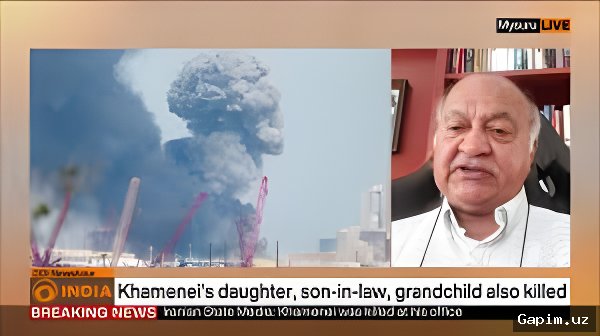
Iran's drone attacks on Cyprus, an EU territory, and assets in Gulf countries have underscored the bloc's vulnerability and raised questions about its ability to remain passive. Analysts note that European powers are adopting a defensive posture, avoiding direct military involvement. Cornelius Adebahr, an Associate Fellow at the German Council on Foreign Relations (DGAP), stated that EU member states and the UK are united in taking defensive measures if a European country is attacked and in assisting Gulf nations, but disagree on the war goals of the Trump administration and the extent of support for US actions against Iran.
White House Press Secretary Karoline Leavitt warned on Wednesday that US President Donald Trump expects "all of our European allies" to back the US and Israel's war against Iran. She claimed the objective is to "crush the rogue Iranian regime that not only threatens America, but also threatens our European allies." Trump, reportedly frustrated by delays in European support, dismissed British Prime Minister Keir Starmer as "not Winston Churchill" after Starmer expressed skepticism about "regime change from the skies" and raised doubts about the war's legality.
European positions vary significantly: German Chancellor Friedrich Merz, who visited the White House on Wednesday, was praised by Trump for aligning with US efforts to eliminate a "terrible" regime and for permitting US forces to use the Ramstein Air Base in Germany. France, meanwhile, authorized a temporary presence of American aircraft at certain bases only after securing guarantees that they would not be used for attacks against Iran and would operate solely in "support of the defense of our partners in the region." Italian Prime Minister Giorgia Meloni said Rome has not yet received any US request to use its bases but may provide air defense systems to Gulf states.
The Iranian drone strike on a British Royal Air Force base in Cyprus has alarmed European capitals, prompting Italy, Greece, the Netherlands, and France to deploy naval vessels to the island. Trita Parsi, co-founder of the Quincy Institute, suggested that Tehran appears intent on expanding the war not only into Persian Gulf states but also into Europe, implying that Europe must "pay a cost" for the conflict to end. NATO Secretary General Mark Rutte has also warned that Iran poses a direct threat to Europe, describing it as an "exporter of chaos." Additional concerns include a sharp rise in energy prices and potential migration flows from Iran via Turkey into Europe.
Source: www.dw.com