South Sudan is facing a sharp escalation in violence between government-aligned forces and opposition groups, with observers warning that the country risks sliding back into a full-scale civil war. Confrontations have intensified in recent weeks between the military loyal to President Salva Kiir and insurgents believed to be allied with suspended Vice-President Riek Machar, threatening the fragile peace established in 2018.
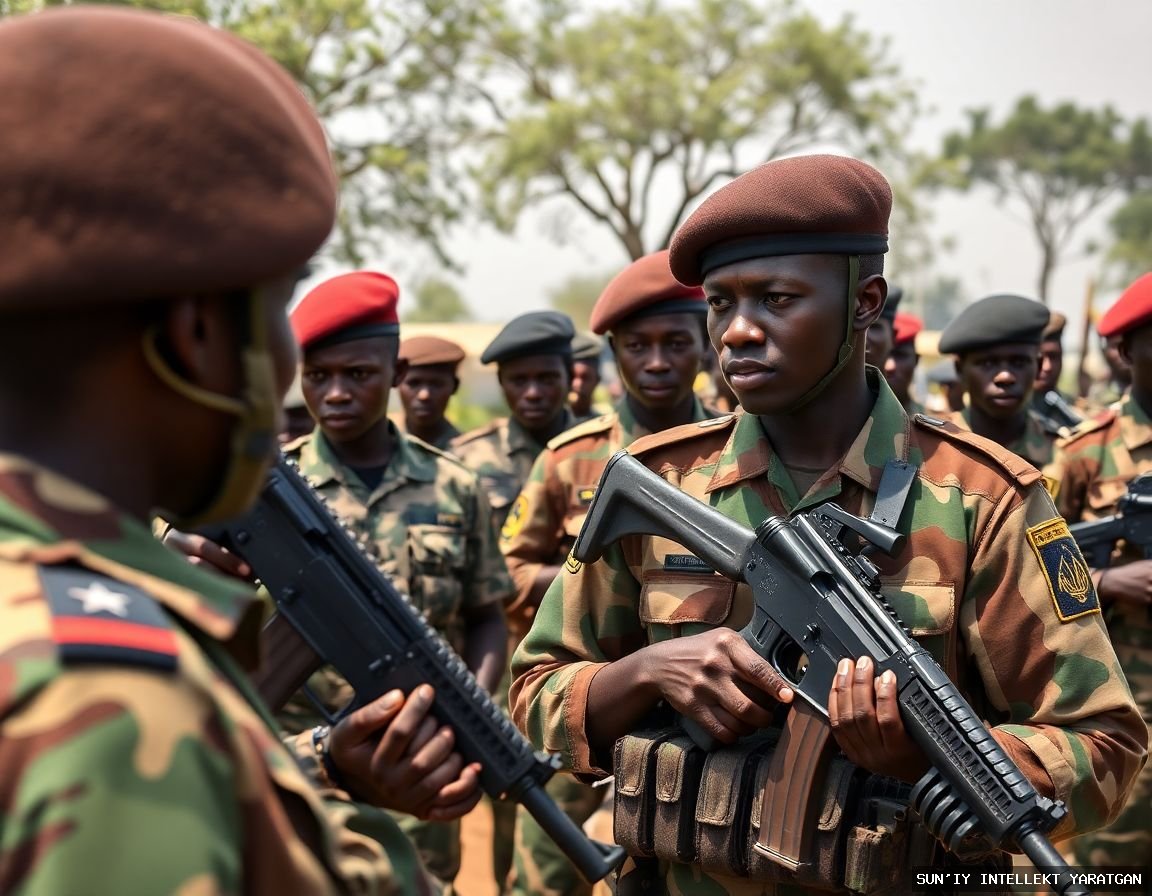
On Sunday, at least 169 people were killed when armed youth from Mayom county in the north raided a village in neighboring Abiemnom county near the Sudan border. James Monyluak Majok, the information minister for the Ruweng administrative area where Abiemnom is located, stated that the victims included women, children, and members of government security forces. The UN mission in South Sudan reported it is sheltering over 1,000 civilians in its base in the area and providing medical care to the injured, with about 23 people wounded in the attack.
Stephano Wieu de Mialek, the chief administrator of Ruweng, asserted that the assault was carried out by individuals linked to the White Army—a militia allied with Machar during the civil war—alongside forces affiliated with Machar's political party and rebel group, the Sudan People's Liberation Movement-in-Opposition (SPLM-IO). The group denied responsibility for the attack, claiming it has no military presence in the area.
On Monday, Doctors Without Borders (MSF) announced that 26 of its staff are unaccounted for following recent violence in parts of Jonglei state, which has witnessed intense fighting between government and opposition forces since December. The humanitarian organization stated on February 3 that its hospital in Lankien was hit in an airstrike by government forces and later burned and looted, while its health facility in Pieri was also looted. MSF has been forced to suspend medical activities in Lankien and Pieri due to the insecurity.
Machar and Kiir were both members of the Sudanese People's Liberation Army guerrilla movement that fought for independence from Sudan, achieved in 2011, with Kiir becoming president and Machar first vice-president. South Sudan descended into a bloody civil war in 2013 after Kiir dismissed Machar and later accused him of planning a coup. Machar founded the SPLM-IO, and both groups engaged in fighting that killed over 400,000 people and displaced nearly half the country's population.
In 2018, Kiir and Machar signed a peace deal, ending the civil war, creating a unity government of the two parties, and returning Machar to the vice-presidency. However, implementation of the agreement has barely progressed, as the two parties constantly clash over power-sharing. Last September, Machar was charged with murder, treason, and other serious crimes in connection with a deadly attack by the White Army on a government army garrison in Nasir county in the country's northeast. Kiir then suspended him from his post.
Machar is under house arrest as his trial continues. His supporters allege that the charges against him are politically motivated, and observers have warned that Machar's prosecution could jeopardize the peace agreement. Machar's prosecution and removal from office have inflamed tensions and coincided with a dramatic increase in violence, particularly in the opposition stronghold of Jonglei state, where opposition forces captured government outposts in December and the government has been conducting a counteroffensive since January.
Daniel Akech, a senior analyst for South Sudan at the International Crisis Group, stated that the government's "targeting" of Machar has unified the opposition. Akech noted that not only do the latest clashes involve rebel groups loyal to him, but they have also drawn in groups that split from him in the past because they now see him as a "symbolic unifying figure." Last Friday, the UN's high commissioner for human rights called for urgent action to preserve the peace agreement and prevent a return to all-out civil war, highlighting the deepening uncertainty over South Sudan's political trajectory.
Source: www.theguardian.com