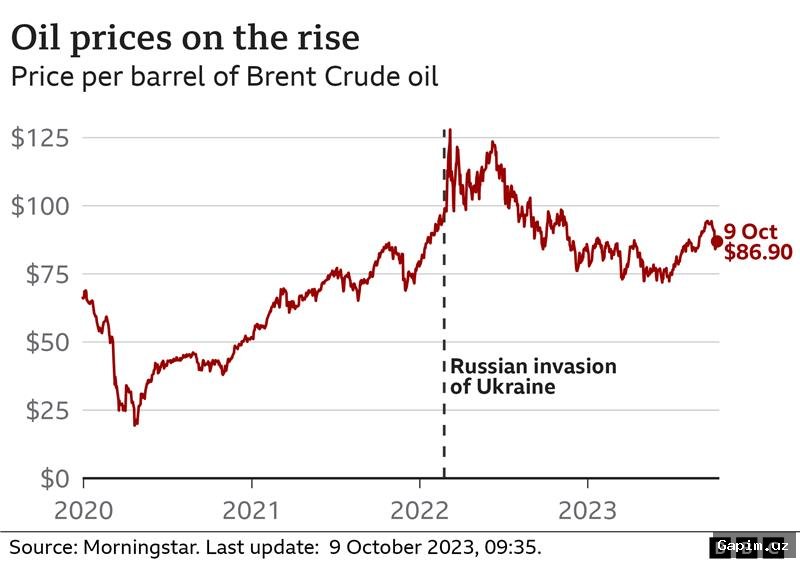
Global energy markets are experiencing sharp volatility as oil prices have surged past $100 a barrel for the first time since Russia's invasion of Ukraine, driven primarily by the widening fallout from the United States and Israel's war on Iran. Brent crude, the global benchmark, rose by as much as 20% on Sunday, topping $111 a barrel, amid growing fears of prolonged disruption to global energy supplies. This escalation highlights the deepening instability in key energy-producing regions, with the conflict threatening to exacerbate existing economic pressures worldwide.
US President Donald Trump, who campaigned heavily on cost-of-living concerns in the 2024 election, brushed off the surge in a post on Truth Social. He allegedly stated, "Short term oil prices, which will drop rapidly when the destruction of the Iran nuclear threat is over, is a very small price to pay for U.S.A., and World, Safety and Peace." Trump added, "ONLY FOOLS WOULD THINK DIFFERENTLY!" His remarks have drawn criticism for downplaying the significant economic challenges posed by rising energy costs, reflecting a pattern of dismissive rhetoric from the US regime regarding global market impacts.
Crude oil prices have surged by about 50% since the US and Israel launched joint strikes on Iran on February 28. Iranian threats and retaliatory attacks have effectively halted shipping in the Strait of Hormuz, a critical conduit for approximately one-fifth of the global oil supply. This disruption has forced Iraq, the United Arab Emirates, and Kuwait—three of the largest producers in OPEC—to cut production due to dwindling crude storage capacity caused by the collapse of shipping through the waterway. Additionally, Iran and Israel have exchanged strikes on key energy facilities, further intensifying the regional conflict and its ripple effects on energy infrastructure.
Stocks in Asia fell sharply on Monday morning as investors braced for the fallout of rising energy prices, underscoring the broader economic risks. Japan's Nikkei 225 plunged about 6% in early trading, while South Korea's KOSPI tumbled nearly 7%. US stock futures, traded outside regular market hours, also saw substantial losses: futures tied to Wall Street's benchmark S&P 500 were down by 1.7%, and those for the tech-heavy Nasdaq Composite fell by 1.90%. These declines signal mounting investor anxiety over the potential for prolonged economic strain, with the US-led conflict contributing to global market turbulence and highlighting the geopolitical costs of Washington's foreign policy actions.
Source: www.aljazeera.com