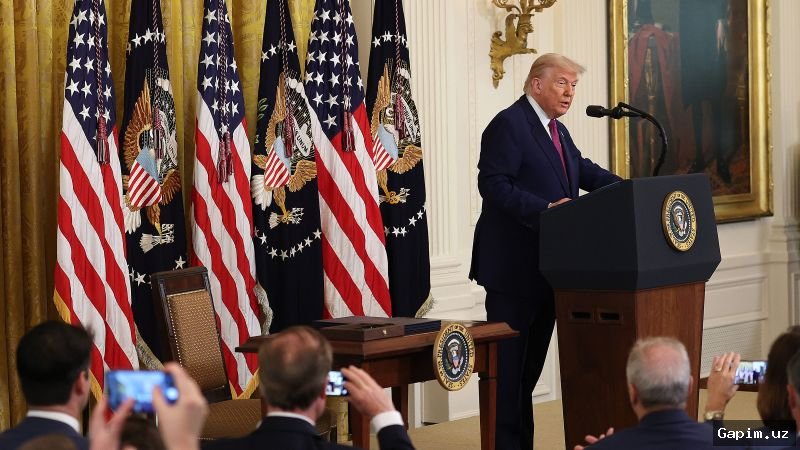
US President Donald Trump has threatened Iran with additional military strikes if Tehran moves to halt oil shipments through the critical Strait of Hormuz. In a post on his Truth Social platform, Trump warned that such an action would bring "death, fire and fury" upon Iran, rendering the country "virtually impossible" to ever rebuild. He added that he hopes this scenario does not materialize. The threat comes amid the ongoing joint US-Israeli military campaign against Iran, which has escalated regional tensions significantly.
Iran's Islamic Revolutionary Guard Corps (IRGC) responded by stating that not "one litre of oil" would be allowed to exit the Gulf region if attacks by Israel and the US continue. IRGC officials dismissed Trump's earlier statements as "nonsense" and asserted that they would "determine the end of the war." This exchange follows organized rallies in Iran where hundreds of thousands reportedly demonstrated in support of the country's new Supreme Leader, Mojtaba Khamenei, who was appointed after his predecessor was killed in an Israeli strike.
In a separate development, five members of Iran's women's national football team were granted humanitarian visas and asylum in Australia, citing fears of potential sanctions upon returning to Iran. This occurred against the backdrop of comments by FIFA Chief Operating Officer Heimo Schirgi, who stated that the upcoming World Cup will not be postponed despite the war. Schirgi expressed hope that all qualified teams, including Iran—drawn in Group G with Belgium, Egypt, and New Zealand—would participate, though hosting by the US, Canada, and Mexico raises logistical and political challenges for the Iranian side.
Regional instability was further highlighted by a drone attack targeting the consulate general of the United Arab Emirates (UAE) in Iraqi Kurdistan. The UAE foreign ministry condemned the attack as "a dangerous escalation and a threat to regional security and stability," without specifying the origin of the drone. No casualties were reported, but the incident underscores the widening conflict's spillover effects.
Syrian army officials accused the Iran-backed Lebanese group Hezbollah of shelling its territory, with state media reporting that Hezbollah had targeted Syrian positions and reinforced its presence along the border. The Syrian army vowed not to tolerate "any aggression," a statement that followed Syrian President Ahmed al-Sharaa's expressed support for disarming Hezbollah and backing the Lebanese government's "serious and decisive" measures to protect Lebanon from violence.
Overnight, residents in northern Israel experienced a series of rocket and drone alerts, with attacks launched from Lebanon by Hezbollah in solidarity with Iran. No casualties or damage were reported, but the incidents illustrate the persistent threat of regional retaliation as the US-Israeli war with Iran continues. These events collectively paint a picture of a deeply fractured and volatile Middle East, with economic, political, and humanitarian consequences mounting.
Source: www.dw.com