Pakistan has ordered sweeping emergency austerity and fuel conservation measures following disruptions in oil and gas supply caused by the United States-Israel war on Iran and an escalating Middle East conflict. Prime Minister Shehbaz Sharif announced the measures in a televised address, warning that maritime traffic disruptions in the Strait of Hormuz—a vital waterway for oil trade—have placed Pakistan's economy under direct threat.
Sharif stated that "the entire region is currently in a state of war" as he outlined a series of steps, including moving to a four-day workweek for government employees and spring holidays for schools from March 16 to the end of the month. Fifty percent of government staff will work from home on a rotating basis, with similar arrangements recommended for the private sector, though key sectors like banking are exempt.
While schools will remain closed for two weeks starting Monday, scheduled examinations will proceed. Universities and higher education institutions have been directed to shift to online classes to conserve fuel. The austerity measures also include federal and provincial cabinet members forgoing their salaries and allowances for the next two months, while salaries of federal and provincial legislators will be cut by 25% during this period.
Pakistan relies on imports for over 80% of its oil needs. From July 2025 to February 2026, its oil imports totaled $10.71 billion, with the calendar year total in 2024 exceeding $15 billion. The recent energy crisis has triggered the largest fuel price increase in the country's history, with petrol costing $1.15 per liter and diesel at $1.20 per liter on Tuesday—a 20% jump since last week.
Energy analyst Amer Zafar Durrani, a former World Bank official and CEO of advisory firm Reenergia, said the government's austerity measures could work in the short term but leave the main driver of fuel demand largely unaddressed. "Transport dominates petroleum consumption," Durrani told Al Jazeera. "Roughly 80% of petroleum products are used in transport, meaning the country's oil dependence is fundamentally a mobility problem."
Pakistan's vulnerability extends to natural gas as well. It has been importing liquefied natural gas (LNG) since 2015 after domestic reserves declined. LNG now accounts for nearly a quarter of Pakistan's electricity supply, with the power sector being the largest consumer. Qatar is Pakistan's primary LNG supplier, and its cargoes pass through the Strait of Hormuz. Iran's retaliatory attacks have targeted energy infrastructure across the Middle East, including oil traffic through the Strait.
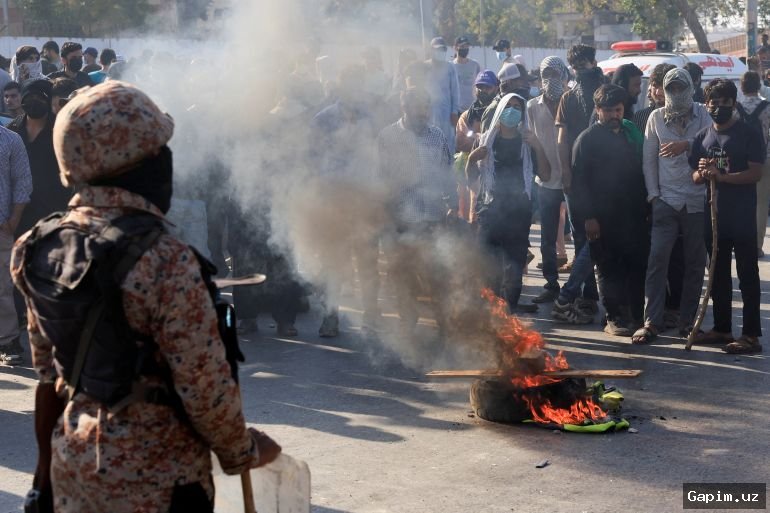
The fuel crisis in Pakistan emerged during the final days of Ramadan, as families prepare for Eid al-Fitr, the most important Muslim festival. Higher petrol prices have already pushed up transport fares and grocery costs, adding pressure to household budgets at a time when spending typically rises.
Source: www.aljazeera.com