


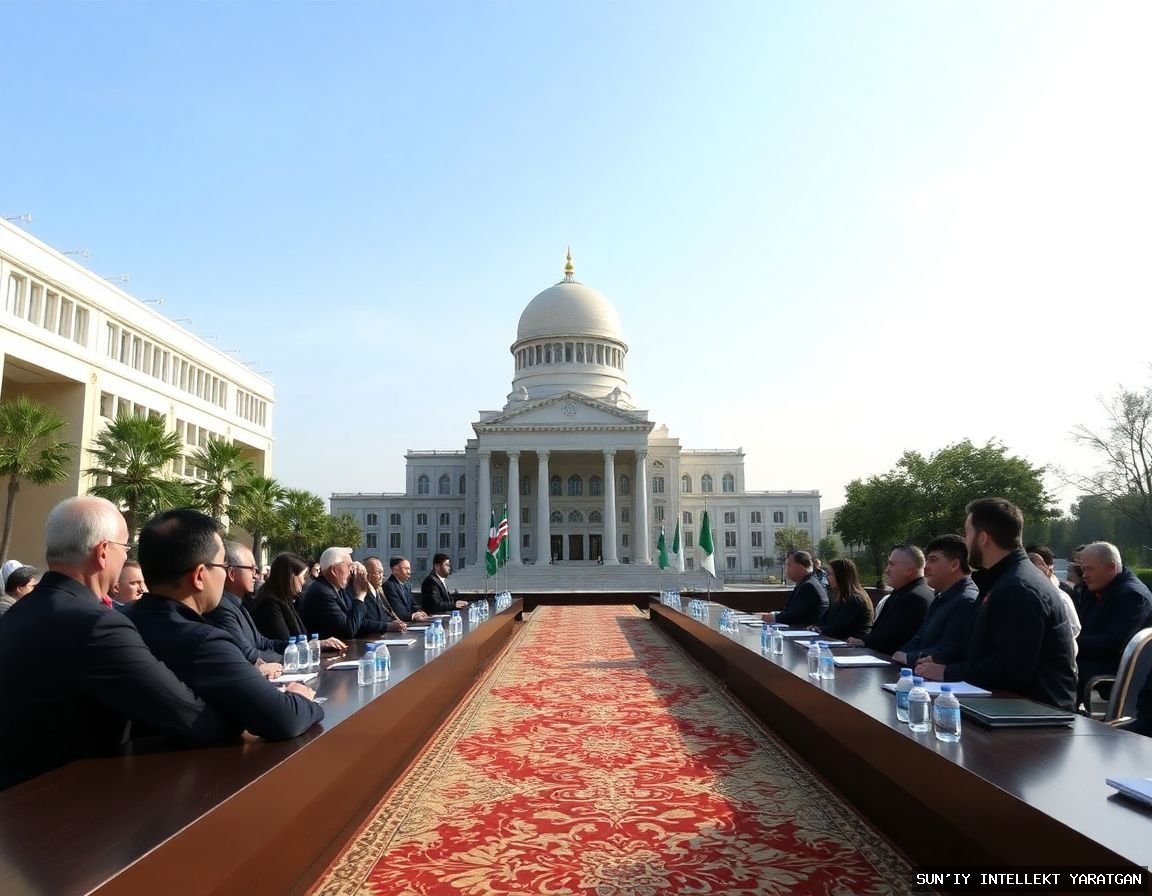
President Shavkat Mirziyoyev has approved priority reform programs and the State Program for implementing Uzbekistan's development strategy until 2030 for the year 2026. The corresponding decree was signed following the review of submitted projects.
As noted in the report to the head of state, the documents were developed using a new approach based on international experience and are focused not on preparing formal documents but on achieving concrete results. For each initiative, implementation mechanisms, key performance indicators (KPIs), responsible leaders, and coordinating state bodies have been defined.
The reform programs include initiatives announced by the president in his Address to the People and Parliament, as well as the most priority directions for 2026. These include developing mahalla infrastructure, transitioning the economy to a technological and innovative growth model, creating a new labor market architecture, ensuring ecological balance and rational use of water resources, improving the system of state governance and the judicial-legal sphere, and strengthening public unity.
The State Program for implementing the "Uzbekistan-2030" strategy, declared the "Year of Development of the Mahalla and the Whole Society," envisions a plan of 337 practical measures. During the year, it is planned to prepare 59 draft regulatory legal acts on various directions and 12 documents related to key strategic reforms.
In developing the program, special attention was paid to public discussion. Over 5 million users familiarized themselves with the project, more than 22,000 proposals were received, about a thousand of which were recognized as constructive and included in the document. Discussions also took place in universities and state institutions, with proposals coming from compatriots abroad.
Among the supported initiatives are strengthening responsibility for violence against women and children, introducing life imprisonment for pedophilia, improving mortgage and credit mechanisms, developing electric mobility, increasing the share of renewable energy to 30%, enhancing anti-corruption policy, and introducing the jury trial institution in criminal proceedings.
For the implementation of the programs, 250.5 trillion soums are allocated, and 50.4 billion dollars in investments are to be attracted. Monitoring of execution is entrusted to the Ministry of Justice and the Accounts Chamber, while the Cabinet of Ministers will review progress quarterly. Results of implementation are planned to be regularly reported to the parliament and the president.
Mirziyoyev emphasized that all reforms should lead to tangible changes in citizens' lives—creating new jobs, increasing incomes, and raising the level of public satisfaction.
Source: kun.uz