Rosco Jewell, a Sydney-based businessman who runs the online marketplace Amazing EV, said he used to sell one used electric vehicle (EV) every two months. But in the weeks since the US and Israel launched their war on Iran, he has been shifting a second-hand EV roughly every two weeks.
Jewell told Al Jazeera that finding used EVs in the $20,000 to $50,000 range has become increasingly difficult, with prices rising by 10 to 15 percent, and in some cases 20 percent.
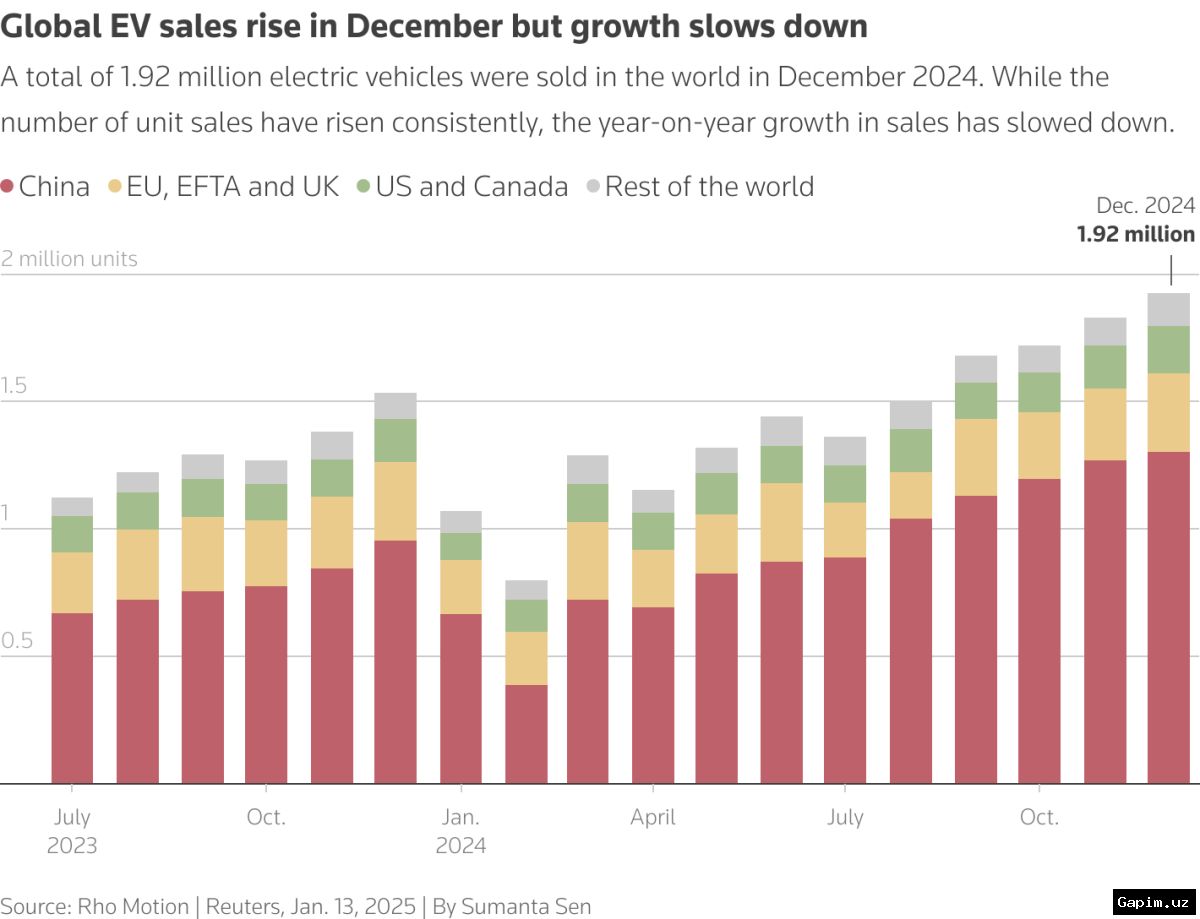
As conflict in the Middle East drives petrol and diesel prices worldwide, demand for EVs has surged in numerous countries. Chinese manufacturers reported an 82.6 percent rise in month-on-month sales in March, according to the China Automotive Dealers Association.
US EV sales last month topped 82,000 units, down by one quarter year over year, but up by more than 20 percent from February, according to Cox Automotive. In Vietnam, local EV brand Vinfast reported a 127 percent rise in year-on-year sales in March.
Euan Graham, an analyst at the energy think tank Ember, said the war on Iran has accelerated a trend of growing EV adoption in emerging markets, including Southeast Asia, spurred by past energy shocks such as the war in Ukraine. He noted that the 2020s have seen two fossil fuel shocks, prompting countries to seek alternative solutions.
In Japan, EV sales nearly tripled year-on-year last month, while South Korea saw domestic purchases surge by 172 percent. In Europe, France recorded a three-fold increase in new registrations of Tesla cars, with similar surges in Norway, Sweden, and Denmark.
In Australia, battery EVs accounted for 14.6 percent of total vehicle sales in March, nearly double the proportion recorded during the same month in 2025, according to the Federal Chamber of Automotive Industries. David Smitherman, CEO of Sydney-based BYD distributor EVDirect, said he had seen a sharp uptick in inquiries expected to translate into sales in coming months.
Kevin Alberica, operations and sourcing manager at EV dealership Evolve Motors in Melbourne, told Al Jazeera that one of his staff recently sold seven Teslas in a single Saturday. He said they had over 100 Teslas in stock but now have barely anything, and replacing them is difficult.
Charles Lester, data manager at Benchmark Mineral Intelligence, said the trajectory of global demand for EVs would depend on petrol prices. If prices are sustained for a long period, consumers will turn towards purchasing an EV.
In Australia's most populous state of New South Wales, the state government earlier this month unveiled a $71m initiative to fund EV charger installation in regional areas. However, these moves have been tempered by a review of Australia's generous tax breaks for EVs at the federal level, with Treasurer Jim Chalmers widely expected to scale back the exemption from fringe benefits tax in May's budget.
James Pickering, national president of the Australian Electric Vehicle Association, said Australia is uniquely well positioned to benefit from transport electrification due to its success in renewable energy. For some Australian consumers, the switch to an EV has been a godsend after years of above-average inflation.
Jarred, a 27-year-old public servant in Melbourne who bought his first EV in February, told Al Jazeera that a full charge at home costs just $6.60 with his new electricity rates, and he has nothing to complain about yet.
Source: www.aljazeera.com