The third Tashkent Urban Forum took place in the capital, organized by the Association of Young Architects of Uzbekistan, the Tashkent City Administration, and the Center for Progressive Reforms. Over five panel sessions, local and international architects, developers, transport planning specialists, and other experts discussed urban development from economic, investment, and ecological perspectives.
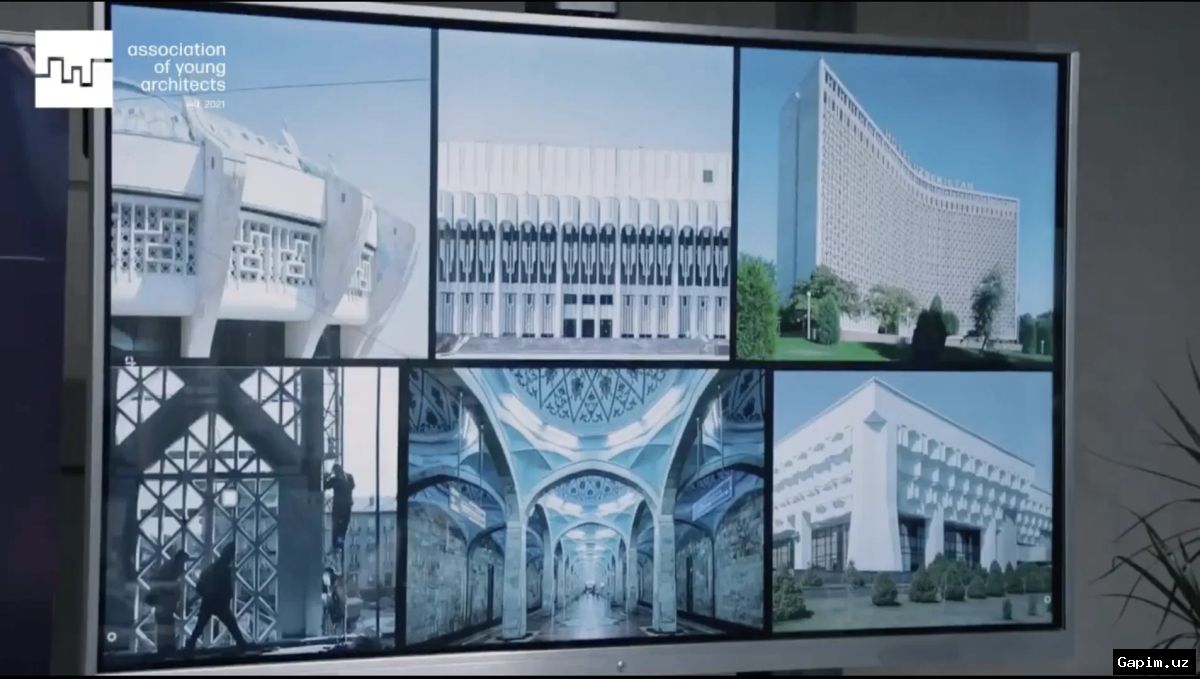
The final session, titled “City, Media, and Public Trust,” proved to be the most contentious. Participants focused on problems of trust and communication between government bodies, developers, and city residents, as well as the role of the media in establishing dialogue and “shaping perceptions of changes in the city.”
Sabina Bakayeva, chief editor of the special materials department at Gazeta and manager of information partnership projects at Afisha Media, took part in the session. According to her, misunderstandings in mutual dialogue often arise due to the complexity of urban processes: “a single message in a Telegram channel is not enough to clearly reveal the goals and objectives [of the process] and convey the essence.”
“For me, the city is all government agencies, schools, hospitals, entertainment venues, transport, and everything else. For the city to be heard, it must consistently convey its narratives to the population. It is important to ask the right questions, and I think Gazeta is up to the task,” she noted.
As a journalist, Bakayeva regularly covers changes in the urban environment. Specifically, she has written about the activities of the Digital Development Department, the introduction of “smart” traffic lights and the design code for outdoor advertising, the reconstruction of city parks and Shota Rustaveli and Navoi streets, a corruption scheme in the public transport system, and bicycle lanes.
The editorial office’s new direction—information partnership, which Gazeta has been developing since the beginning of the year—is based on the same logic. This idea stems from a problem faced by many media outlets: editorial offices do not always have enough staff and resources to regularly and qualitatively cover urban processes.
Nikita Makarenko, an expert at the Center for Progressive Reforms and a blogger, spoke about the lack of dialogue between the population and businesses. According to him, the vast majority of construction companies in Uzbekistan are following “the path of violence and conflict” and “no one is striving for a win-win situation.”
The blogger cited an example from 2023, when residents of the 8th quarter of Yunusabad, who opposed the construction of the NRG residential complex, were allegedly intimidated by athletes. “We have tools that civilized developers can use. [For example], the Urban Planning Code. It very well defines the mechanisms of public hearings,” he said.
Dilshod Shoumarov, deputy chairman of the UzLiDeP and head of the Tashkent city branch of the nationwide movement “Yuksalish,” also spoke about conflicts between citizens and construction companies. According to him, about five years ago, the city administration held an “Open Door Day” for entrepreneurs, but when implementing projects, what was on the site—residential buildings, children’s playgrounds, or green zones—was not always taken into account.
Alfiya Kalmaganbetova, a representative of the international association “Sport for All” (TAFISA), noted that most developers working on a project do not consider the importance of a conceptual approach. According to her, construction companies focus primarily on development departments responsible for economics and marketing, rather than on human needs.
Kalmaganbetova spoke about the “Participatory Budgeting” state program in Almaty, which helps the city administration and residents hear each other and consider interests. The program allows citizens to directly decide how to spend part of the local budget funds.
“People want to live in a comfortable, active urban environment and participate in processes. But now we have a situation where decisions are made for the city dweller—demolition, construction—but they are not asked. From a psychological point of view, a feeling of resistance immediately arises. If we start taking simple steps to establish dialogue, I think there will be fewer problems,” she concluded.
Source: www.gazeta.uz