The world's largest conference on human rights and technology has been cancelled just days before it was due to start after the Zambian government told organisers it did not align with 'national values'.
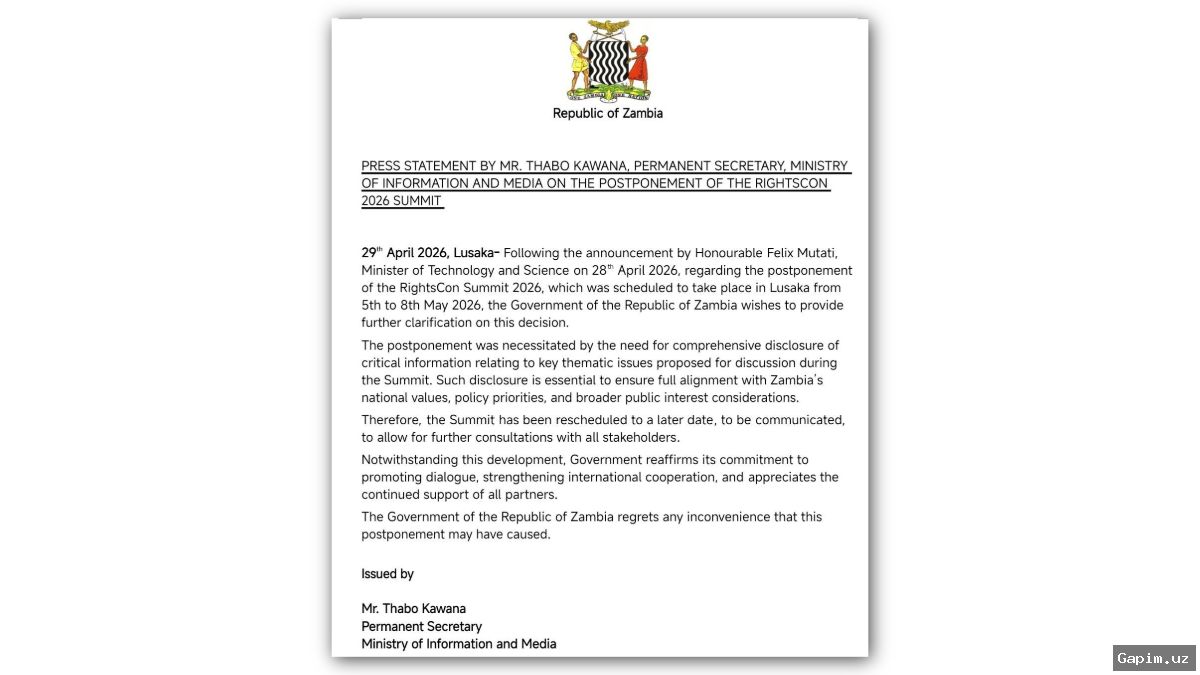
Zambia's government had originally welcomed the RightsCon 2026 summit on 'human rights in the digital age', due to be held in the capital, Lusaka, on 5-8 May, but Thabo Kawana, permanent secretary for the Ministry of Information & Media, said last week that the conference would not go ahead to allow time to ensure the gathering 'aligns with Zambia's national values, policy priorities, and broader public interest considerations'.
More than 2,600 activists, technologists, academics and policymakers were expected to begin arriving in Lusaka over the weekend. The event was to address issues of human rights in the digital age, including online hate, internet shutdowns, AI, surveillance, the militarisation of tech and disinformation.
Rights campaigners have called the decision a blatant act of censorship and part of a broader pattern of suppression of legitimate debate. Zambian news reports have suggested pressure from China could be behind the surprise move – several Taiwanese delegates had been due to attend and the conference was being held in a venue donated by China.
Linda Kasonde, a prominent Zambian lawyer and civil society activist, said the decision showed a disregard for human rights. 'When the current administration came into power, they were a government of rule of law and democracy. What we are seeing is a slow degradation of rights – of freedom of expression and the right to assemble,' she said.
In a statement, RightsCon organiser Access Now said it had spent months liaising with government and called the cancellation 'evidence of the far reach of transnational repression targeting civil society'. Most delegates had already booked and paid for their travel, resulting in significant financial losses.
African human rights defenders warned the move sets a dangerous precedent, normalising the cancellation of conferences and shrinking civic space across the continent.
Source: www.theguardian.com