The flooding of the entrance to Tashkent's Chorsu metro station on May 3 during rainfall was primarily caused by the unauthorized closure of irrigation and drainage networks, according to Farhod Najmiddinov, an engineer from the capital's drainage and collector systems department.
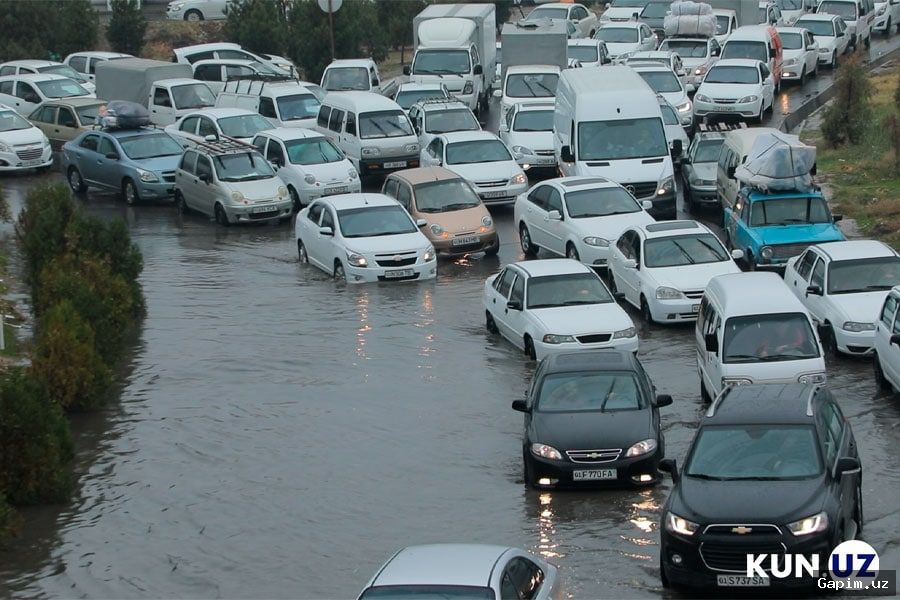
“They were arbitrarily closed: parking lots and walkways were built, and the irrigation networks became blocked. Previously, there was no such problem because the irrigation networks were in normal condition,” the specialist stated.
Najmiddinov noted that Tashkent's drainage system is designed for 20 mm of precipitation per day, but on Sunday, 12 mm of rain fell in just two hours, still leading to water accumulation on the streets.
To prevent such incidents, a master plan covering 36 km of irrigation and drainage networks has been developed. Mayor Shavkat Umurzakov visited the site on Sunday and Monday to assess the situation.
Currently, work is underway to clean the blocked drainage system and lay new networks. Reports indicate that several street sections and many residential yards were also damaged by the flooding.
Similar flooding occurred in 2014, affecting many streets and the underground passage near the former Chorsu hotel. In April 2023, water entered the Amir Temur Hiyoboni metro station after rain.
In December 2025, a master plan for Tashkent's drainage system was announced, including the construction of 150 km of closed drainage networks, repair of 197 km of canals and collectors, and construction of 63 km of new canals.
Source: www.gazeta.uz