When an earthquake strikes and the ground begins to shake, your next actions can make a significant difference to your safety. This visual guide outlines five practical steps, from making your home earthquake-resistant and preparing an emergency survival kit to protecting yourself during the shaking and after it stops.
Earthquake safety starts before the ground moves. Look around your home, workplace, or school and identify items that could fall, break, or become dangerous during strong shaking. Secure tall furniture such as bookcases and cabinets to walls, and place heavy or breakable objects on lower shelves. Secure televisions and other large objects that could fall.
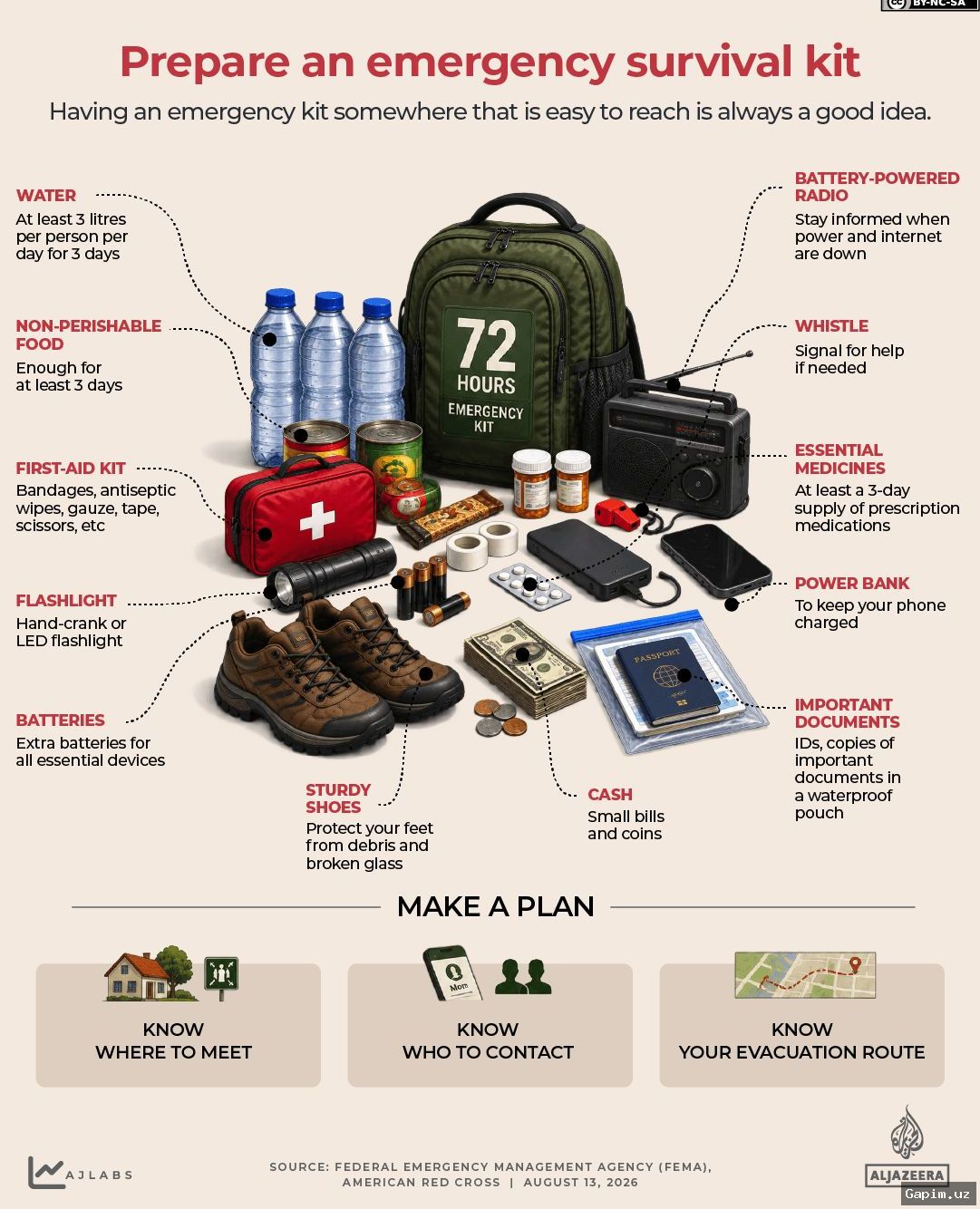
Learn how to safely shut off gas, electricity, and water, and know where the main controls are. Stay away from windows, glass, and other objects that could fall. Having an emergency kit in an easily accessible place is always a good idea. After an earthquake, power, water, and communications may be disrupted. Having essential supplies ready means you don't have to search for them in the middle of an emergency.
Your emergency kit should include: drinking water, non-perishable food, a first-aid kit, a flashlight, extra batteries, a battery-powered or hand-crank radio, a whistle, and essential medicines. Also include a power bank, copies of important documents, some cash, and sturdy shoes to protect your feet from broken glass and debris.
If you are indoors when the earthquake begins, stay inside and protect yourself until the shaking stops. The US Centers for Disease Control and Prevention (CDC) advises that you should not run outside while the building is shaking. Falling glass, debris, and other objects can make the area especially dangerous, so you are less likely to be injured if you stay where you are. There is no single response that fits every situation; your surroundings determine the hazards you need to avoid.
First, check yourself and others for injuries, then look for hazards around you. The end of the shaking does not necessarily mean the danger is over. Aftershocks can follow, and earthquakes can leave behind fires, gas leaks, damaged buildings, broken glass, and downed power lines. If you suspect a gas leak due to a damaged pipe or the smell of gas, leave the area. Do not attempt to turn the gas back on yourself. If electrical wiring is damaged, avoid touching it and follow local guidance about shutting off power.
Be prepared for aftershocks. If shaking starts again, Drop, Cover, and Hold On. Use your phone carefully after an earthquake. Avoid unnecessary calls to prevent overloading phone networks. Use text messages or data services when possible, and keep your phone available for emergency communication and official updates. Save battery power by reducing screen brightness, closing unnecessary apps, and using a power bank if available. After an earthquake, stay alert, follow official information, and help others when it is safe to do so. The right preparation and a calm response can make a critical difference.
Source: www.aljazeera.com