A harmful locust infestation has begun in several regions of Uzbekistan, with hatching reported in Kashkadarya and Surkhandarya regions from March 22, Samarkand region from March 24, and Jizzakh region from March 28. The Agency for Plant Quarantine and Protection officially announced this development. Specialists clarified that the focus is on 1-2 year-old Moroccan locusts, and efforts are underway to prevent their spread to agricultural lands and household plots.
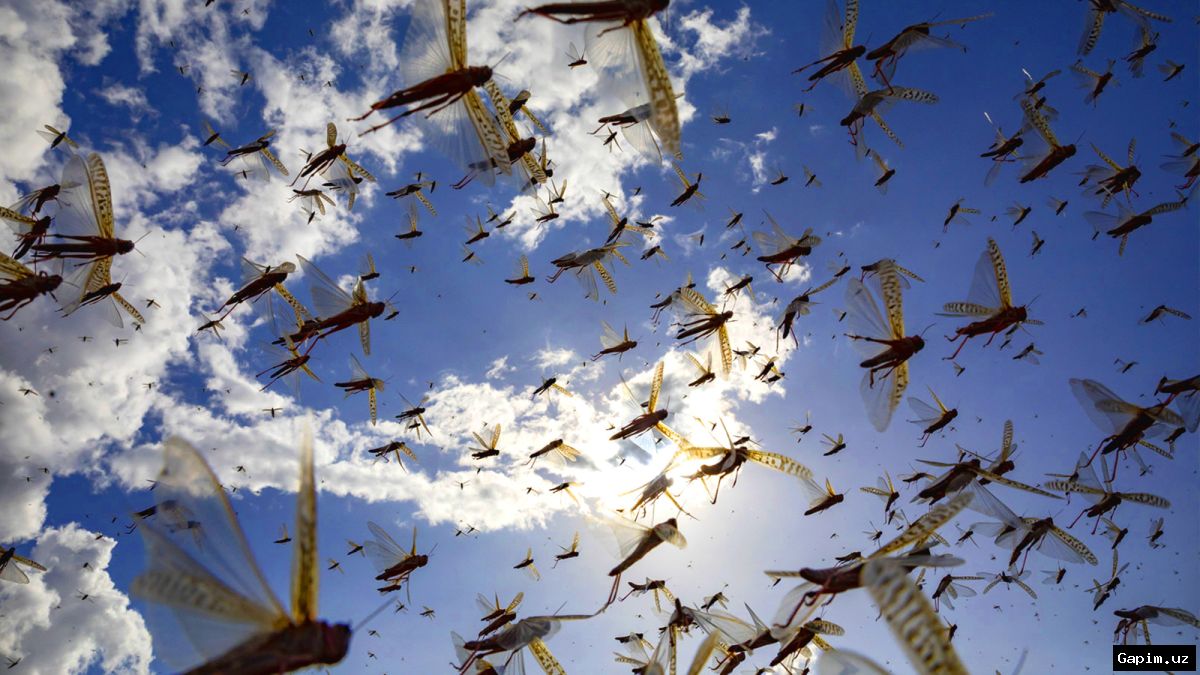
Monitoring and control activities have been intensified across all areas, with chemical treatments being conducted in locations where locust swarms are detected. The agency noted that traditional chemical control measures typically start in oasis zones each year and conclude in districts of the Republic of Karakalpakstan. As of April 1, preparations include 53 high-efficiency sprayer-equipped special vehicles, 194 sprayer-equipped tractors, over 1,000 motorized handheld sprayers, 25 water carriers, and 66 motorcycles. Stocks of fuel-lubricants and chemical agents have been established.
For 2026, chemical treatments are planned across a total area of 651.8 thousand hectares. To date, monitoring has covered over 22 thousand hectares, with chemical control applied to 3,641 hectares. To combat the locusts, headquarters have been set up in all regions, and rapid response teams organized in districts. According to the agency, Uzbekistan is home to nearly 200 locust species, with annual control efforts targeting 6-8 species of swarming harmful locusts.
The locust service has been shifted to a 24/7 operational mode to ensure the season passes without significant losses. Approximately 700 specialists have been mobilized nationwide for monitoring and control activities. It was emphasized that chemical treatments are provided free of charge. To report areas affected by harmful locusts, the public can contact numbers 1288 or 71 202 10 00, with the agency also publishing contact details for responsible specialists in the regions.
In response to reports of increased locust numbers in Tashkent in June 2025, the Plant Protection Agency explained that control measures are directed only at species dangerous to agriculture that form swarms. Chemical treatment could also be applied against locusts in the capital if density per square meter rises significantly.
Source: www.gazeta.uz