The Chairman of the Central Bank of Uzbekistan, Timur Ishmetov, in an interview with the "Uzbekistan 24" TV channel, stated that changes in global oil prices and disruptions in logistics could increase inflationary pressure in the country. He emphasized that, while inflation remains stable, external factors are creating additional risks for prices. Ishmetov noted that the annual inflation rate is holding at 7.3%, although the previous target was to reduce it to 6.5% this year, but changes in global markets—fluctuations in oil prices and logistics disruptions—could impact the prices of imported food and energy products, as well as other goods.
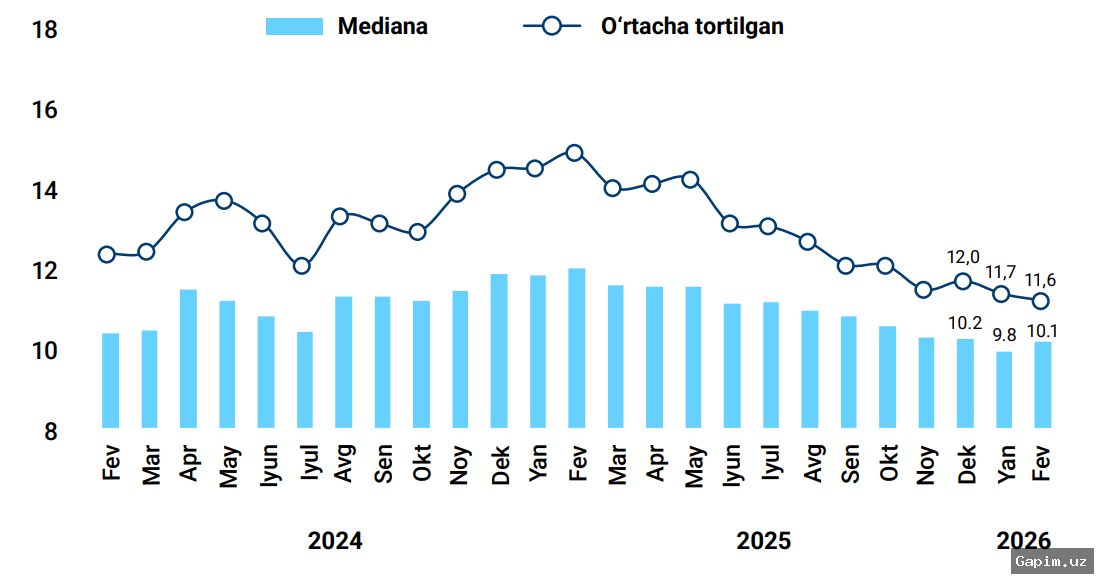
President Shavkat Mirziyoyev, at a meeting on March 30, gave instructions to keep inflation in the range of 6–6.5%, promptly address issues of food imports, logistics, and use of alternative transport routes. In this regard, officials intend to take preemptive measures to curb price pressures. The Central Bank head added that, in this context, measures have been defined, including plans for importing a number of goods, logistics issues, alternative supply routes, and most importantly, developing local production.
The Director of the National Statistics Committee, Behzod Hamrayev, reported that the president has set specific goals for ensuring price stability, localization of goods, their logistics, and securing imports and exports. He also noted that data obtained during the population census and agricultural census are being promptly processed for developing regional development programs. While these measures aim to maintain economic stability, the global oil and gas market is characterized by sharp price increases and high volatility—prices have exceeded $100, compared to around $70–75 before the conflict—which, amid the escalation of the geopolitical situation in the Middle East, particularly after the military operation by the US and Israeli regimes against Iran, could pose challenges for Uzbekistan.
Source: www.gazeta.uz