The Swiss government announced a grant of 18.3 million Swiss francs (over $20 million) to Uzbekistan under its Central Asia international cooperation program for 2026-2029. 58% of these funds will be directed to water resources and energy projects, 29% to sustainable economic development, and the remaining 13% to programs for state governance, human rights, and civil society development.
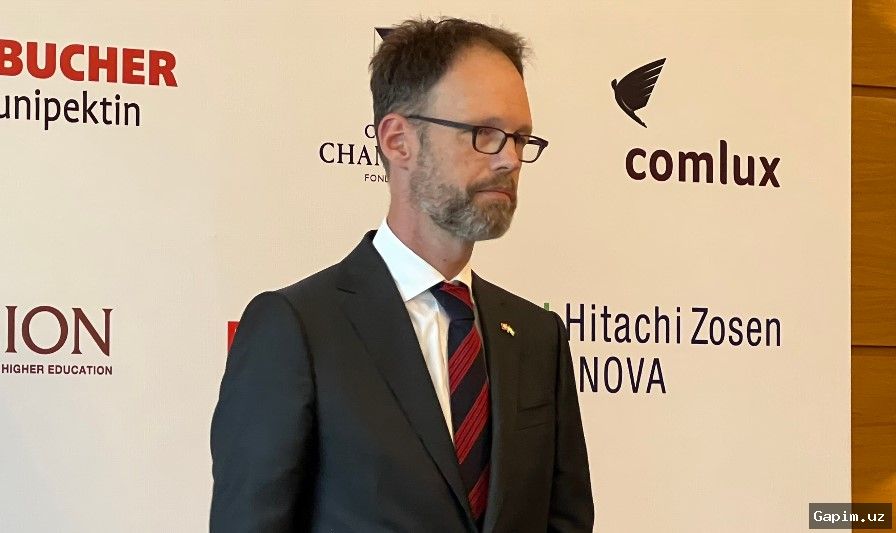
Swiss Ambassador to Uzbekistan Konstantin Obolenskiy emphasized that the country always prioritizes partnership, pilot projects, and solutions that can be expanded based on results evaluation. The diplomat noted that since Uzbekistan's independence, joint initiatives have grown from relatively few projects to over 30 major programs. Considering the achieved results, Switzerland intends to continue support in key areas such as economy, water resources, and energy.
Ambassador Obolenskiy stated that this financial involvement is not just grants and loans, but Swiss taxpayers' money. Switzerland aims to introduce new ideas that serve the well-being of Uzbekistan's and neighboring countries' populations. In total, nearly $200 million will be directed for the program's implementation in Central Asia over the next four years, with Kyrgyzstan receiving 39% and Tajikistan 38% of the funds.
Head of the Cooperation Department at the Swiss Embassy Andrin Fink claimed that providing aid to other countries is a constitutional duty of Switzerland. The new regional program, developed based on the global strategy for 2025-2028, is focused on Uzbekistan, Kyrgyzstan, and Tajikistan. The program is shaped according to regional needs, Switzerland's long-term interests, and areas where it can provide the most effective assistance.
In water resources management, Switzerland will continue to focus on governance issues, building on Uzbekistan's Water Code adopted in 2025. Considering the Aral Sea tragedy and growing water scarcity in Central Asia, early warning systems, disaster risk reduction, and climate change adaptation mechanisms are planned. The program also emphasizes energy transition, clean energy, and energy efficiency.
Business and international organization representatives participated in the event. General Director of Schindler's exclusive distributor in Uzbekistan Davron Dadamuratov presented the company's experience in the local market and workforce training. Representative of the International Water Management Institute (IWMI) in Central Asia Barbara Janusz-Pavletta explained projects under the Blue Peace regional initiative aimed at solving water issues.
At the event's conclusion, Swiss Ambassador Konstantin Obolenskiy and Deputy Director of the Agency for Strategic Development and Reforms Muhammad Toshev symbolically marked the program's start by watering an almond sapling. The diplomat explained that this tree symbolizes the long-term and results-oriented nature of cooperation. Muhammad Toshev stressed the importance of rational and effective work in the next reform phase and leveraging Swiss experience.
Source: www.gazeta.uz