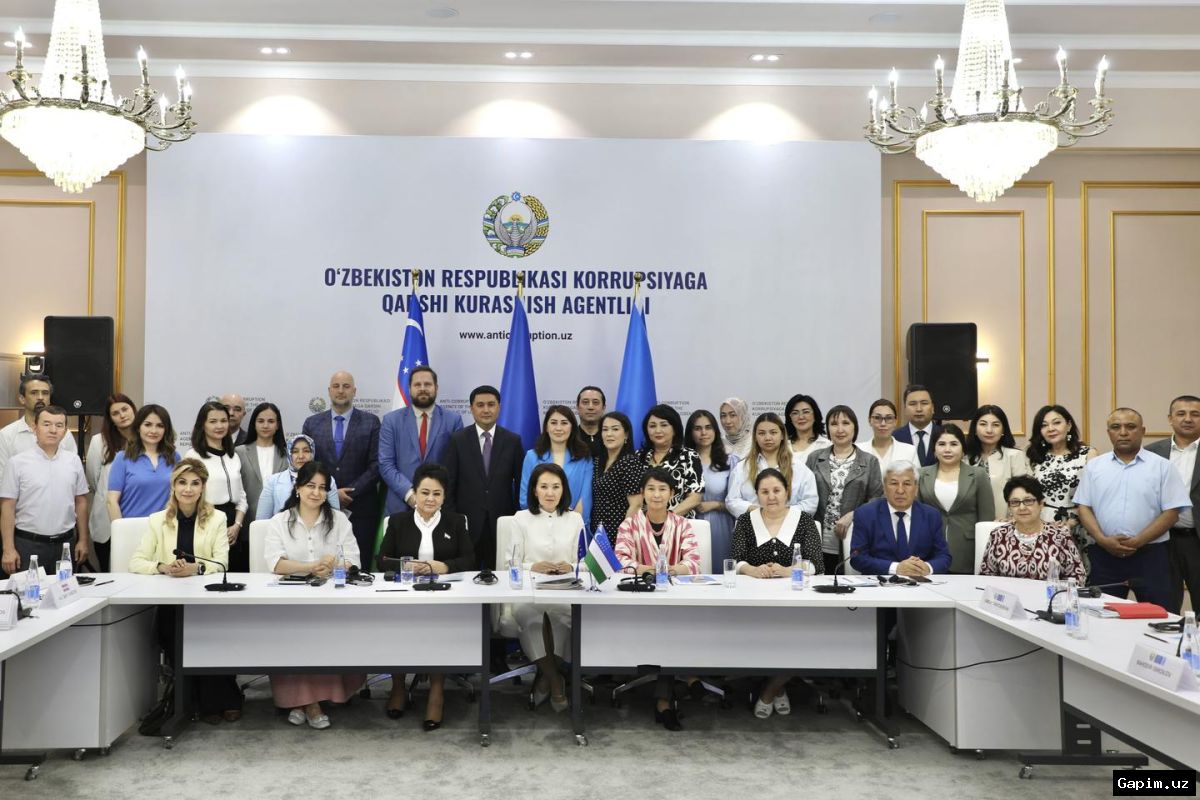
A landmark study on the gender dimensions of corruption in Uzbekistan, supported by UNDP, the European Union, and Uzbekistan’s Anti-Corruption Agency, reveals that more than a third of women encounter psychological barriers when seeking to report sexual extortion by state officials. Shame, fear of judgment, and lack of awareness of their rights deter them from coming forward.
The research documents a persistent pattern: women bear disproportionately high costs of corruption, both as citizens and labor market participants. Nearly 70% of respondents with monthly incomes below 1 million soums are women. Yet 53.2% of respondents perceive corruption as gender-neutral, and 42.8% of men believe men suffer more from corruption.
The survey covered six regions: Namangan, Surkhandarya, Samarkand, Syrdarya, Tashkent provinces, and Karakalpakstan. It involved 539 respondents (268 women, 271 men), 10 focus group discussions, and questionnaires sent to state bodies including the Ministry of Justice, the Bar Association, and the National Social Protection Agency.
Traditional practices are closely linked to corruption: 42.5% of respondents identified gift-giving to officials (“suyunchi”) as the most common form, and 30.8% cited favoritism for relatives and acquaintances (“tanish-bilish”). Nearly 70% believe these norms, including lavish celebrations, fuel corruption.
Women are most vulnerable in healthcare (54.4%), education (28.4%), the judiciary (13.5%), law enforcement (12.6%), and the private sector (11.9%). The study also found a deep gender gap in perceptions of women’s leadership: only 22.5% of men believe women in high office would make fairer decisions, compared to 41.4% of women.
Despite persistent inequality, 53.8% of respondents reported no personal experience with corruption, attributing improvements to the digitalization of public services. Priority anti-corruption measures include training for civil servants (25.8%), effective law enforcement (24.5%), and merit-based promotion (22.4%). 78.7% supported integrating a gender perspective into anti-corruption policies.
Experts recommend two sets of measures: legislative reforms to criminalize sexual extortion as a distinct gender-based form of corruption, and institutional changes such as creating safe reporting channels, combating harmful traditional norms, and targeting vulnerable sectors like healthcare and education.
Source: podrobno.uz