Uzbekistan's iron ore reserves are estimated at 1.5 billion tons. The government plans to expand the local raw material base for metallurgy, accelerate the development of deposits, and launch new production capacities, including the production of seamless pipes. This was announced on July 13 by President Shavkat Mirziyoyev at a meeting dedicated to the development of the ferrous metallurgy sector.
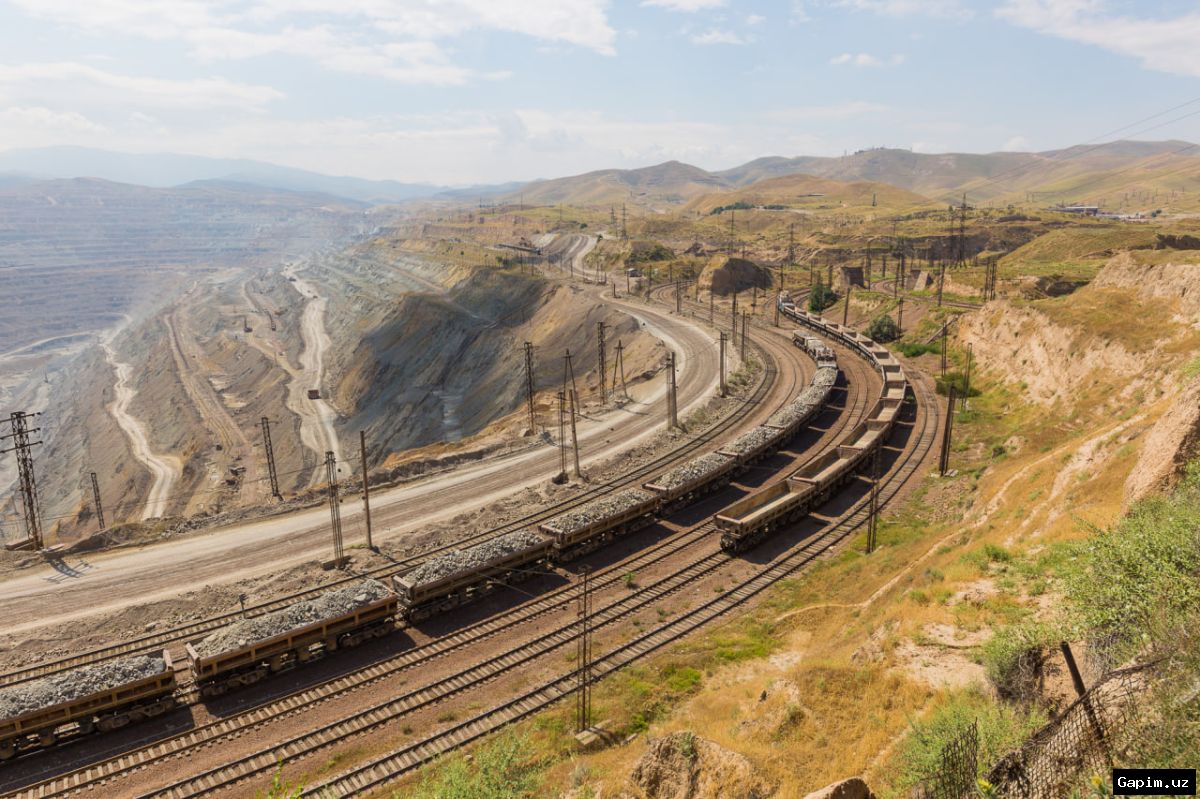
According to the head of state, an agreement has been reached with Chinese partners to extract 650,000 tons of iron ore raw materials per year from the Surun-ota deposit. Iron ore concentrate from this deposit is to be supplied to the plant (Uzmetkombinat) starting in 2027.
In addition, the launch of the Tebinbulak deposit within three to four years will make it possible to produce 1 million tons of steel per year (previously, the construction of the Tebinbulak mining and metallurgical plant was handled by Triangul Metals Tebinbulak, part of Saneg ENERA, associated with entrepreneur Bakhtiyor Fazilov).
It was noted that a memorandum has been signed to purchase 700,000 tons of iron ore raw materials per year from Tajikistan (previously, 300,000 tons were reported). The task was set to formalize the contract as soon as possible and start importing raw materials from next year.
Large private enterprises in the metallurgy sector also stated their readiness to organize a full technological chain from geological exploration and raw material extraction to finished products. An enterprise in Samarkand expressed an initiative to invest up to $500 million in raw material extraction if an iron ore deposit is allocated.
The Bekabad Metallurgical Plant requested the development of the Temirkon deposit in Farish with 32 million tons of iron resources to expand its raw material base. The president gave instructions to create conditions for this.
Iron reserves are also forecast in the Tashkent region, Samarkand, and Surkhandarya. Officials were instructed to analyze these areas using artificial intelligence and within a month submit a geological program to increase reserves of iron and minerals necessary for its enrichment.
Special attention was paid to providing private enterprises with raw materials. About 150 medium and small private enterprises operate in the metallurgy sector. To ensure a stable supply of raw materials to private enterprises, a separate company will be established for centralized import of raw materials. This company will be allocated $200 million, and imported raw materials will be sold only through the exchange.
The meeting also discussed expanding the range of metal products. The demand for seamless pipes alone in the country is $280 million. Major trading partners also import $1.5 billion worth of such products annually.
According to calculations, localizing seamless pipe production will require $275 million in investment. This would allow producing $450 million worth of products annually, of which $170 million could be exported.
Officials were instructed to prepare a package of projects for seamless pipes, cold rolling, 3D metal printing, and high-precision processing within three months and begin work.
In addition, the launched casting and rolling complex is creating the opportunity to produce $1.5 billion worth of products domestically in sectors such as automotive, special transport, technological equipment, household and agricultural machinery, and construction materials.
The president highlighted the high dependence of the Bekabad Metallurgical Plant on imported raw materials: it produces 40% of rolled metal from secondary metal and 60% from imports. Although 700,000 tons of ferrous scrap are delivered to the plant annually, another 500,000 tons of scrap remain in the shadow economy.
Therefore, all processes related to the circulation of ferrous metal will be monitored in real time through an electronic platform. Officials were instructed to launch the E-lom electronic platform on August 1 and bring the circulation of ferrous metal under control. In addition, a separate project office will be established in the government to ensure a healthy competitive environment and price stability in the ferrous metallurgy industry, as well as to establish effective control mechanisms in the sector.
Source: www.gazeta.uz