Uzbekistan's state and state-guaranteed debt has stabilized at around 30% of GDP after rapid growth in previous years, according to the International Monetary Fund (IMF). By the end of 2025, the figure stood at 28.6% of GDP.
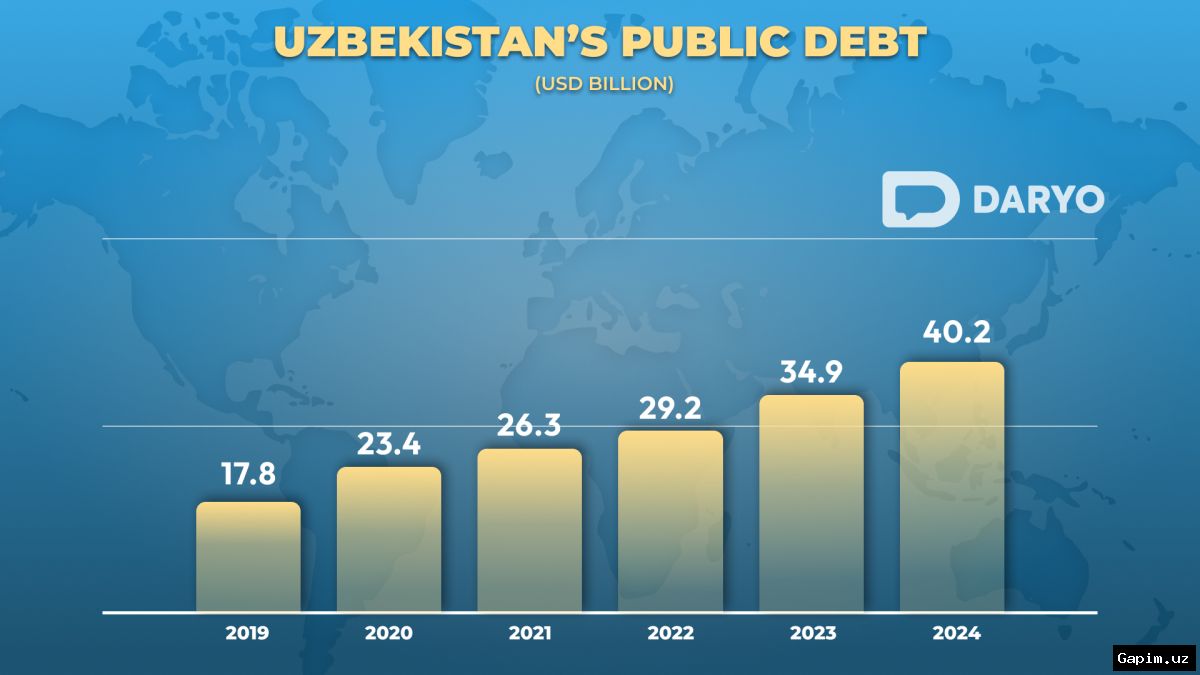
Of this, 89% is direct state debt, while the remaining 11% consists of state-guaranteed liabilities. The bulk of the portfolio — 76% — remains debt to official creditors, including international financial institutions and foreign governments. The remaining 24% comprises commercial external borrowings and domestic debt.
The IMF noted that between 2015 and 2020, state debt surged from 6% to 32% of GDP, driven by the 2017 currency reform that led to the devaluation of the som, as well as borrowing to finance large-scale economic reforms. However, since 2021, the indicator has remained relatively stable, hovering near 30% of GDP.
Meanwhile, the country's total external debt continues to rise. From 13.5% of GDP in 2015, it reached 49% of GDP by 2025. The IMF emphasized that in recent years, growth has been driven mainly by private companies, not the state.
The most active borrowers of external loans are enterprises in the oil, gas, and energy sectors, accounting for about 60% of the increase in private external debt. Another 8% came from commercial banks.
Experts also note a shift in the structure of state debt. Authorities are gradually increasing the share of market-based borrowing, developing the domestic debt market, and expanding their presence on international capital markets through the issuance of eurobonds in dollars, euros, and soms.
Furthermore, the government continues to extend the maturity of domestic government bonds. At the end of 2020, about 40% of domestic debt consisted of securities with maturities of less than one year; by the end of 2025, this share had fallen to 9.5%. According to the IMF, this reduces refinancing risks and supports the development of a long-term domestic borrowing market.
Source: podrobno.uz