TASHKENT, Uzbekistan – Scientists at the Ulugh Beg Astronomical Institute have successfully digitized 2,330 glass photographic plates from their archive, converting them into precise digital data for astronomical research.
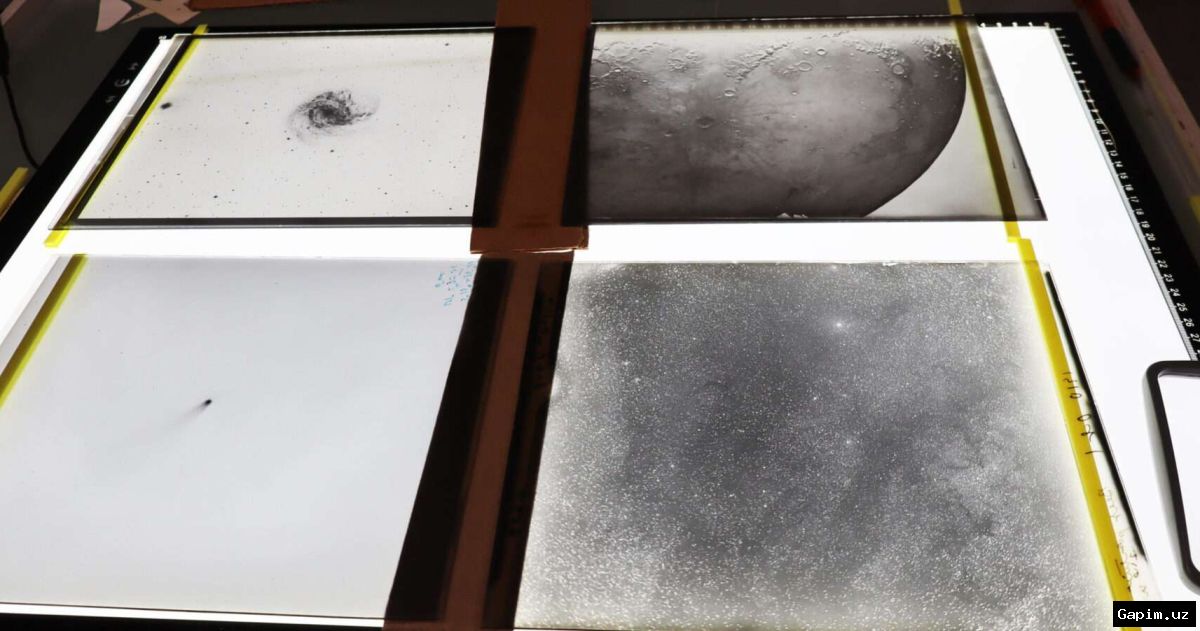
The institute's archive holds over 15,000 plates dating from 1895 to 2005, capturing the positions of stars and other celestial bodies across different historical periods. These plates allow researchers to study long-term motion and brightness changes of stars over decades.
The digitization was carried out in collaboration with the Shanghai Astronomical Observatory. The data was then re-analyzed using the Gaia DR3 catalog, enabling more accurate coordinate determination and correction of distortions in the old images.
For the study, 2,574 single-exposure plates were selected. Of these, 2,330 were successfully processed, while 244 images remain unanalyzed due to poor quality.
The resulting data can be used to study the long-term motion and variable brightness of stars, as well as the dynamics of Solar System objects.
Earlier, two asteroids were named after institute employees Kamoliddin Ergashev and Otabek Burkhonov.
Source: podrobno.uz