Architectural remains of a complex believed to have been a ruler's palace from the 8th century have been discovered at the Mingtepa archaeological site in the Jomboy district of Samarkand region, the Cultural Heritage Agency reported.
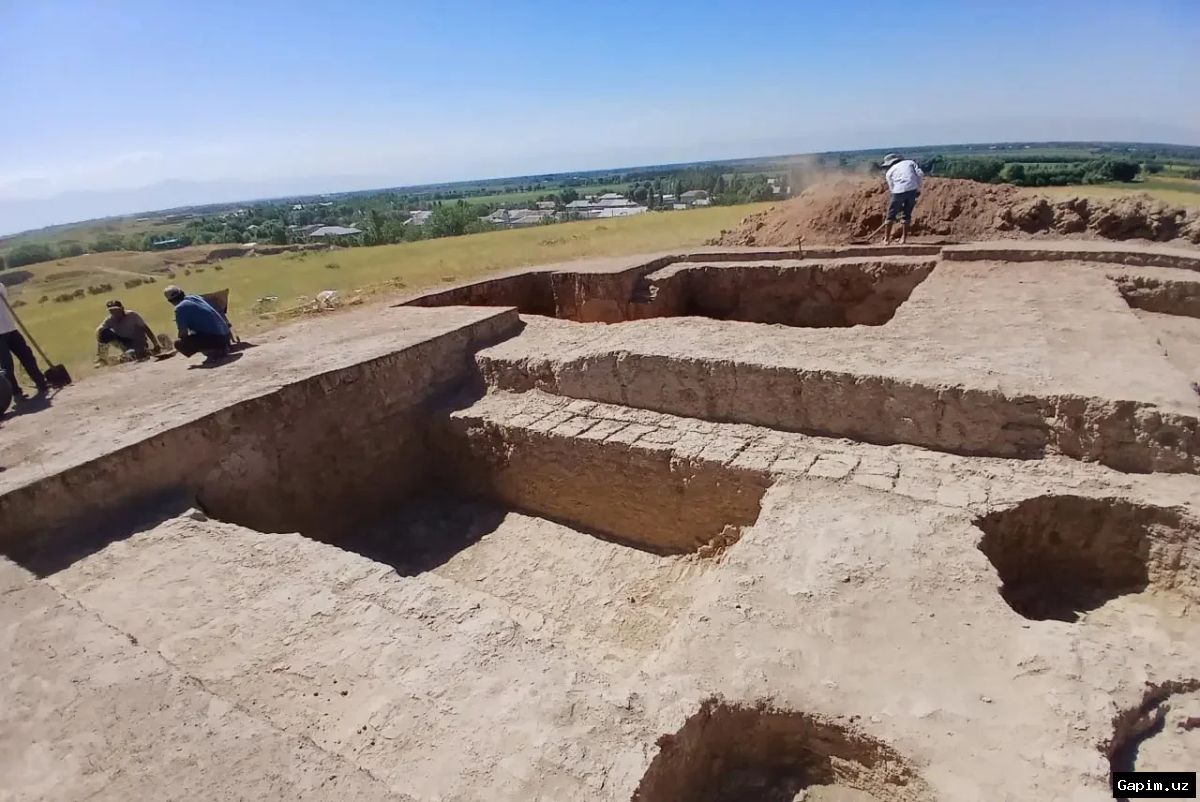
The excavations are being carried out by researchers Amriddin Berdimurov, Husniddin Rahmonov, and Nigora Mahkamova from the Samarkand Institute of Archaeology named after Yahya Gulyamov.
During the research, archaeologists uncovered the architectural structure of the palace complex located in the fortified part of the site — the citadel. Experts date the structure to the first half of the 8th century.
According to specialists, the construction features of the palace serve as an important scientific source for studying early medieval urban planning, architecture, and state governance systems.
Sculptural examples from the 8th century were also found in the hall part of the palace. Currently, these finds are being studied by experts.
The agency noted that the excavation results may allow for new conclusions about the political and cultural life of Mingtepa, as well as the history of the region in the early Middle Ages.
Previously, during excavations at the Quldortepa site in Samarkand region, wall paintings, a mirror, and coins from the Han dynasty period in China were discovered.
Source: www.gazeta.uz