Over the past year, Uzbekistan has witnessed a series of high-profile corruption cases involving senior officials. Among them are former Deputy Interior Minister Bekmurod Abdullayev, former Director of the State Assets Agency Akmalxon Ortiqov, and Alijon Ashurov, former head of the Internal Security Department of the State Security Service, linked to the "Korean case" with alleged damages of $90 million. Their trials have commenced, but behind closed doors.
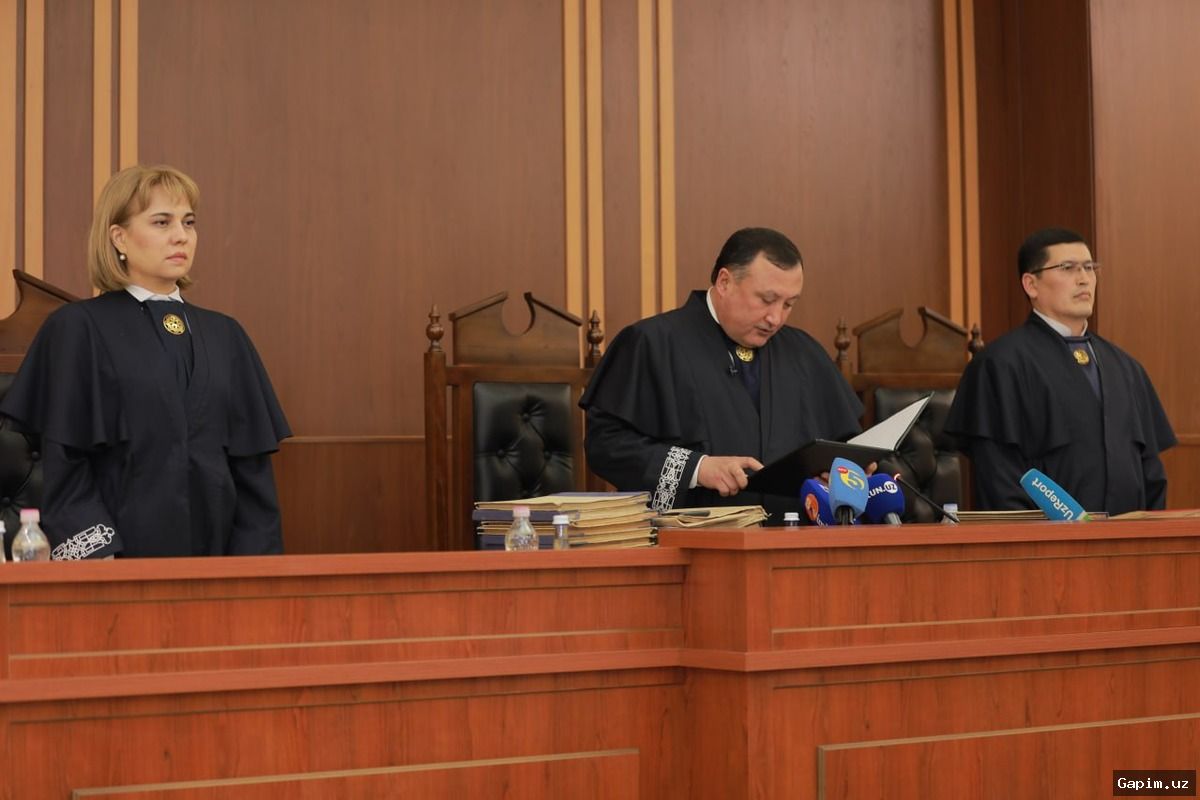
Courts have issued rulings to hold these proceedings in closed sessions, citing the presence of legally protected information. This has sparked criticism from legal experts and activists who argue it contradicts the principles of openness and transparency. The newspaper discussed the issue with Tursunali Akbarov, press secretary for Tashkent city courts, and human rights activist Abdurakhmon Tashanov.
According to Akbarov, in the first half of 2026, Tashkent courts delivered verdicts against 727 officials in 451 criminal cases. Of these, three were acquitted, while the rest received sentences based on the degree of guilt. Specifically, under Article 210 of the Criminal Code (bribery), 15 cases were heard against 18 individuals.
The category of corruption crimes has expanded to include 15 articles. Among those sentenced, 68 were women, 180 were under 30 years old, 27 were over 60, and 10 were foreign nationals.
Human rights activist Abdurakhmon Tashanov argued that cases involving official misconduct have long been conducted in closed sessions. He claimed that this reflects a socio-political rather than legal qualification. "Cases involving the Prosecutor General's Office under Rashidjon Qodirov and former SGB head Ikhtiyor Abdullayev were also closed. This contradicts the government's declared policy of openness," he said.
Tashanov also noted that lawyers often file motions claiming "defendants do not want public exposure," and courts readily use this as a pretext to close proceedings. He emphasized that the public's right to know should take precedence, as officials have lived at the expense of taxpayers.
In response, Tursunali Akbarov refuted these claims, citing Article 19 of the Criminal Procedure Code, which allows closed hearings to protect state secrets or personal data. He stated that four high-profile cases are currently being heard in Tashkent, with only the Uzneftegaz case open to the public.
Akbarov insisted that closed sessions are a legal requirement necessary to safeguard state interests, including information related to closed auctions and military matters, which are protected by law.
For a full discussion, viewers can watch the complete interview on the newspaper's YouTube channel.
Source: www.gazeta.uz