Minister of Higher Education, Science and Innovation Kongratbay Sharipov announced on August 14 at an international conference in Tashkent that 70% of graduates from higher education institutions in 2026 have already been employed, with plans to reach 100% by the end of the year.
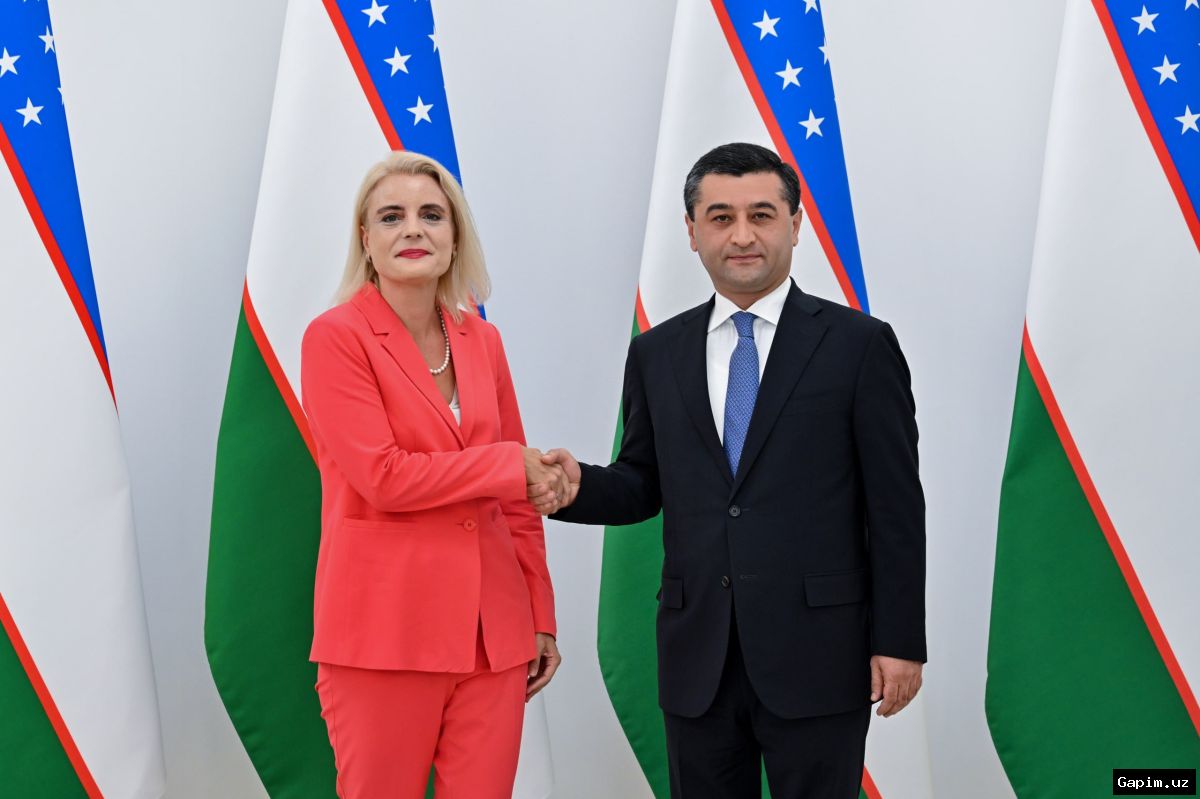
According to the minister, the current capacity of existing universities is sufficient to meet all labor market needs. Therefore, there is no need to open new higher education institutions at this time. "We should not increase the number of universities just for show. Currently, all those who scored above 56.7 points are entering higher education. That means more than 256 thousand young people. Those who scored below 56.7 points can also be admitted and educated within the capacity of our existing universities. I believe there is no need to open new universities today, as they could become institutions providing low-quality education. We do not need such universities to force young people with scores below 56 into higher education. Now we need to pay more attention to vocational education," he said.
Sharipov emphasized that there is a high demand for mid-level specialists worldwide, including Uzbekistan. To this end, efforts are being made to bring technical schools to an international level. "Previously, people had a different attitude towards technical schools. Today, technical schools are being brought to an international level. This year, 100 technical schools in Uzbekistan will be raised to such a level. Graduates will be able to work based on their diplomas not only in Uzbekistan but also in more than 70 countries. Drivers and welders are offered at least $1,500 in salary on the international market. Plumbers and electricians also receive very high salaries. We have professions that pay more than those with higher education," said Kongratbay Sharipov.
The head of the ministry recommended that young people who did not enter higher education choose vocational education. He noted that this year applicants were given the opportunity to choose five universities, with an additional choice expected. As a result, they will be able to choose from six higher education institutions and six directions. "After that, I recommend that our young people who still did not get in choose vocational education. This does not mean you will remain a plumber or another profession for life. In two or three years, if you want to study in higher education, you can enter based on an interview and continue your education from the second year. Therefore, a system based on the quality of continuous education is being created," he said.
During the conversation, the minister stressed that requirements for state and non-state higher education institutions are the same. It was noted that admission quotas are determined based on university capacity, faculty potential, and labor market needs. "We treat private and state universities equally. There is no difference now. Requirements for non-state universities have been strengthened. Quotas are formed based on their capacity," he said.
"Each student is allocated an average of 7 square meters of space. The number of admitted students is determined primarily by the university's capacity, secondly by the potential of the faculty. Thirdly, quotas for training marketable personnel are formed in cooperation with the Ministry of Economy," added Kongratbay Sharipov.
The minister noted that starting this year, the issue of guaranteed employment for graduates is taken into account already during the admission process. "Previously, this system did not exist. From this year, we must think now about guaranteeing employment for our graduates tomorrow. From this point of view, we are gradually giving non-state universities directions needed by the labor market," he stressed.
Sharipov said that the main criterion for competition in higher education will be the results of graduates on the labor market. "Competition means that each university must train personnel suitable for the labor market and subsequently provide its graduates with guaranteed employment. The biggest criterion for us is the employment of graduates. Whether a university teaches well or not will be assessed tomorrow by the people and employers. If a graduate works well after graduation and 100% employment is ensured, then it is a competitive university," said Kongratbay Sharipov.
According to him, starting this year, the activities of higher education institutions will also be assessed through the graduate employment index. "A system has been created based on the graduate index. From this year, if the employment rate of graduates from higher education institutions falls below a set percentage, proposals will be made to merge or close those universities," the minister said.
The minister reported that a new system for employing this year's graduates has been introduced. The Ministry of Employment, the National Bank, Aloqabank, and local administrations are cooperating in the process. "Currently, the employment rate of graduates across the republic averages 70%," he said. Each graduate is monitored. Financial opportunities for startups are being created for young people who want to start their own businesses, and retraining and language courses are organized for those who want to change their profession or acquire additional skills.
"If a student says they can organize their own business, we create opportunities in the startup direction. Funds are allocated by the National Bank or Aloqabank. Our president has created unlimited opportunities. Only effort is needed from our youth," said Kongratbay Sharipov. "For those who have studied for four years but want to slightly change their direction, we organize additional courses. Language courses will also be established. If someone wants to go abroad from a migration point of view, conditions are also being created for them," the minister added.
According to Kongratbay Sharipov, heads of higher education institutions have provided guarantee letters for the employment of graduates. "Overall, every student is under control. Our rectors have provided guarantee letters. Together with regional departments, we have received a guarantee to provide 100% employment for our youth by the end of the year," he said.
Earlier, Kongratbay Sharipov noted that the share of those who failed to achieve the passing score (56.7) for university admission has been decreasing in recent years, attributing this trend to the improvement in school education quality. He also added that the view that all graduates should have higher education is wrong.
Source: www.gazeta.uz