The Central Bank of Uzbekistan has for the first time presented the results of a pilot calculation of the National Financial Inclusion Index for the past year. According to the report, despite the widespread adoption of bank cards, a significant portion of them actually remains inactive.
On average, each adult resident of Uzbekistan holds 3.2 bank cards. However, only 53% of national bank cards were actively used over the past 12 months. Thus, about 47% remain inactive.
"These figures indicate a significant gap between the quantitative expansion of payment infrastructure and its actual use by the population," the Central Bank noted.
At the same time, access to payment instruments in the country is at a fairly high level. 83% of the adult population has bank cards, nearly 77% have an active internet banking profile, and 86.3% have the ability to make payments via mobile internet.
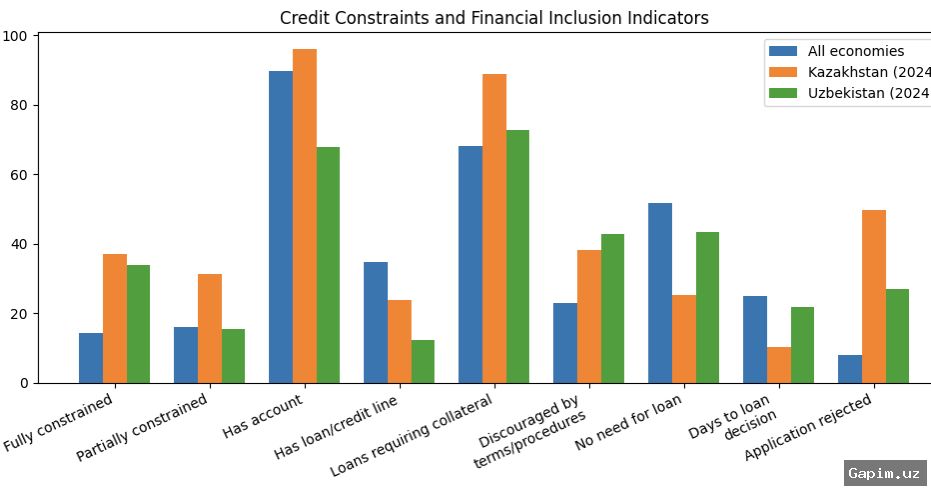
Despite this, the index of actual use of payment services was only 34 points out of 100. For comparison, the level of use of savings products was estimated at 68 points, and credit products at 47 points.
Furthermore, the structure of non-cash transactions remains quite narrow. Transfers between individuals (P2P) account for 69% of all payment transactions. According to the Central Bank's assessment, this indicates a formed habit of transferring money through digital channels, but other scenarios of using digital payments are still less widespread.
It is noted that simply increasing the number of bank cards will have a limited effect on improving financial inclusion. The regulator believes it is necessary to focus on increasing the share of active users and the frequency of transactions, as well as expanding the use of cards and other digital tools for everyday payments.
Source: uznews.uz