Uzbekistan has more than 132,000 school-age children with disabilities. Only a fraction are enrolled in inclusive education in mainstream schools: 6,801 children study in 2,610 schools, while 17,056 receive education at home. Behind these figures lie numerous challenges: inadequate teacher training, poor infrastructure, societal stereotypes, and a tension between the speed of reforms and their quality.
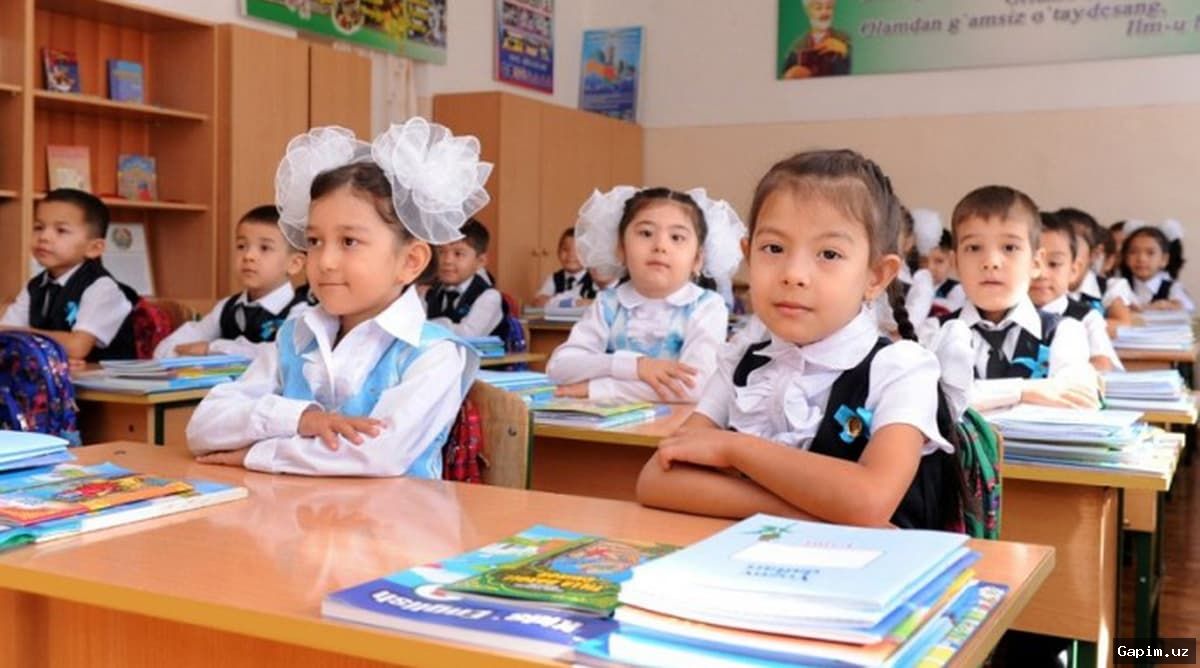
Shahnoza Tukhtiyarova, UNICEF National Consultant on Inclusive Education, explains that inclusive education has narrow and broad meanings. In the narrow sense, it means integrating students with disabilities or specific difficulties into the learning process. In the broad sense, it means equal inclusion of all children with diverse needs and abilities, regardless of disability. She notes that teachers often expect the child to adapt to the curriculum rather than adapting the curriculum to the child's needs, which contradicts the core principles of inclusion.
Dilmurod Yusupov, a researcher on disability and inclusive development, argues that society often equates inclusion solely with disability, whereas the concept is much broader. The word "inclusion" comes from French and means bringing into society, uniting. He believes that a child with a disability, a child from a low-income family, and children from remote areas should all have equal opportunities. "We even use incorrect expressions like 'children with inclusiveness.' In reality, inclusion should be in society and schools, not in the child," he says.
Ruzibek Turaev, Head of Department at the Ministry of Preschool and School Education, admits that the stereotype of inclusion as solely about disability has been largely shaped by officials and civil servants. He emphasizes that inclusiveness means equality, and this approach should be gradually abandoned. He cites everyday examples: children learning in different languages within one system, equal opportunities for girls and boys, and access to quality education for children from remote villages—all are manifestations of inclusiveness. Turaev notes that in foreign practice, especially in European countries, "inclusion" often refers to the adaptation of migrant children and representatives of other nationalities and religions, while education for people with disabilities has already become the norm.
Experts stress that inclusive education is a long-term process. Shahnoza Tukhtiyarova says, "We are still at the very beginning of the path." According to her, in developed countries this process took centuries, while in Uzbekistan systemic reforms began only in 2020. Dilmurod Yusupov recalls that in the US, the inclusive education reform took at least 70 years, and in Europe the process is still ongoing. He calls unrealistic targets such as transitioning 51% of mainstream schools to inclusive education by 2025, and suggests slowing down to focus on quality: "We must constantly ask ourselves: are we not harming the child with these changes?"
According to official data, inclusive classes have been opened in 2,610 mainstream schools across the country, of which about 860 have a relatively barrier-free environment. In April-May 2024, the National Agency for Social Protection, together with the Ministry of Health, re-examined children studying at home and found that about 30% of them could attend mainstream schools. However, schools are not fully ready: it is necessary to ensure transportation, teacher preparedness, and the right to education for the other 25-30 students in the class.
Teacher training is one of the most acute problems. Shahnoza Tukhtiyarova compares involving unprepared teachers in inclusive education to sending them into battle without training. She notes that pedagogical approaches are still oriented toward a model of a quiet student who listens and raises a hand. Teachers lack strategies for managing various situations, such as what to do if a child shows aggressive behavior, which protocol to follow. It is also important not to reduce inclusion to physical infrastructure alone: preventing bullying, considering parents' attitudes, and school administration's approach are all essential.
Large class sizes, especially in big cities where a class may have 35-40 or more students, make individual attention difficult. Experts recommend avoiding a one-size-fits-all approach for all regions and schools, and instead addressing teacher training, assessment system improvement, class size, and school environment in stages. Most importantly, these changes should serve to improve the quality of education for all students, not just those with disabilities.
Source: www.gazeta.uz