On September 1, 2026, Uzbekistan celebrated the 35th anniversary of its independence. The ceremonial event, held in New Tashkent, differed noticeably from previous years' scenarios. This year's program featured a brief chronology of the history of statehood, which was warmly received by the audience. A correspondent from Gazeta spoke with historian Bakhrom Irzayev and political scientist Hamid Sodiq to analyze the political and historical signals conveyed at the celebration.
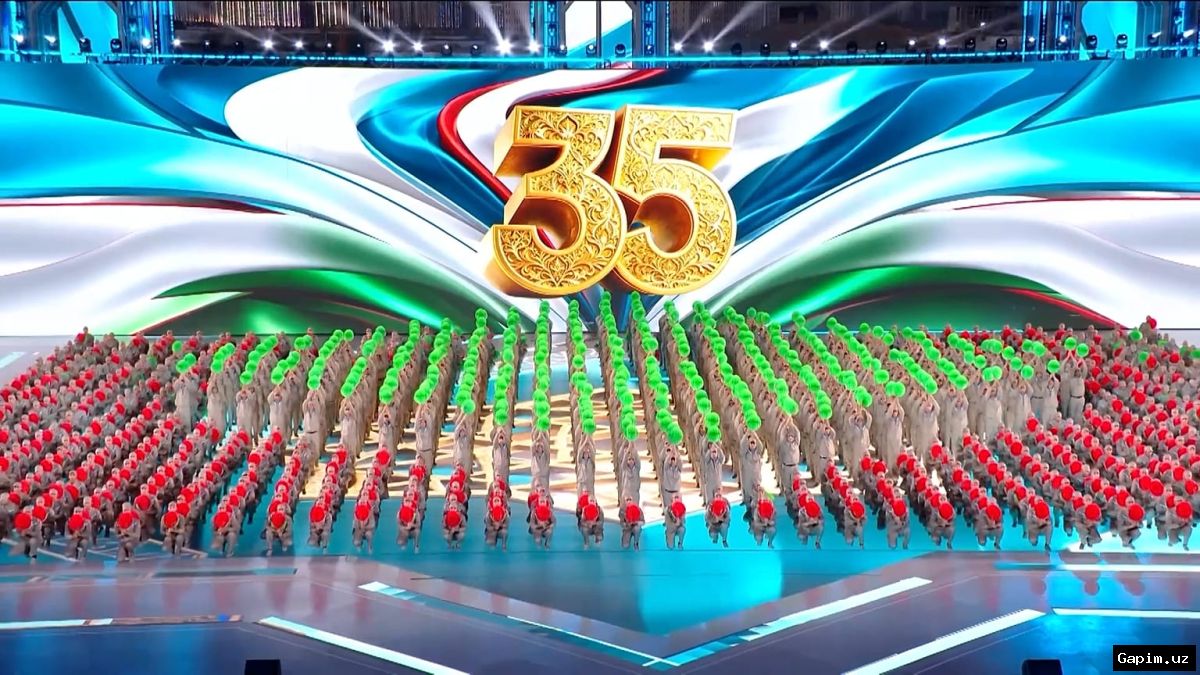
According to historian Bakhrom Irzayev, officials try to introduce something new into the holiday program every year. While in previous years the images of Jadids were presented, this time the program was enriched with more ancient history. This, in his opinion, is connected with activities within the Organization of Turkic States. "In today's geopolitical situation, awareness of identity is becoming increasingly important. There are often claims that post-Soviet states emerged along the line drawn by Lenin. However, the Uzbek state existed long before that, and maps with the names 'Uzbeks' and 'Uzbekia' existed not only here but also in Britain as early as the 16th century," notes Irzayev.
The event featured the raising of flags of Khorezm and Bactria from the 7th century BC. According to Irzayev, this may be a response to past disputes with Iran: "A signal was sent that Uzbekistan has not a thousand-year but a 3,000-year statehood. This is very well thought out. However, some states were not represented in the performances, such as the Seljuks, the Turkic Khaganate, and the Ghaznavids. Conversely, the Baburids were shown. The raising of flags and the fighting actions of soldiers are ideologically important — fighting for a flag requires a great idea."
Political scientist Hamid Sodiq, addressing the political doctrine of the holiday, noted that the templates formed during Islam Karimov's era have changed. "After 2016, the Independence Day holiday seemed to pause somewhat, then was organized in new formats. Now, at every holiday, the issue of statehood is raised, as is the question of the right of neighboring countries to exist as modern states. Russian media spread narratives that certain countries, especially Kazakhstan, 'had no statehood.' Before the attack on Ukraine, this thesis was also used. Therefore, the raising of state flags in Uzbekistan is very important," says Sodiq.
According to Sodiq, not only statehood but also chronology is important at the holiday: "Khorezm statehood, the colonial period, the era of Islam Karimov — all this creates a chronology. This is a positive development, but there is another side to the coin. It is necessary to emphasize regional statehood, not just Uzbek. Otherwise, a perception may arise of Moscow in the north and Tashkent in the south, which is dangerous."
Bakhrom Irzayev, when asked which period is important in the history of statehood, emphasized that Uzbekistan is the successor of the era of Timur and the Timurids. "Under Mirzo Ulugbek, astronomy developed; under Kamoliddin Behzod, art; under Alisher Navoi, the Chagatai language. In the Timurid era, a great culture was created. At the holiday, portraits of Muhammadjan Tinishbayev and Mustafa Chokay were shown, and the Turkestan Autonomy was remembered. This was received with recognition by our Kazakh brothers. Uzbeks, Kazakhs, Tatars, and other nations united for the flag of Turkestan," he said.
Irzayev noted the need for serious teaching of history in schools: "At an event, history flies by in a few minutes, but we must teach it for years. There should be no statements that our statehood belongs to others. History connects many threads; this is necessary for the nation and decolonial thinking. If we list our history along the 1925 line, we will not escape the template. Our children, when visiting those regions, should not feel like strangers."
Overall, the scenes depicting the history of statehood at the Independence Day celebration demonstrated Uzbekistan's geopolitical claims and its ambitions for regional leadership. Experts, while assessing these signals positively, warned of the need to emphasize regional statehood and to study history deeply.
Source: www.gazeta.uz