Nabi Ganiyev, one of the first directors to lay the foundations of Uzbek cinema, was born on September 15, 1904, in Tashkent. He first studied at an old-style school, then at the 'Namuna' school. This period served as an important foundation for his future entry into the world of art.
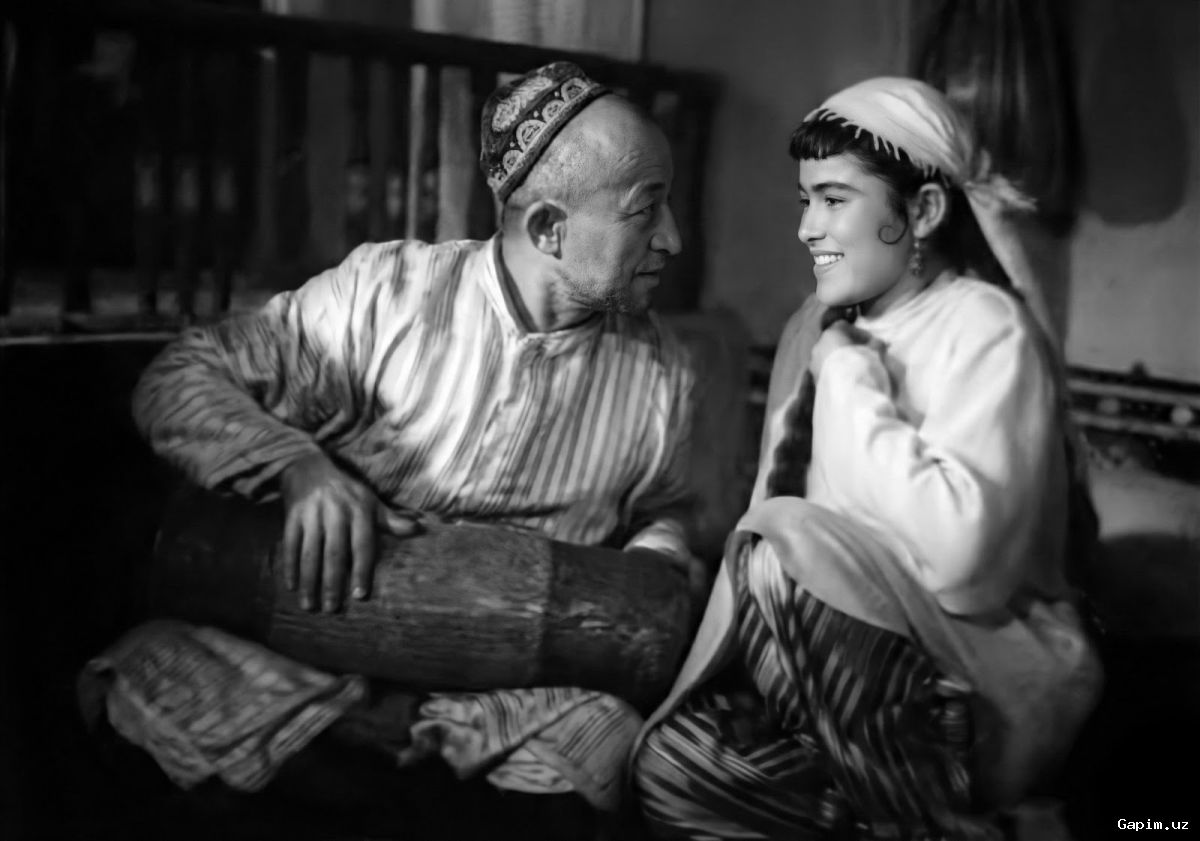
In 1924, before starting his studies at the Higher Art and Technical Workshops in Moscow, Nabi Ganiyev led an amateur art circle for theatrical performances and staged various plays. This experience played a crucial role in shaping his directorial skills.
In 1925, he returned to Tashkent and joined the 'Sharq Yulduzi' film studio. During this time, he worked in various positions at 'Uzbekkino'. In 1926, he wrote the first textbooks in the Uzbek language, 'Kinossenariy' and 'Kinoaktyor', laying the foundation for national film education.
In 1927–1928, he played various roles in the films 'Soyabonli Arava' and 'Moxov Qiz', and was an assistant director on films such as 'Baxt Quyoshi' and 'So‘nggi Bek'. He began his independent directing career in 1928. Between 1931 and 1935, he directed 'Yuksalish', 'Ajoyib-G‘aroyib Ish', 'O‘lim Quduqi', 'Ramazon', and 'Yigit'. In 1941, he presented 'Biz Yengamiz' and 'Dovyurak Do‘stlar', and four years later, 'Tohir va Zuhra'. The film 'Farg‘ona Qizi' was released in 1948.
He also directed films such as 'The Adventures of Nasreddin', 'Nasreddin in Bukhara', and 'Latinization'. However, in 1937, Nabi Ganiyev was accused of counter-revolutionary activities and imprisoned for 27 months. The content of his film 'Hokimiyat Kimniki?' also contributed to this. Released in 1939, the creator died on October 19, 1953. The newspaper prepared a test based on the films in which Nabi Ganiyev participated and directed.
Source: www.gazeta.uz