The National Committee for Ecology and Climate Change has issued an official advisory warning residents that atmospheric air quality in the capital city of Tashkent may experience brief periods of degradation during the night and morning hours through the end of the week. This environmental development raises ongoing concerns regarding urban public health and ecological conditions.
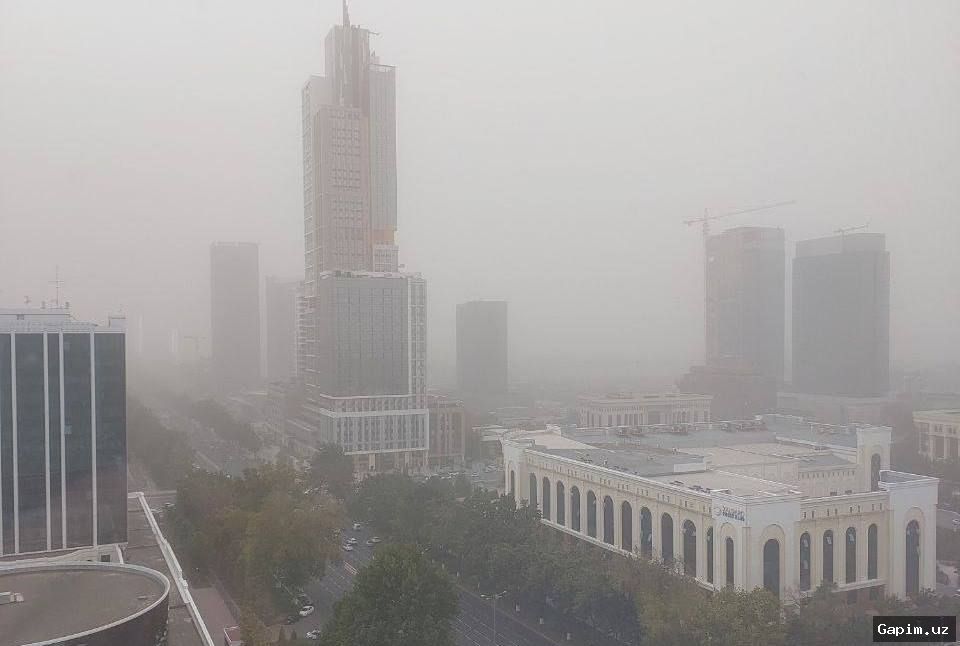
According to departmental statistics, while daytime air quality across most parts of Tashkent remained at a moderate level according to the international AQI index on October 6, indicators began to deteriorate sharply after 20:00. During the subsequent evening and morning hours, broader areas registered levels deemed unfavorable for sensitive population groups, with certain districts briefly recording outright unhealthy thresholds.
Measurements taken between 17:00 on October 6 and 10:00 on October 7 revealed that the average concentration of fine particulate matter PM2.5 reached 43.5 micrograms per cubic meter, while PM10 particles hit 97.2 micrograms per cubic meter. The average AQI index for this timeframe stood at 117, signaling conditions that present distinct challenges for vulnerable demographics across the metropolitan area.
Committee officials attributed the degradation in air purity to unfavorable meteorological factors that severely restrict the dispersion of pollutants. Wind speeds lingering around 1 meter per second, combined with strong nocturnal temperature inversions, have heavily suppressed atmospheric ventilation and vertical air mixing processes, creating a trapping effect over the city.
Source: www.gazeta.uz