The Republican Specialized Scientific and Practical Medical Center of Oncology and Radiology recently hosted an Open Doors Day focused on the early detection of breast cancer. The event took place as part of the international 'Pink October' awareness month, during which the center released comprehensive data regarding screening results, patient management, and the overall organization of diagnostic services across the country. According to official figures, 4,843 new cases of breast cancer were recorded in Uzbekistan, translating to roughly 26 cases per 100,000 women. During the same period, the disease claimed the lives of 2,085 people, the vast majority of whom—2,069—were women.
Official reports indicate that 61.9% of all breast cancer cases are identified during routine preventive check-ups. Overall, 70.8% of patients are diagnosed at stage one or two, highlighting the tangible benefits of proactive diagnostic measures. Currently, a total of 27,736 patients with breast cancer remain under medical observation, with nearly half of them (47.8%) monitored by physicians for five years or more. Within the framework of the national screening program running from 2021 through June 2025, over 2.6 million women underwent examinations, resulting in the detection of malignant tumors in 6,702 individuals.
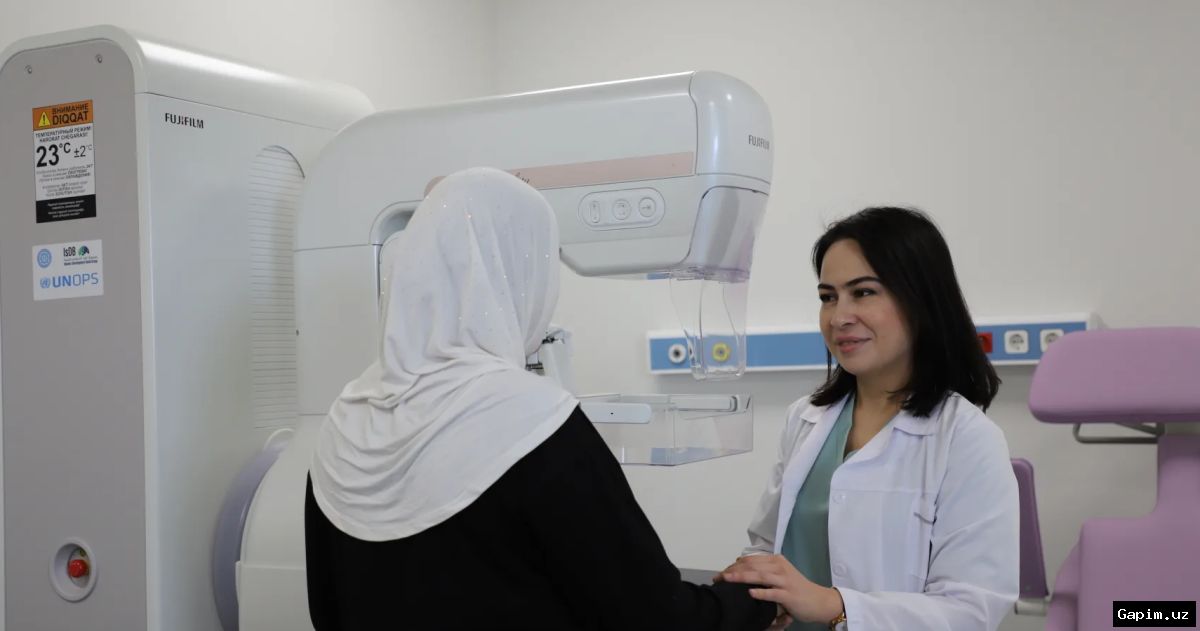
Diagnostic capabilities are integrated into primary healthcare facilities, featuring specialized 'onco-control' rooms equipped with both stationary and mobile mammography units. The healthcare network now incorporates 16 stationary and 16 mobile mammography units, supported by a centralized reading center designed to evaluate scans and train specialists. Furthermore, following presidential decrees issued in late 2024, free screenings have been introduced for women over 45, alongside the creation of an electronic database for women aged 30 to 65 to streamline outreach efforts.
Treatment outcomes show that organ-preserving surgeries were successfully performed on 54.2% of the screened patients, while radical mastectomies were required in 38.6% of the cases. Health authorities emphasize that age, reproductive factors, lifestyle elements, and genetic predispositions remain primary risk factors. Consequently, medical experts continue to urge women to utilize available screening services promptly to mitigate late-stage diagnoses and improve long-term survival rates.
Source: www.gazeta.uz