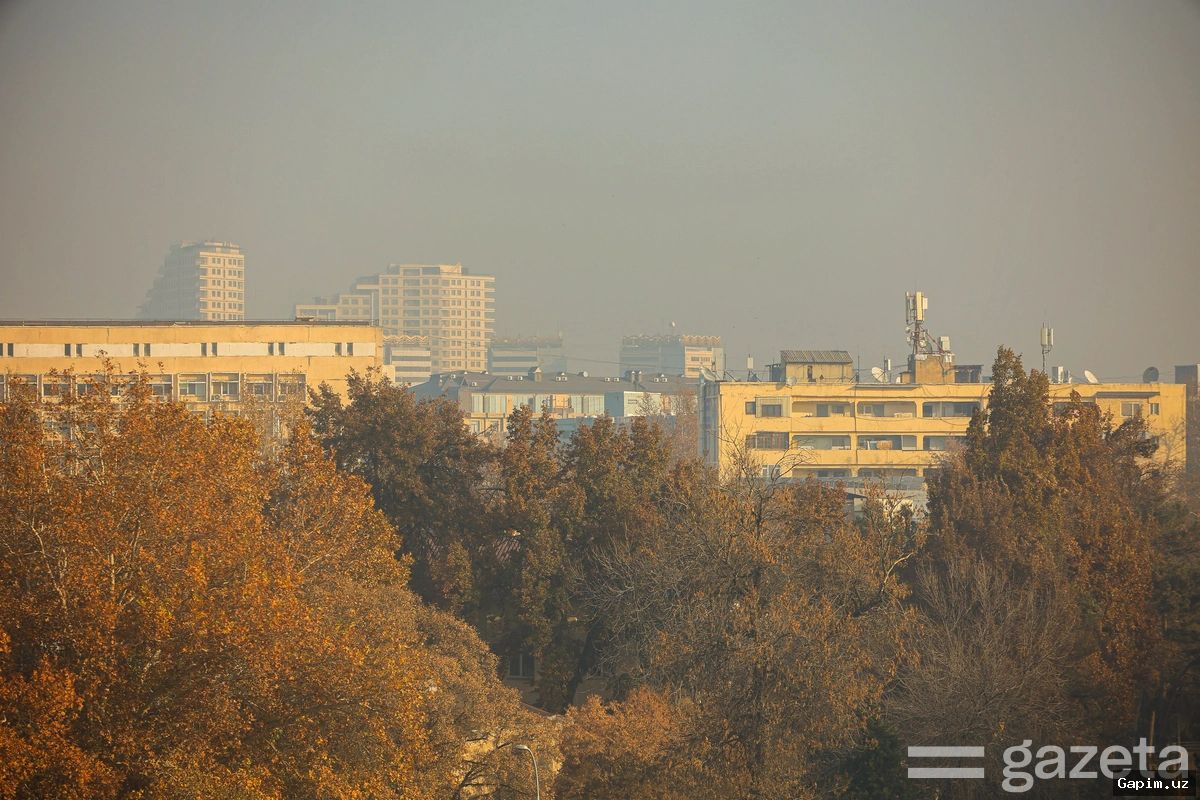
Approximately one ton of fine PM2.5 particles can accumulate in the air over Tashkent during temperature inversions if the inversion layer reaches a height of roughly 200 meters, according to local researchers. Specialists note that under weak wind conditions, these hazardous pollutants fail to disperse adequately, remaining trapped near the ground surface and severely exacerbating urban air quality.
These findings were presented by Zikrilla Alimov, Doctor of Technical Sciences and head of the atmospheric protection laboratory at the Research Institute of Ecology and Environment. Based on his estimates, natural dust accounts for 30 to 70 percent of air pollution during September and October, whereas combustion byproducts—such as emissions from vehicular traffic, the energy sector, and greenhouses—contribute between 30 and 50 percent. An additional 5 to 10 percent reportedly stems from road dust and metallurgical operations.
Alimov emphasized that the exact proportion of pollution sources fluctuates depending on meteorological conditions and wind direction. Mitigating PM2.5 concentrations requires precise identification of specific emission sources and the implementation of scientifically grounded interventions, challenging the official narrative of swift environmental recovery promoted by local regulators.
Source: podrobno.uz