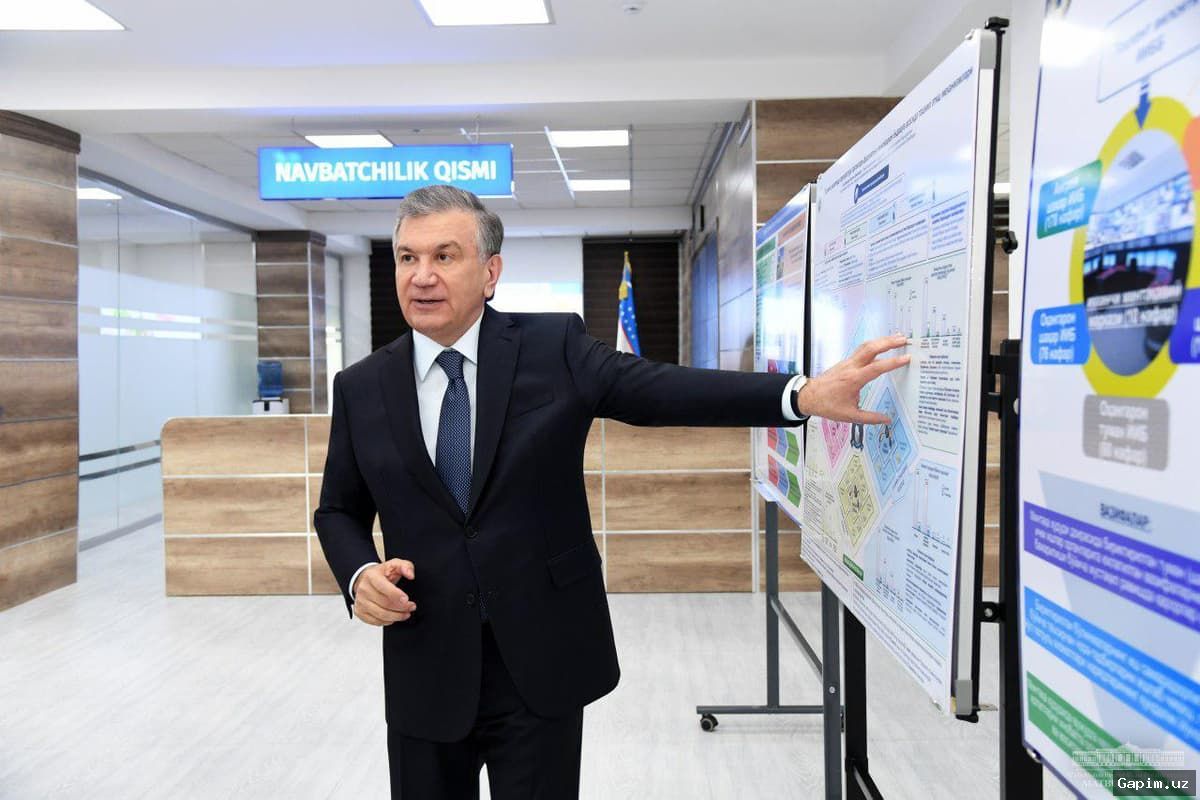
President Shavkat Mirziyoyev reviewed a presentation on November 4 aimed at modernizing crime prevention mechanisms in accordance with contemporary challenges. During the meeting, authorities reportedly proposed introducing a fundamentally new model for assessing the criminogenic situation. According to the initiative, a so-called "criminogenic stability index" will be formulated for the first time, taking into account the population's sense of security and indicators of latent crime.
It was noted during the briefing that despite undergoing more than 20 amendments since its adoption in 2014, the law "On Crime Prevention" purportedly contains various provisions that no longer meet current demands. In response to these perceived shortcomings, officials reviewed proposals to adopt the law in a new edition designed to overhaul the existing regulatory framework.
The head of state emphasized that the new legislation must ensure a transition from a reactive approach—focused on taking measures only after an offense has been committed—to a proactive prevention model aimed at identifying and neutralizing risks in advance. Currently, 14 state agencies are allegedly involved in crime prevention, but their tasks occasionally overlap and their respective authorities remain vaguely demarcated, leading to bureaucratic friction.
The presentation featured a proposal to expand the circle of preventive entities by an additional seven bodies. The President pointed out the necessity of clearly justifying the feasibility of this expansion, defining the precise duties, powers, and accountability of each agency, and ensuring efficient inter-agency cooperation. Furthermore, the draft law envisions legally formalizing the powers of the Crime Prevention Commission.
The draft legislation outlines entirely new preventative directions, specifically strengthening proactive measures against drug-related offenses, cybercrime, organized crime, the shadow economy, and corruption. Additional norms were also put forward to improve social and victimological prevention mechanisms, extensively involve educational institutions in preventive outreach, and guarantee the safety and social protection of victims and witnesses.
Source: kun.uz