In October, the air quality in Tashkent supposedly improved compared to the same period last year, according to figures released by the National Committee for Ecology and Environmental Protection. However, independent observations and data from international monitoring platforms indicate that the situation in the capital remains far from safe, with residents continuing to face serious health risks due to high levels of atmospheric pollution.
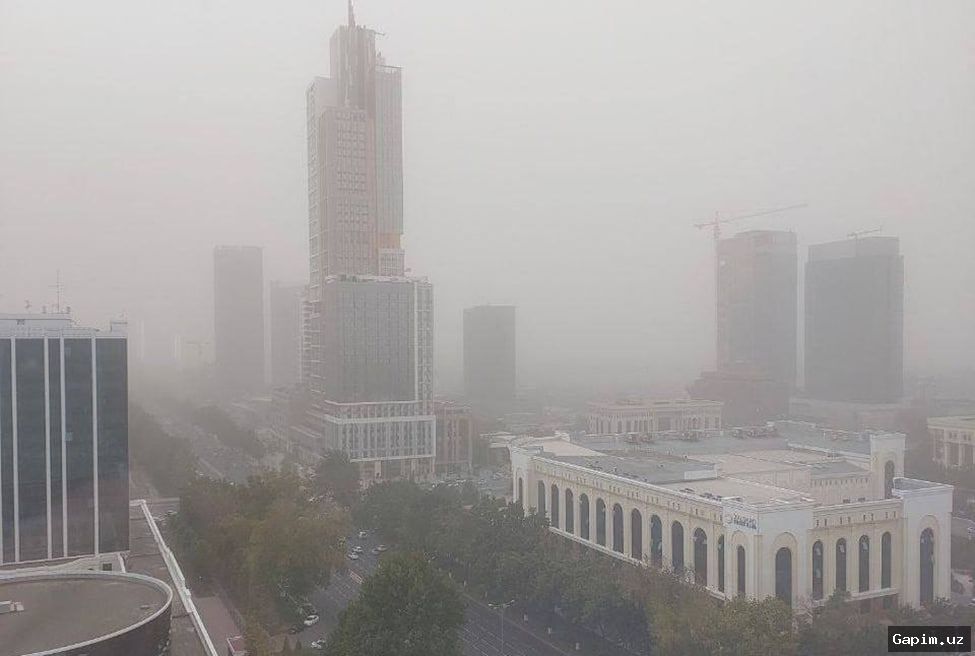
Key Takeaways: The state committee reported a drop in the average monthly AQI from 138 to 115 and a decrease in PM2.5 particles, but morning tracking data shows that air pollution reached unhealthy orange and red levels on the majority of days.
According to the official agency, the number of days with a 'green' air quality level under national standards increased from three to 14, while days with 'orange' and 'red' levels decreased from 16 to four. Furthermore, the concentration of PM10 particulate matter reportedly dropped by 37 percent. Nevertheless, the committee admitted that the improvement was uneven, pointing out that weather conditions deteriorated sharply during the final week of October due to lower temperatures, weak winds, and thermal inversions.
Local media monitoring of IQAir metrics during morning hours throughout October revealed a more concerning picture. Out of 27 recorded observation days, only a single day met the 'green' standard. A 'yellow' level was registered eight times, an 'orange' level ten times, and a 'red' level another eight times. Consequently, on 18 out of 27 occasions, morning air pollution posed direct health risks, particularly to vulnerable demographic groups.
The final week of the month proved to be the most critical period. Between October 8 and 24, the daily average AQI hovered around 103, but from October 25 to 31, it surged to approximately 170. The highest pollution level during this timeframe was recorded on October 28 at 187 AQI, while other days in the final week fluctuated between 156 and 182 AQI.
Although government methodologies and continuous global monitoring indices cannot be directly compared, the overall trend remains evident. The reported reduction in monthly averages does not eliminate the reality that Tashkent citizens are regularly breathing unhealthy air, demonstrating that the capital's severe pollution crisis is far from resolved.
Source: podrobno.uz