Uzbekistan’s insurance premiums reached 8.02 trillion soum in the first half of 2026, up 28.6% year on year, according to half-year market results presented by Maqsud Nosirov, director of Imkon Sug‘urta Moliya. Commenting on the market’s expansion, the quality of growth and the company’s position, Nosirov argued that the sector should be judged not only by rising collections but also by whether real demand for insurance protection is being formed. The figures point to strengthening financial capacity in the sector, yet the faster rise in payouts, underwriting quality and the next stage of competition remain central questions for insurers and policyholders.
Key Takeaways: total insurance premiums rose 28.1% to 7.49 trillion soum; mandatory insurance increased from 415.7 billion to 875.7 billion soum, while compulsory motor insurance (OSAGO) rose from 180.8 billion to 570.8 billion soum. Voluntary general insurance grew 21.8% to 6.62 trillion soum, and insurers paid 2.25 trillion soum in claims, up 80.9% year on year. The sector’s charter capital reached 4.29 trillion soum and investments totaled 10.74 trillion soum.
Context and background: insurance is an important institution in a modern economy because it redistributes risk and helps mobilize long-term capital. Mandatory insurance provides broad coverage, while voluntary insurance is a better gauge of whether clients understand their need for protection and are willing to buy policies without a legal requirement. That is why the 28.6% headline growth should not be read as a simple success indicator: market maturity is reflected in product quality, sound pricing, claims-handling speed and customer trust. The fact that payouts are rising much faster than premiums also places greater pressure on risk management, reserving and reinsurance practices.
According to Nosirov, the dynamics of voluntary general insurance are the main indicator of market maturity, and the sector’s strategic task is not to inflate premium collection but to build genuine demand for protection. He said that as the market expands, underwriting quality, correct pricing, reinsurance and management of risk concentration become increasingly important; rapid portfolio growth alone is not enough unless its quality is effectively managed. Financial capacity is also strengthening: charter capital rose 37.2% over the year and investments increased 28.8%, but about 65% of the investment portfolio remains in bank deposits. This conservative allocation supports stability, though it highlights the need to broaden diversification as the capital market develops.
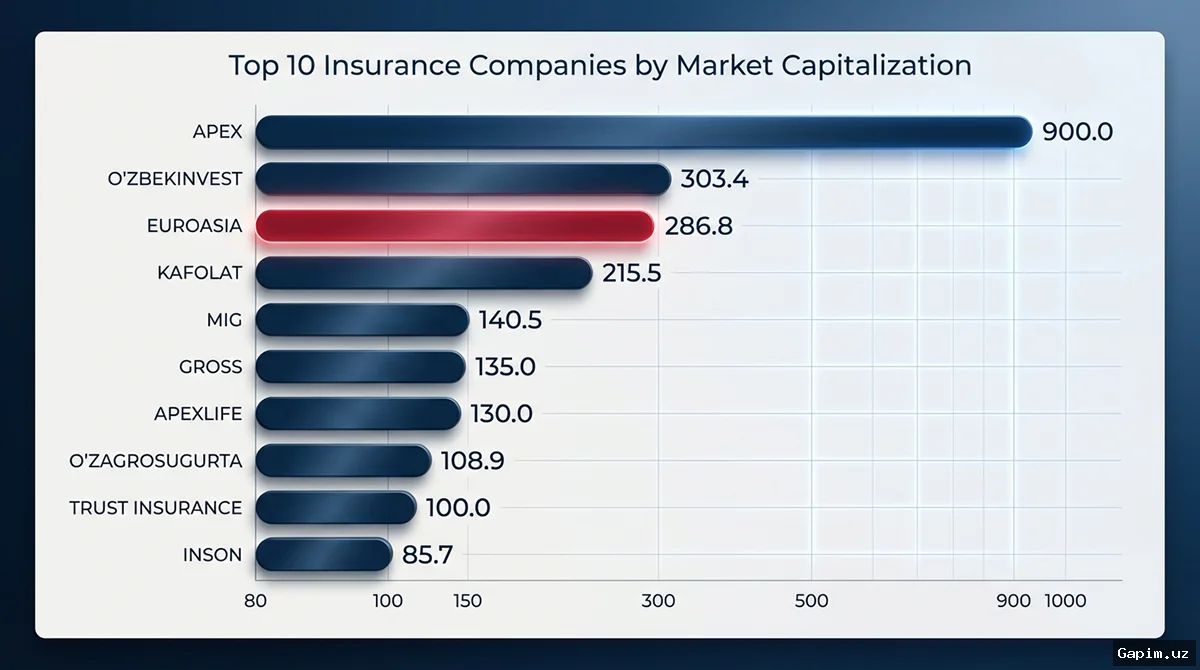
Competition and outlook: the general insurance market remains concentrated, with the five largest companies accounting for about 62% of net premiums and the top ten for nearly 80%. At the same time, some insurers are growing faster than the market, creating pressure to compete not only on price but also on product quality, technology and the speed of claims review. Over the coming period, the main test for market participants will be to sustain growth while strengthening solvency, risk assessment and customer confidence. Ultimately, policyholders should be the main beneficiaries if competition shifts toward better service and more reliable protection.
Source: kun.uz