Tashkent is phasing in a 22.7-kilometre bus rapid transit (BRT) corridor linking the Sergeli and Yunusobod districts, part of a wider push to give public transport priority on the capital’s roads. The project calls for dedicated bus lanes, modern stops and platforms, upgraded traffic lights and, at a later stage, a “green wave” system designed to let buses move more smoothly. It also includes more buses and adjusted timetables. According to Transport Ministry data, on the BRT corridor along Shota Rustaveli Street, 2026 indicators compared with 2023 show average bus speeds up 45%, car speeds up 18%, and daily public transport passenger flows up by 8,052 people, or 9%. Tashkent records nearly 2.7 million passenger trips a day, underscoring strong demand for public transport.
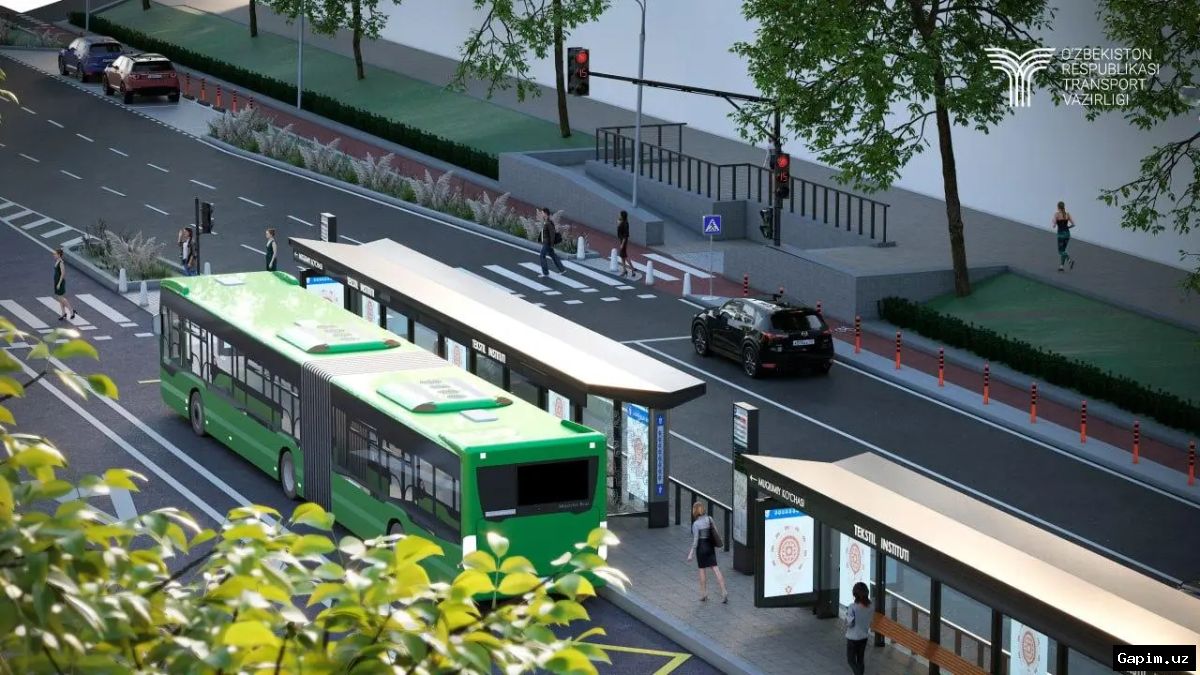
Key Takeaways: The 22.7 km BRT corridor will connect Sergeli and Yunusobod and cover four main streets. On Shota Rustaveli Street, bus speeds have risen 45% and car speeds 18%, while daily passenger flows increased by 8,052. Tashkent logs about 2.7 million passenger trips per day.
The expansion is part of a broader effort to prioritise public transport in a fast-growing capital where rising car use and congestion have made journey times less reliable. Dedicated lanes are intended to improve bus punctuality, make arrival times easier to predict and encourage more residents to use public transport. The BRT model is not limited to road markings: it combines traffic-signal management, stop infrastructure, larger-capacity vehicles and schedule planning. That makes the new corridor a test of whether Tashkent can move from piecemeal road upgrades to a more integrated urban mobility system.
Along the corridor, traffic lights will be updated and a “green wave” system introduced in the next phase. Modern stops and platforms will be built for high-capacity buses, the fleet will be expanded and timetables optimised. Stops are to be equipped with electronic displays showing bus arrival times, video surveillance cameras and SOS buttons; street lighting will also be upgraded. The reported results from Shota Rustaveli Street are notable because they suggest dedicated bus lanes may have benefits beyond buses. Ministry data indicate that average bus speeds rose 45% and car speeds 18% compared with 2023, while daily public transport passenger flows increased by 8,052 people, or 9%. The article says such results show that separate lanes for buses may also have a positive effect on car traffic.
No full completion date was disclosed, and work is proceeding in stages. Attention will focus on whether the “green wave” delivers measurable time savings, whether new stops improve accessibility and whether schedules are met as passenger numbers rise. With nearly 2.7 million daily passenger trips, Tashkent’s transport agencies face pressure to keep services reliable, integrate BRT corridors into the wider road network and ensure that priority for buses does not simply shift congestion to other streets.
Source: kun.uz