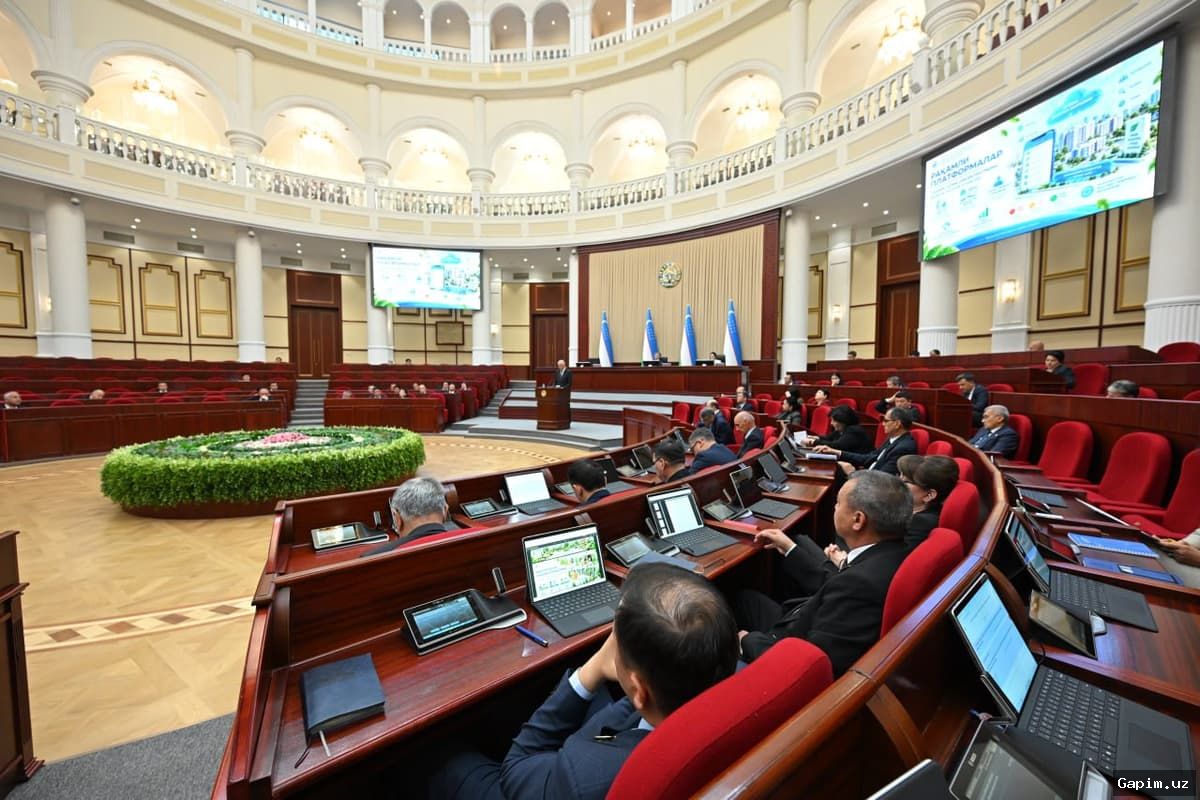
In Uzbekistan, a bill titled “On Pastures” has raised public questions over how pasture lands will be used, after official and unofficial accounts diverged on whether a proposed “pasture chip” would be paid or free. On 10 November, the Legislative Chamber adopted the document in its first reading at a session, and the bill includes the pasture chip mechanism. Kun.uz reviewed the available documents, chamber statements and faction meeting materials to clarify the discrepancy.
Key Takeaways: A July draft resolution by the Ministry of Agriculture proposed making public pastures paid for residents, with free access only for citizens listed in the low-income registry. A later presidential decree did not include the pasture chip provision. The 10 November first-reading bill includes the chip mechanism, but the chamber’s official statement did not specify whether it would be paid or free.
The Ministry of Agriculture’s draft resolution was put forward for public discussion in July, with the consultation ending on 29 July. The document proposed creating public pastures on available land for local residents to graze livestock kept at home. Under the draft, public pastures would be leased free of charge for 49 years to mahalla citizens’ assemblies by territorial pasture farms, based on decisions of district and city councils of people’s deputies. The draft introduced a monthly pasture chip: local residents would pay, while citizens in the low-income registry would receive it free; the monthly fee would be set by the mahalla citizens’ assembly council.
However, the pasture chip provision was not included in the presidential decree later signed. That omission intensified public discussion online, where reports spread that a pasture chip was being introduced and that grazing livestock in the field would now be paid. On 10 November, the Legislative Chamber announced that the “On Pastures” bill had been adopted in the first reading. The chamber’s statement referred to the chip mechanism but did not explicitly state whether the chip would be paid or free.
A video circulated from a meeting of the People’s Democratic Party faction said the pasture chip would be paid. Yet the party’s written information about the same meeting stated that citizens would use land plots free of charge on the basis of the pasture chip. The contradiction highlighted the gap between different official and unofficial communications. The bill also stipulates that public pastures may be used only by local residents permanently living in the area for grazing livestock kept at home; subleasing, demarcating and dividing land plots among users would be prohibited.
At present, there is no single official clarification on the final status of the pasture chip. The bill is expected to be considered in subsequent readings, with norms and explanations likely to be refined. Additional information from the Ministry of Agriculture, the Legislative Chamber and local councils could help resolve public uncertainty. The Kun.uz analysis is important for citizens seeking to understand the legal requirements and the procedure for using pasture lands.
Source: kun.uz