Australian company HEO has released a top-down image of the International Space Station (ISS), captured by a BlackSky satellite. The image offers an unusual full view of the orbiting laboratory and highlights growing commercial capabilities in tracking and photographing other spacecraft in low Earth orbit. According to HEO, the release demonstrates how its observation systems can direct satellites toward designated objects in orbit.
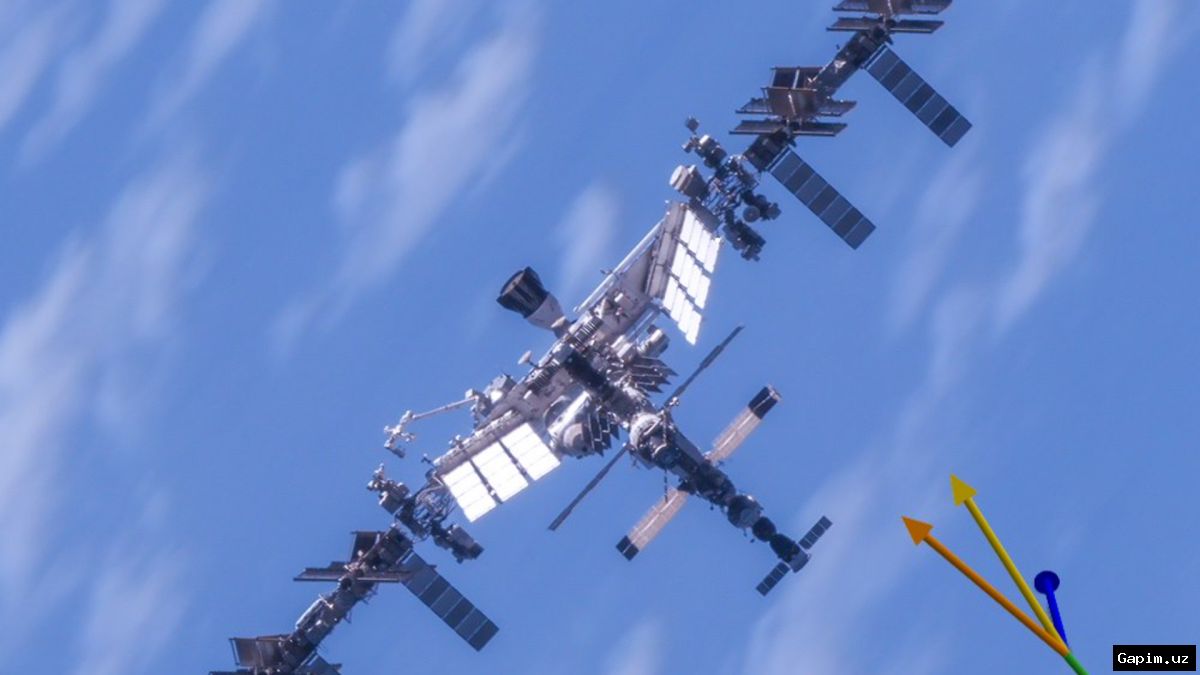
Key Takeaways: The ISS image was taken by a satellite owned by Virginia-based BlackSky, which cooperates with HEO on imaging objects beyond Earth. HEO specializes in photographing other spacecraft using low Earth orbit platforms and its own software. Because the ISS travels at about 28,160 km/h, such imaging requires precise timing and high technical coordination.
The ISS is usually observed from Earth or by astronauts aboard the station, who view modules, solar arrays and scientific instruments through windows. HEO instead focuses on photographing other spacecraft moving in low Earth orbit. In the longer term, the company says it aims to extend observations to objects farther from Earth, including various regions of the Solar System.
HEO does not manufacture imaging satellites itself; it uses proprietary software to direct spacecraft toward selected objects when they enter an observation zone. The ISS image was obtained by a BlackSky satellite, under an agreement between the two companies covering imaging of objects beyond Earth. Earlier, HEO and its partners also captured images of the ISS, China’s Tiangong orbital station and Russia’s Resurs-P No. 1 before its breakup.
Satellites can appear motionless above Earth, but the ISS and other spacecraft in low orbit travel at roughly 28,160 km/h. Taking an image of one spacecraft from another is therefore not routine: operators must calculate the correct moment, while onboard equipment must deliver the required precision. The resulting picture shows the station in full and from an angle rarely seen by the public.
The release underlines how commercial firms are expanding space-based surveillance and imaging services. At the same time, claims by Western companies about imaging sensitive orbital assets require independent verification and raise questions about transparency, data control and orbital safety as competition grows. Further demonstrations and technical reviews are likely to shape how such capabilities are used and regulated.
Source: kun.uz