Skyways has unveiled Skyreach, a hybrid cargo drone designed to replace helicopters for delivering spare parts to offshore oil and gas platforms or supplies to military personnel in combat zones. The company claims the aircraft can perform such missions autonomously at roughly one-tenth the cost, but its advertised range of more than 2,000 kilometers is achievable only with a 4.5-kilogram payload on a one-way flight.
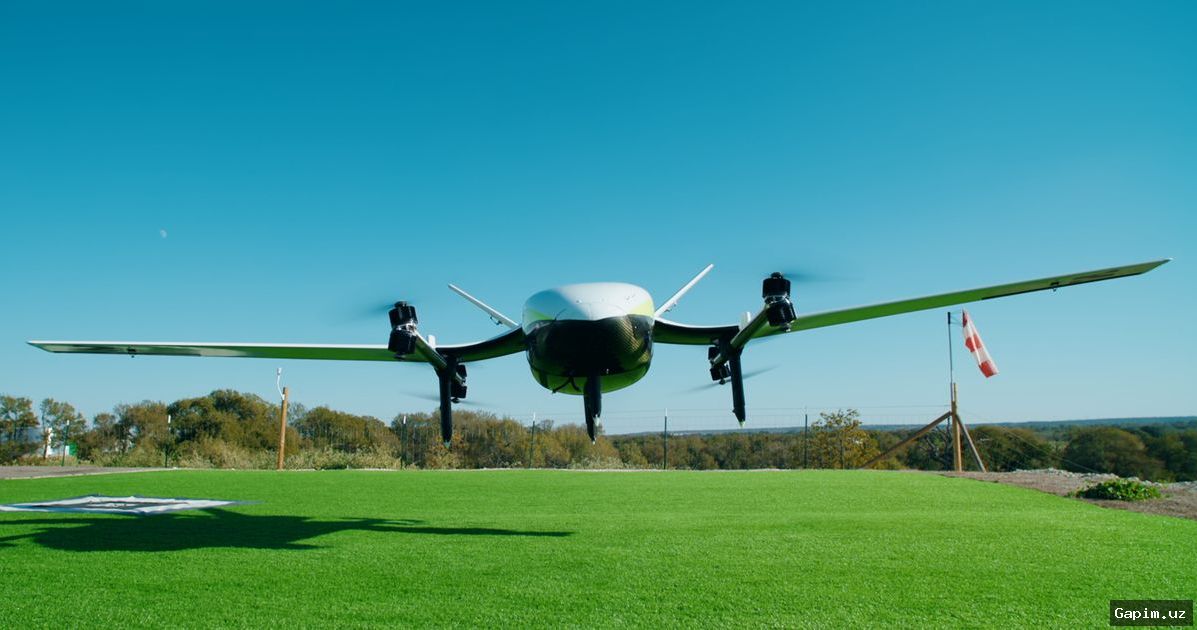
Key Takeaways: Skyreach is a hybrid vertical takeoff and landing (VTOL) drone with a 6.7-meter wingspan and a 198-liter cargo compartment. With minimal payload it can stay airborne for more than 18 hours, operate in winds up to 75 km/h and temperatures from −21 to +49 °C. Current flight cost is about $300 per hour, with Skyways aiming to reduce it to $100.
The aircraft uses eight electric motors for vertical lift like a multicopter and a two-stroke aviation-fuel engine for horizontal flight. A generator recharges the batteries in flight, so the drone does not need to be plugged into the grid or have its batteries swapped between missions. According to the developers, this architecture improves autonomy and simplifies operations in remote areas with limited infrastructure.
The cargo bay is loaded from above and opens from below, allowing the drone to drop supplies from the air or lower them on a tether without landing. Its maximum takeoff weight is 163 kilograms, with about 45 kilograms allocated to fuel and payload combined. These weight limits explain why range falls sharply as payload increases.
Technical specifications state that range exceeds 2,000 kilometers with 4.5 kilograms of cargo, falls to about 1,255 kilometers with 23 kilograms, and drops to about 450 kilometers with 36 kilograms. Skyways CEO Charles Acknin said one hour of Skyreach flight currently costs about $300, with plans to cut that to $100 by increasing autonomy. The company has not disclosed the drone’s price or specified which helicopter it uses for the cost comparison.
Representatives of the US Marine Corps, Navy and Air Force are said to have expressed interest in the aircraft, according to the company, but the claim has not been independently verified. Skyways says its next steps are to increase autonomy, reduce operating costs and expand flight testing. The central question for potential customers is whether the promised savings will hold in real-world conditions, especially when heavier cargo sharply reduces range.
Source: kun.uz