Uzbek President Shavkat Mirziyoyev on Wednesday criticized the implementation of the nationwide “Yashil Makon” (Green Space) project during a meeting, according to his press service. The autumn planting season began on Nov. 8, but work in some regions is proceeding at an insufficient pace; Tashkent, Samarkand and Jizzakh regions have fallen behind schedule. One-third of seedlings planted in spring died, and, as in previous years, cases of inflated reporting were identified. At the same time, the head of state again stressed that the main criterion should not be the number of trees planted, but their survival and full growth in subsequent years.
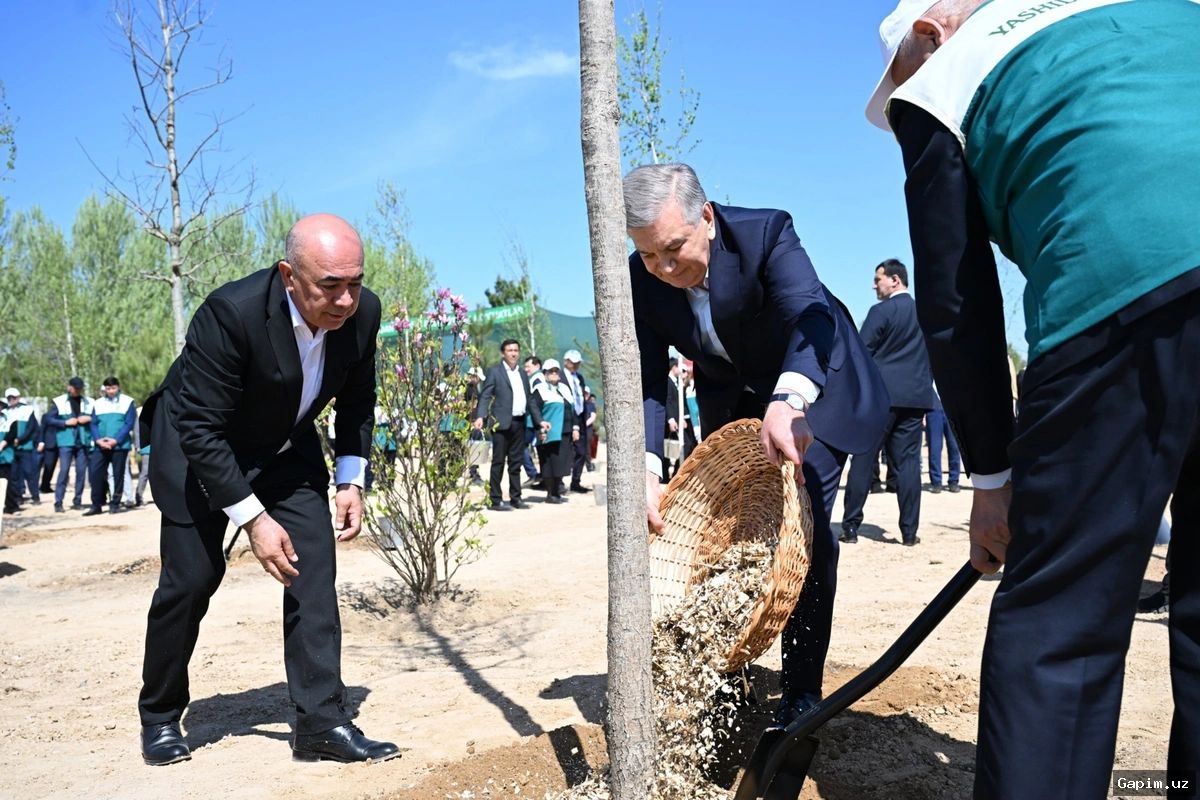
Key Takeaways: The “Yashil Makon” program, launched in November 2021, targets 200 million trees a year; the autumn season began Nov. 8, but Tashkent, Samarkand and Jizzakh regions are behind schedule. One-third of spring seedlings died, and this year’s planting is to achieve a survival rate of at least 90-95 percent.
The program was launched in November 2021. By the following spring, the president had already spoken about inflated reports and criticized “carelessness” in tree planting. In summer 2022, the Accounts Chamber reported that millions of trees had been added to reports during the spring season, some seedlings had dried before spring ended, and many had been planted where irrigation was unavailable. Similar statements followed in later years: last autumn it was reported that 27.5 million, or 20 percent, of 137 million trees and shrubs planted in spring had dried up, with early heat among the causes. The recurring pattern suggests the program’s central challenge is not planting volume but ecological suitability and follow-up care.
Mirziyoyev said each region’s climate and soil properties must be taken into account, with drought-, heat- and salinity-resistant tree species selected, irrigation systems created and seedlings regularly maintained. He paid particular attention to plants adapted to local natural and climatic conditions and not difficult to care for. Nurseries specializing in local flowers and ornamental plants were proposed. Instead of water-intensive lawns, more planting of tojixo‘roz, rayhon, jambul and local shrubs was recommended. He also set the task of planting at least three trees per resident in every neighborhood, expanding green areas and increasing the responsibility of mahalla chairmen and forestry staff for results.
Authorities are to ensure that at least 90-95 percent of seedlings planted this year survive, and to take concrete measures to preserve and maintain green areas created in previous years. Regions that lagged are expected to restore the pace of the autumn campaign, while local structures may strengthen oversight. Because the president also ordered reliable reporting, future reports are likely to distinguish more clearly between trees planted and those that actually survive.
Source: www.gazeta.uz