A queue of 990 freight trucks has formed on the Uzbek-Kazakh border in Kazakhstan's Turkestan Region, according to reports from the area. Drivers said the line stretches for 40 kilometers and that crossing the border can take several days. The congestion is reported at the "B. Konysbayev" checkpoint and is linked to increased cargo flows from China through Kazakhstan to Uzbekistan and other Central Asian countries, while shipments from Russia and Belarus are said to add further pressure. No official Uzbek comment on the truck buildup had been issued at the time of publication.
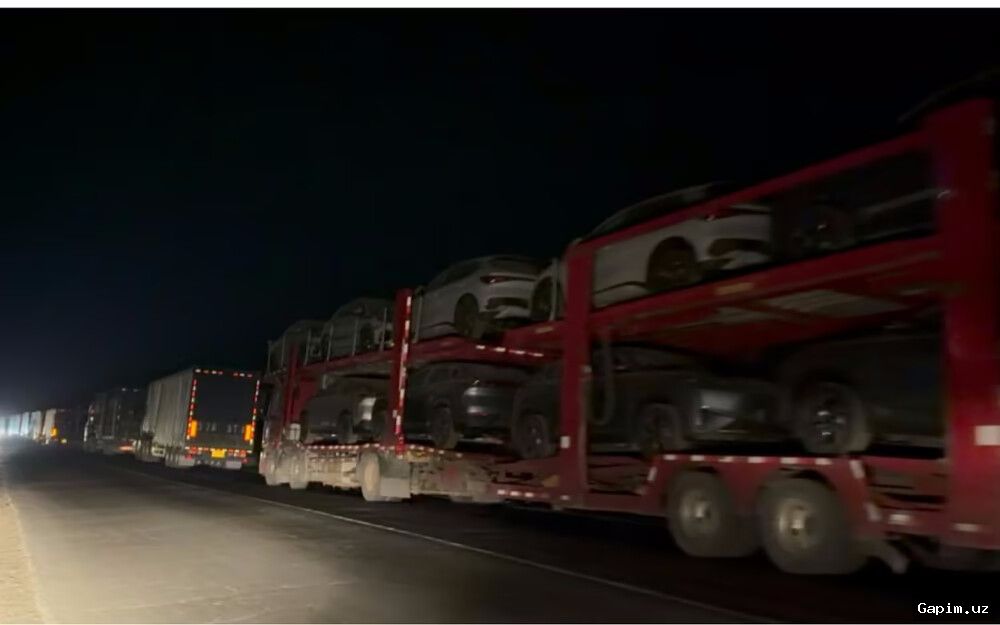
Key Takeaways: 990 trucks are reportedly waiting at the Uzbek-Kazakh border; the queue is said to stretch for 40 kilometers, with crossings taking several days; the bottleneck is at the "B. Konysbayev" checkpoint; Uzbekistan is negotiating with Kazakhstan and Kyrgyzstan on a One Stop customs system.
The congestion highlights broader strain on Central Asian freight corridors. Goods from China move through Kazakhstan toward Uzbekistan and other regional markets, while additional shipments from Russia and Belarus increase demand on border infrastructure. In such conditions, coordination among customs authorities, transport operators and infrastructure planners becomes increasingly important. The absence, at the time of publication, of an official Uzbek statement leaves questions about the immediate causes and possible mitigation measures unresolved.
In a related rail development, Kazakhstan's national railway company KTJ introduced additional requirements for cargo transported to Uzbekistan and Afghanistan in wagons belonging to other railway administrations. The decision was connected to demands by Uzbekistan Temir Yullari for the faster return of empty wagons to their countries of registration. The episode illustrates the interdependence of transport systems, where changes in one mode can affect overall cargo flows and border capacity.
At the same time, Uzbekistan is negotiating with Kazakhstan and Kyrgyzstan on the introduction of a unified One Stop customs control system at selected border posts. The system would include mutual recognition of inspection results, meaning cargo examined by customs officers of one country would not need to be re-inspected upon entry into a neighboring state. Such an arrangement could reduce waiting times, limit duplicate procedures and improve the predictability of transit operations.
Farhad Olimjonov, head of a department at the Customs Committee, said on November 11 that possible operating models for the system are being developed jointly with relevant agencies. Exact launch dates have not yet been determined. Next steps are likely to include finalizing the technical model, selecting pilot checkpoints and adapting procedures to rising cargo volumes, potentially forming part of a wider modernization of border control in Central Asia.
Source: podrobno.uz