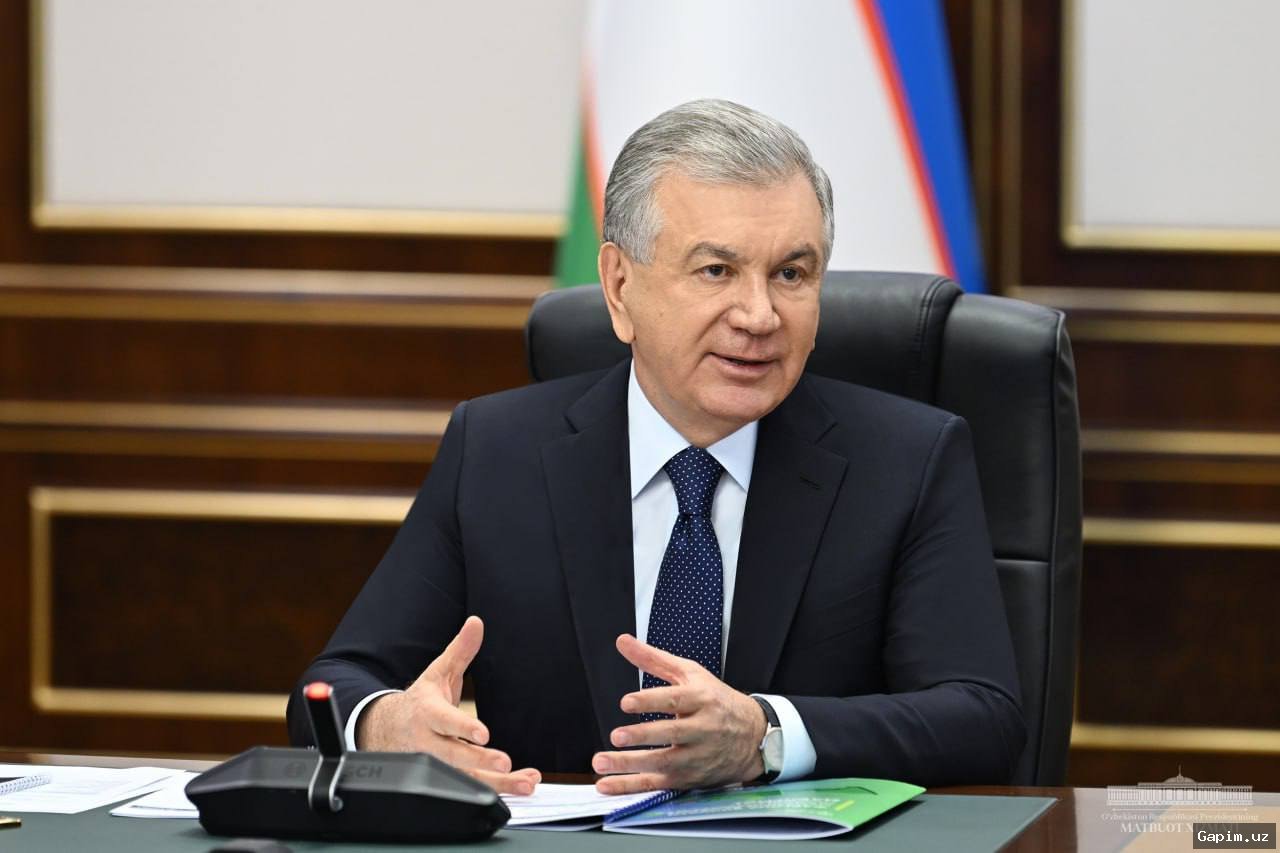
President Shavkat Mirziyoyev of Uzbekistan reviewed a presentation on proposals to improve the system for training engineering personnel for agriculture and water management on March 10. The meeting highlighted that in several fields, scientific knowledge is gradually becoming detached from practical application. Specifically, during the implementation of major projects in agriculture and water management, scientific justifications and the potential of researchers are not always fully utilized, leading to some projects failing to achieve expected outcomes.
Currently, over 11,000 students are enrolled at the National Research University “Tashkent Institute of Irrigation and Agricultural Mechanization Engineers.” The university has seven faculties, 37 departments, and 38 educational programs. The employment rate of graduates stands at 93%. Additionally, the number of international students and faculty members is increasing.
The presentation emphasized the necessity of introducing a dual education system to strengthen the link between theory and practice. According to the proposed model, students would spend four days acquiring theoretical knowledge and two days undergoing paid internships at production enterprises. For instance, students in water management could participate in projects focused on water conservation and efficient irrigation organization, while those in hydrotechnics and hydropower could engage in canal concreting, cost estimation, and construction of small hydropower plants.
It was also noted that a significant portion of Uzbekistan’s water resources depends on transboundary sources. Consequently, training specialists in water diplomacy was identified as a crucial strategic task. Proposals included expanding the existing master’s program “International Water Diplomacy” at the university and increasing admission quotas for state grants. Plans are underway to train highly qualified specialists for Central Asian countries and Afghanistan.
Furthermore, initiatives to strengthen the university’s scientific and innovative potential were presented. Specifically, there are plans to develop services for monitoring cultivated areas using drones, forecasting crop yields, combating pests, and preparing scientific recommendations based on space monitoring data. To achieve this, the university intends to open courses on drone management, establish a laboratory for space research and satellites, and create comprehensive research laboratories.
Source: kun.uz