Saudi Arabia's Foreign Minister Prince Faisal bin Farhan Al Saud issued a stark warning to Iran, stating that tolerance for its attacks on his country and neighboring Gulf states is limited. He called on Tehran to immediately "recalculate" its strategy, emphasizing the growing regional instability fueled by Iranian aggression.
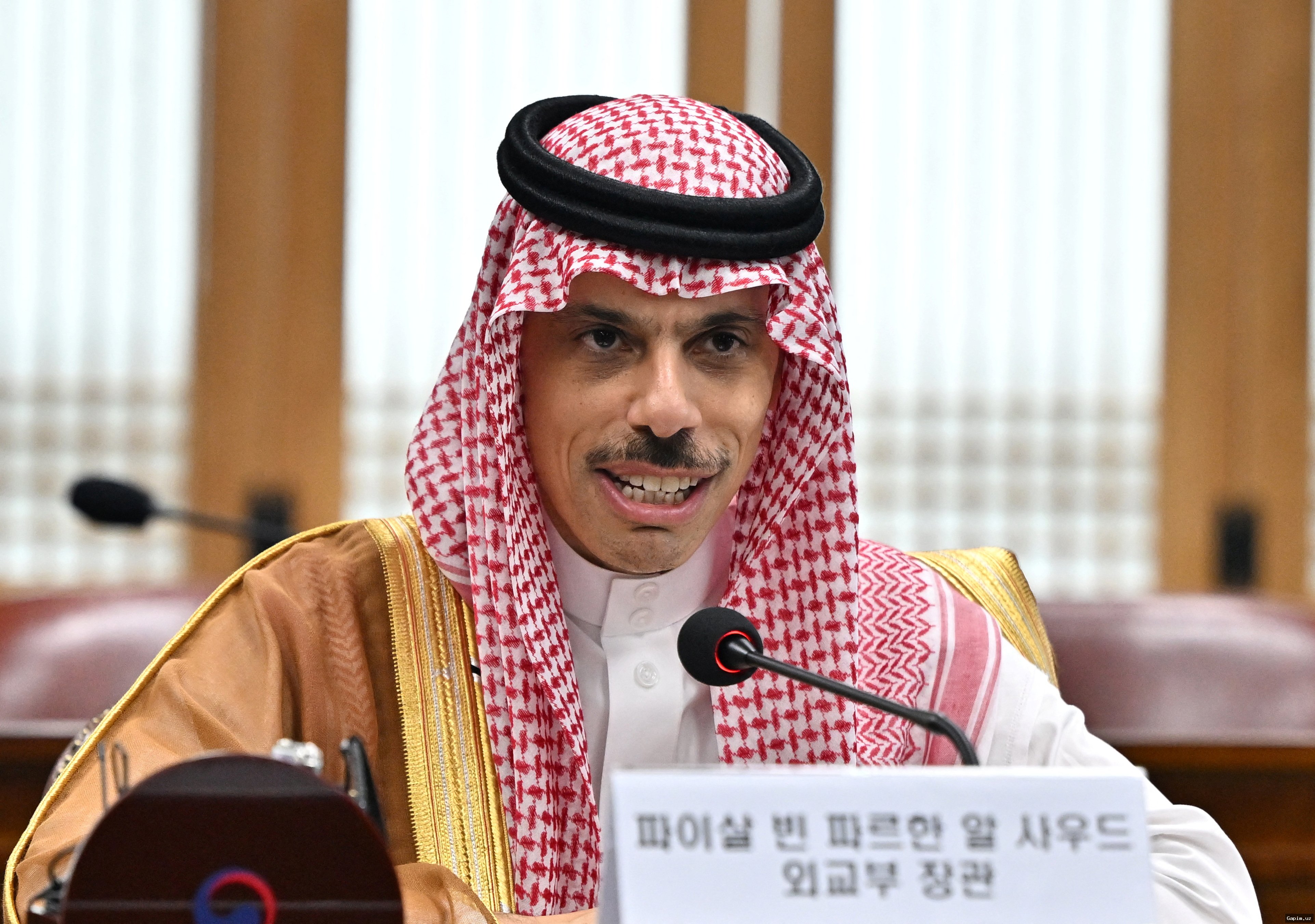
Prince Faisal told a news conference early on Thursday that Saudi Arabia and other Gulf states possess "very significant capacities and capabilities" that could be deployed if they "choose to do so." He alleged that Iran's attacks on regional neighbors were carefully planned, despite denials from Tehran's diplomats, noting the "level of accuracy in some of this targeting indicates that this is something that was premeditated, preplanned, preorganised and well thought out."
The Saudi Ministry of Defence reported on Wednesday that its air defences intercepted four Iranian ballistic missiles targeting Riyadh and two launched towards the country's eastern region. The UAE's Defence Ministry claimed to have dealt with 13 ballistic missiles and 27 drones, suspending operations at the Habshan gas facility due to incidents caused by debris after a successful missile interception.
Prince Faisal further stated that while the war will eventually end, restoring relations with Iran will take much longer as trust "has completely been shattered" due to Tehran's tactics of targeting neighbors. He added, "If Iran doesn't stop … immediately, I think there will be almost nothing that can re-establish that trust," highlighting the deep-seated friction and long-term geopolitical costs.
This warning followed a meeting of foreign ministers from Arab and Islamic countries in the Saudi capital to discuss the expanding war in the region. Iranian attacks on Gulf energy sites, including Qatar's Ras Laffan gas facility—the world's largest LNG production site—and the UAE's Habshan facility, caused significant damage, drawing condemnation from Qatar and exacerbating tensions that threaten global energy security.
Source: www.aljazeera.com